We're loading the complete profile of this person of interest including their biography, achievements, and contributions.
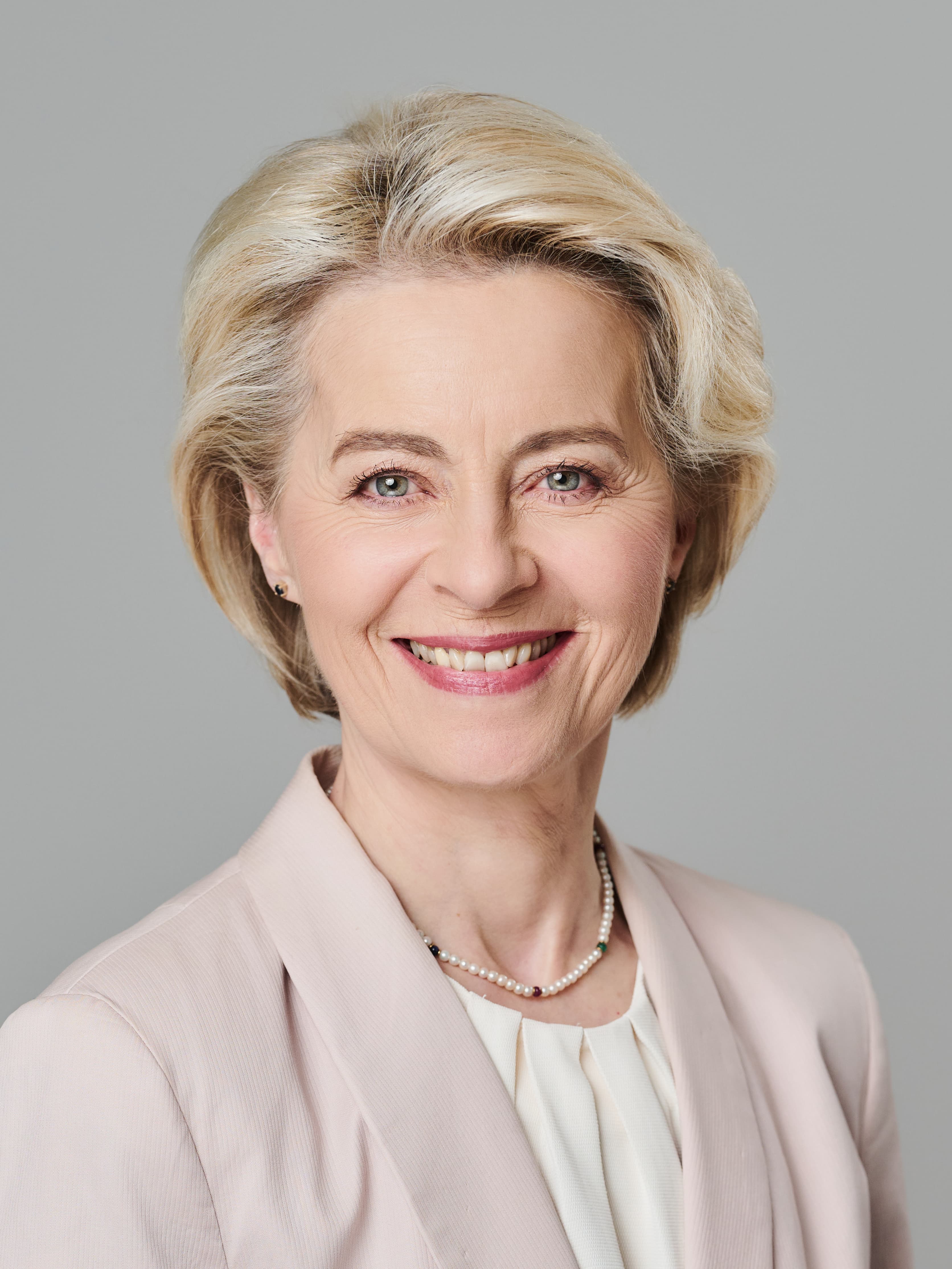
President of the European Commission
Public Views
Experience
Documented career positions
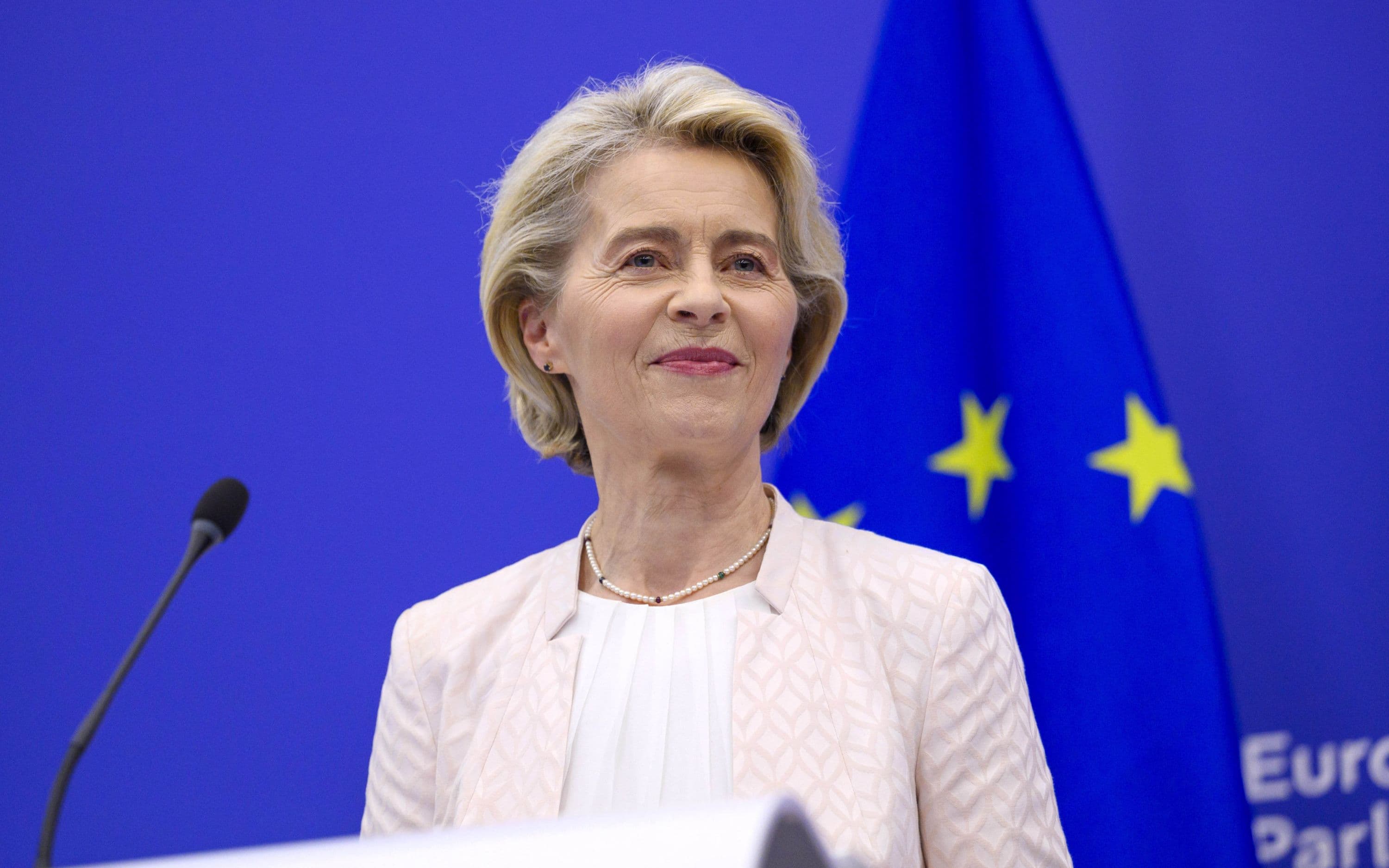
Ursula Gertrud von der Leyen (born Ursula Albrecht on October 8, 1958) is a German politician and physician who has served as the President of the European Commission since 2019. She is the first woman to hold this office and is a member of the centre-right Christian Democratic Union (CDU) and the European People's Party (EPP). Over the course of her political career, she has held several high-level positions within the German federal government, establishing herself as a prominent figure in European politics. Born in Ixelles, Brussels, Belgium, von der Leyen was raised in an international environment as her father, Ernst Albrecht, was one of the first European civil servants. She spent the first 13 years of her life in Brussels, attending the European School, which fostered her multilingual proficiency in German, French, and English. In 1971, her family relocated to the Hanover region in Germany when her father entered state politics. Von der Leyen pursued a diverse academic path, initially studying economics at the universities of Göttingen and Münster, as well as at the London School of Economics between 1977 and 1980. She subsequently shifted her focus to medicine, enrolling at the Hannover Medical School, where she qualified as a physician in 1987 and later earned a doctorate in medicine (Dr. med.) in 1991. Between 1992 and 1996, she lived in Stanford, California, with her husband, Heiko von der Leyen, whom she married in 1986, and their growing family. Following their return to Germany, she earned a Master of Public Health in 2001 and served as a faculty member at the Hannover Medical School. Her political career began in the late 1990s, after she joined the CDU in 1990. She initially became active in local politics in the Hanover region before ascending to state-level office, serving as a cabinet minister in the government of Lower Saxony from 2003 to 2005. In 2005, she joined the federal cabinet of Chancellor Angela Merkel, beginning a 14-year tenure in the federal government. She served as the Federal Minister for Family Affairs, Senior Citizens, Women and Youth (2005–2009), where she gained recognition for advocating for paid parental leave and the expansion of childcare facilities. She later served as the Federal Minister for Labour and Social Affairs (2009–2013) before becoming Germany's first female Federal Minister of Defence (2013–2019). In 2019, the European Council proposed von der Leyen as the candidate for the presidency of the European Commission. She was elected by the European Parliament and assumed office on December 1, 2019. Her first term was characterized by navigation of the COVID-19 pandemic, the initiation of the European Green Deal, and the European Union’s response to the Russian invasion of Ukraine. Her leadership saw the introduction of the NextGenerationEU recovery package and the advancement of digital and climate-focused policy agendas. In July 2024, the European Parliament re-elected her for a second five-year term, extending her leadership until 2029. Von der Leyen is a Lutheran and, alongside her husband, Heiko von der Leyen—who is also a physician—is a parent to seven children. Throughout her career, she has been recognized for her ability to manage complex ministerial portfolios and for her strategic role in shaping European integration.
First woman to serve as President of the European Commission, successfully securing a second five-year term in 2024
Orchestrated the EU's historic, unified response to the Russian invasion of Ukraine, pushing through unprecedented financial sanctions against Moscow and securing billions in military aid for Kyiv
Architect of the European Green Deal, a sweeping legislative framework aiming to make Europe the first climate-neutral continent by 2050
Her aggressive centralization of power in Brussels frequently angers member state leaders (particularly Viktor Orbán of Hungary), who accuse her of acting like a European monarch without a direct democratic mandate
Faced a massive transparency scandal ('Pfizergate') regarding her refusal to release text messages exchanged with Pfizer CEO Albert Bourla during the negotiation of multi-billion euro COVID-19 vaccine contracts
Heavily criticized by European farmers and conservatives for the bureaucratic burden of the Green Deal, forcing her to significantly water down environmental regulations in 2024 to quell mass tractor protests
News articles featuring Ursula von der Leyen
Managed the EU's collective vaccine procurement and the €800 billion NextGenerationEU recovery fund during the COVID-19 pandemic
Earned a doctorate in medicine from Hanover Medical School in 1991
Earned a Master of Public Health degree from the University of Hannover in 2001
Served as Minister of Social Affairs, Women, Families and Health for the state of Lower Saxony from 2003 to 2005
Appointed Federal Minister of Family Affairs, Senior Citizens, Women and Youth in Angela Merkel's cabinet in 2005
Appointed Federal Minister of Labour and Social Affairs in 2009
Elected as deputy leader of the Christian Democratic Union (CDU) in 2010
Appointed Federal Minister of Defence in 2013, becoming the first woman to hold the position in Germany
Re-appointed Federal Minister of Defence in 2018
Elected as the first female President of the European Commission in 2019
Took office as President of the European Commission on December 1, 2019
Awarded the Global Citizen World Leader Prize in 2020
Named the most powerful woman in the world by Forbes in 2022
Named the most powerful woman in the world by Forbes in 2023
Named the most powerful woman in the world by Forbes in 2024
Elected as the European People's Party (EPP) Spitzenkandidat for the 2024 European Parliament elections in March 2024
Re-elected as President of the European Commission by the European Parliament in July 2024
Named the most powerful woman in the world by Forbes in 2025
Awarded the International Charlemagne Prize of Aachen in May 2025
In 2015, von der Leyen faced allegations of plagiarism regarding her 1991 doctoral thesis at Hannover Medical School. An independent review panel identified multiple instances of plagiarism and academic misconduct, but concluded that there was no intent to deceive, resulting in her retaining her medical degree.
Between 2018 and 2020, while serving as Germany's Defence Minister, von der Leyen was the subject of a parliamentary investigative committee focused on the improper awarding of lucrative government contracts to external consultancy firms. The inquiry identified significant management failures and violations of procurement rules, though no personal corruption charges were brought against her.
Since 2021, von der Leyen has faced intense scrutiny regarding the lack of transparency in the negotiation of large-scale COVID-19 vaccine procurement contracts with Pfizer, specifically involving undisclosed text messages exchanged between her and CEO Albert Bourla. This matter has prompted investigations by the European Ombudsman and, more recently, an ongoing investigation by the European Public Prosecutor's Office (EPPO) regarding potential irregularities in the handling of these communications.