We're loading the complete profile of this person of interest including their biography, achievements, and contributions.
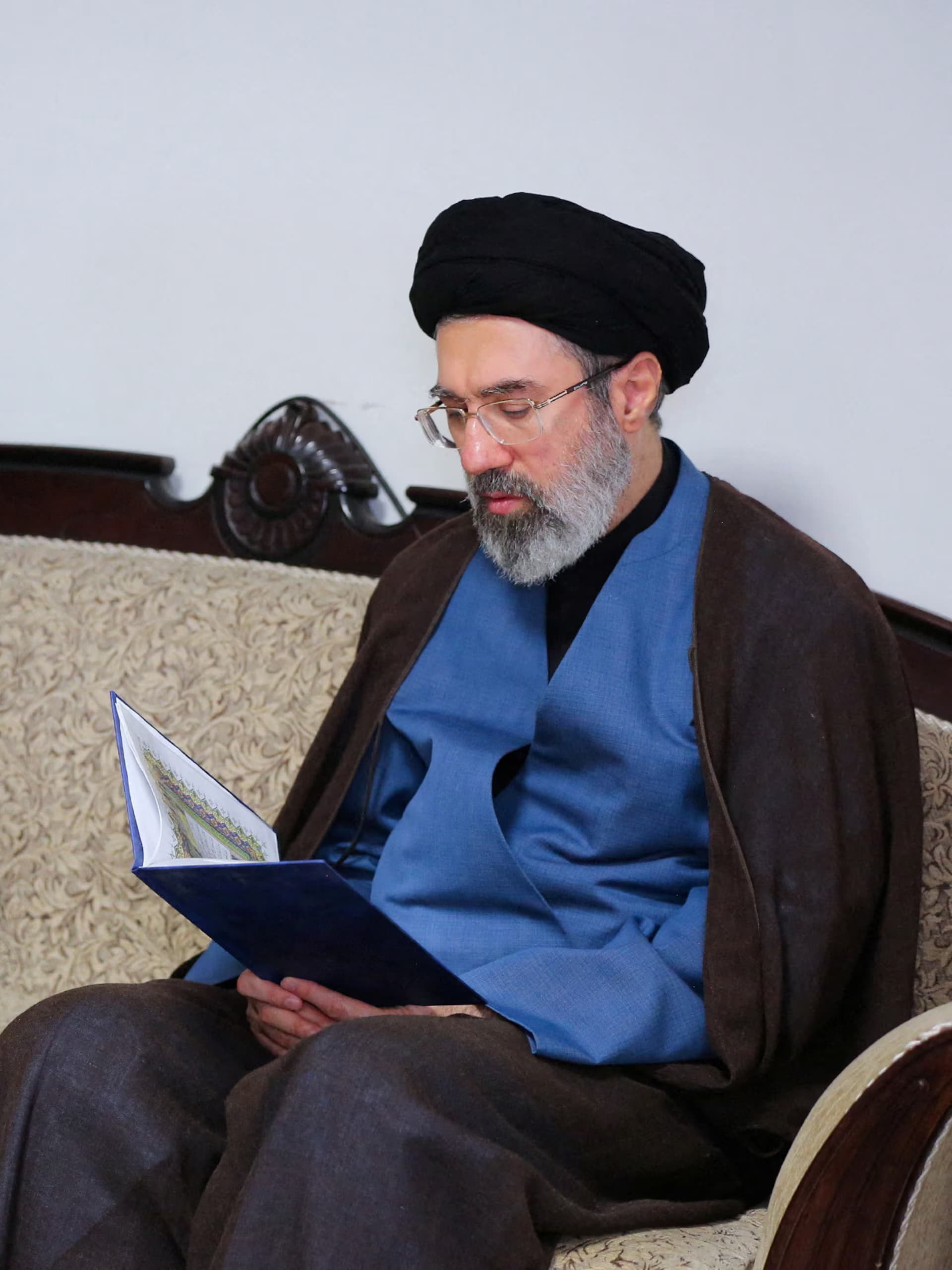
Supreme Leader of Iran
Public Views
Experience
Documented career positions
Mojtaba Hosseini Khamenei (born September 8, 1969) is an Iranian Shia cleric who has served as the Supreme Leader of Iran since his appointment on March 8, 2026. Prior to his ascension, he was a highly influential, yet largely obscured, political and security figure within the Iranian establishment, acting for decades as a central power broker and key gatekeeper within the administration of his father, the late Supreme Leader Ali Khamenei. Born in Mashhad, Iran, Mojtaba Khamenei is the second son of Ali Khamenei and Mansoureh Khojasteh Bagherzadeh. Growing up in a household deeply embedded in the religious and revolutionary elite, he witnessed his father’s rise from a prominent cleric and politician to the presidency and eventually the Supreme Leadership. During his youth, Mojtaba spent time in northwest Iran, including the cities of Sardasht and Mahabad, before completing his secondary education at Alavi High School in Tehran. In the late 1980s, during the final years of the Iran-Iraq War, he served in the Islamic Revolutionary Guard Corps (IRGC), an experience that helped him forge lasting alliances with military and intelligence personnel. Following his military service, Mojtaba pursued traditional clerical studies, a prerequisite for elite status in the Iranian theocracy. He spent extensive time at the seminaries in Qom, where he studied under prominent hardline clerics, including Mohammad-Taqi Mesbah-Yazdi and Ayatollah Mahmoud Hashemi Shahroudi. Throughout his career, he focused on advanced jurisprudence (*dars-e kharej*). For decades, Mojtaba Khamenei operated as one of the most powerful individuals in Iran without holding a formal government title. Working within the Office of the Supreme Leader, he became known as a "hidden hand" in Iranian politics, wielding significant influence over the country's security and intelligence apparatus, including the IRGC and the Basij militia. His behind-the-scenes role was most notably observed during the 2009 Iranian presidential election, where he was widely alleged to have played a central role in organizing the state's crackdown on the "Green Movement" protests. His political influence and close proximity to the centers of power led to him being sanctioned by the United States Department of the Treasury in 2019 for his role in carrying out tasks on behalf of his father. On February 28, 2026, the assassination of Ali Khamenei in a US-Israeli air strike in Tehran created an immediate power vacuum during an intense regional conflict. On March 8, 2026, the Assembly of Experts—the constitutional body responsible for selecting the Supreme Leader—announced the appointment of Mojtaba Khamenei as the third Supreme Leader of the Islamic Republic. This selection marked a significant historical shift, as it represented the first instance of hereditary succession in the history of the post-1979 Iranian state. His appointment was met with pledges of allegiance from the country's armed forces and various political institutions, although it also underscored the regime's pivot toward continuity amid extreme domestic and external instability. Mojtaba Khamenei was married to Zahra Haddad-Adel, the daughter of Gholam-Ali Haddad-Adel, a senior conservative politician and former speaker of the Iranian parliament. Their marriage, which began in 1999, linked two of the most prominent families in the Iranian political establishment. Zahra Haddad-Adel was killed during the same military strike that resulted in the death of Ali Khamenei in February 2026. As Supreme Leader, Mojtaba Khamenei is widely expected to maintain the hardline foreign and domestic policies established by his predecessor. His deep ties to the IRGC and his history of managing the regime's coercive institutions suggest a leadership style that emphasizes security, state survival, and regional resistance. Analysts note that his legitimacy faces challenges, particularly from those within the clerical and political spheres who view the hereditary transition as a departure from the revolutionary principles of the Islamic Republic, yet his control over the security apparatus remains the foundation of his authority.
Elevated to Supreme Leader of the Islamic Republic of Iran in early 2026, inheriting absolute religious, political, and military authority over the state
Effectively ran the Office of the Supreme Leader for over a decade during his father's declining health, acting as the primary liaison to the IRGC
Instrumental in orchestrating the brutal suppression of the 2009 Green Movement and the 2022 Mahsa Amini protests
His succession to Supreme Leader was fiercely contested internally, with critics viewing it as the un-Islamic establishment of a hereditary monarchy within a theocratic republic
Personally sanctioned by the United States Treasury Department in 2019 for advancing his father's destabilizing regional ambitions and suppressing domestic dissent
Universally condemned by human rights groups as the primary architect behind the IRGC's violent crackdowns, torture, and executions of Iranian youth protesting for democratic freedoms
News articles featuring Mojtaba Khamenei
Served in the Habib Battalion of the Islamic Revolutionary Guard Corps during the final stages of the Iran-Iraq War in the 1980s.
Graduated from the elite Alavi High School in Tehran in 1987.
Pursued advanced religious studies in Qom, specializing in Islamic jurisprudence and seminary education starting in the 1990s.
Served as a long-term political aide and gatekeeper within the Office of the Supreme Leader for several decades.
Reportedly played a decisive role in influencing the presidential elections of 2005 and 2009 in support of hardline factions.
Placed on the United States government sanctions list in 2019 for his role in exercising administrative responsibilities for the Supreme Leader.
Appointed as the third Supreme Leader of the Islamic Republic of Iran by the Assembly of Experts on March 8, 2026.
Following the disputed 2009 Iranian presidential election, Mojtaba Khamenei was widely accused by opposition leaders and international observers of orchestrating the violent crackdown on the Green Movement, including directing the Basij and security forces to suppress dissent.
In 2019, the United States government imposed sanctions on Mojtaba Khamenei, citing his role in representing the interests of his father and supporting policies that restricted political freedoms within Iran.
He has faced persistent allegations of financial corruption, including claims that he oversaw vast economic holdings and 'bonyads' (charitable foundations) and benefited from his proximity to power, though these allegations have remained largely unverified due to the secretive nature of Iran's financial institutions.
His succession to the position of Supreme Leader in March 2026 faced significant internal and external criticism, with observers arguing that the hereditary transfer of power from father to son contradicted the revolutionary principles of the Islamic Republic, which theoretically oppose dynastic rule.
He has been accused of political interference in presidential elections, including claims by former candidates such as Mehdi Karroubi that he played a critical behind-the-scenes role in engineering the victory of Mahmoud Ahmadinejad in the 2005 election.