We're loading the complete profile of this person of interest including their biography, achievements, and contributions.
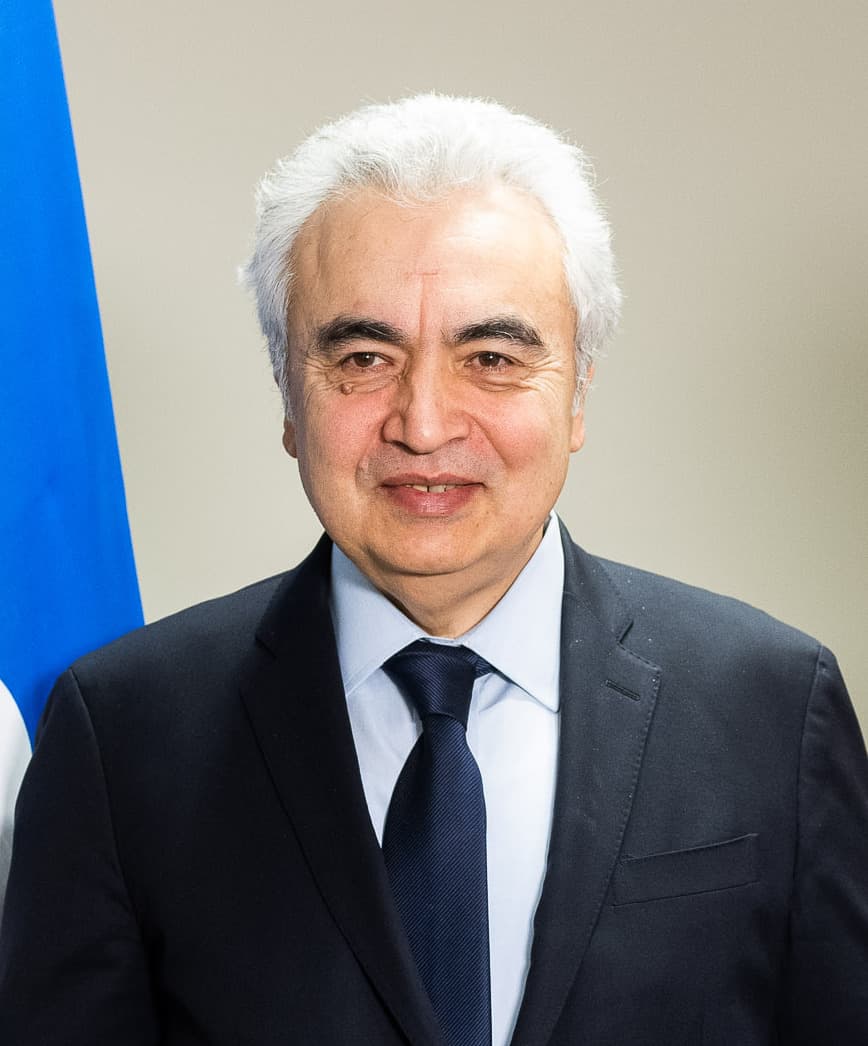
Executive Director, International Energy Agency (IEA)
Public Views
Experience
Documented career positions
Dr. Fatih Birol is a preeminent Turkish economist and energy expert who has served as the Executive Director of the International Energy Agency (IEA) since September 1, 2015. Widely recognized as one of the most influential figures in global energy policy, Birol has spent much of his professional life at the IEA, where he played a pivotal role in shaping the organization's strategic direction before ascending to its highest leadership position. Born on March 22, 1958, in Ankara, Turkey, Birol pursued an academic foundation in engineering and economics. He earned his Bachelor of Science degree in Power Engineering from the Istanbul Technical University. He subsequently moved to Vienna, Austria, where he completed his Master of Science and Doctor of Philosophy degrees in Energy Economics at the Technical University of Vienna. Prior to his long tenure at the IEA, Birol began his career working for six years at the Secretariat of the Organization of the Petroleum Exporting Countries (OPEC) in Vienna, an experience that provided him with a comprehensive understanding of the complexities inherent in producer-consumer energy relationships. Birol joined the IEA in 1995 as a junior analyst. Over the course of the next two decades, he steadily rose through the ranks, eventually serving as the IEA’s Chief Economist and Director of Global Energy Economics. In these roles, he became widely known for directing the Agency’s flagship publication, the *World Energy Outlook*, which established itself as the definitive source for energy market analysis and long-term projections. During his time as Chief Economist, he gained a reputation for his ability to synthesize complex data into actionable insights for policymakers, earning him significant respect across government and industry sectors. Since assuming the role of Executive Director in 2015, Birol has overseen a transformative modernization program for the IEA, the most comprehensive in the organization's history since its founding in 1974. Under his leadership, the IEA has significantly expanded its scope and influence. His strategic vision has been characterized by three main pillars: strengthening cooperation with major emerging economies—such as China, India, Indonesia, and Brazil—to increase the IEA’s global relevance; shifting the organization's primary focus toward clean energy transitions and the global fight against climate change; and broadening the Agency’s energy security mandate to encompass electricity and natural gas alongside traditional oil markets. His push for international net-zero emission pathways has made the IEA a critical advisory body for governments navigating the energy transition. Birol’s leadership has been marked by his frequent engagement with international summits and his ability to communicate the urgency of the climate crisis to global leaders. In recognition of his contributions, he has received numerous accolades, including being named to the *TIME100* list of the world's most influential people in 2021 and being honored by the *Financial Times* as the Energy Personality of the Year in 2017. He has also been the recipient of prestigious national decorations from several countries, including the Japanese Order of the Rising Sun, the Order of the Polar Star from Sweden, and the Federal Cross of Merit from Germany. Additionally, in 2013, he was awarded a Doctorate of Science honoris causa by Imperial College London. Birol continues to serve in various advisory capacities, including as the chair of the World Economic Forum’s Energy Advisory Board, maintaining his position as a central authority in the global energy landscape.
Executive Director of the International Energy Agency (2015–Present), successfully modernizing the agency to focus heavily on climate change and the renewable energy transition
Authored the highly influential 2021 IEA 'Net Zero by 2050' roadmap, which famously declared that no new oil and gas fields must be approved for development if the world is to meet its climate targets
Faces intense, sustained hostility from OPEC nations (particularly Saudi Arabia) and American oil executives, who frequently accuse Birol and the IEA of abandoning objective data analysis in favor of anti-fossil fuel political advocacy
His projections regarding the rapid 'peak demand' for oil and gas are highly contested by energy executives who argue that the explosive energy requirements of the AI sector and the developing world will keep fossil fuels dominant for decades longer than the IEA predicts
In 2024, Fatih Birol and the IEA faced public criticism from members of the U.S. House Energy and Commerce Committee, who questioned whether the agency had strayed from its core mandate of energy security to prioritize advocacy for clean energy transitions.
News articles featuring Fatih Birol
Consistently named one of the most influential people in global energy policy, utilizing massive data analytics to guide the investments of G7 nations
Named on the TIME 100 list of the world's most influential people (2021)
Joined the International Energy Agency (IEA) as a junior analyst in 1995.
Served as Chief Economist and Director of Global Energy Economics at the IEA, where he directed the flagship World Energy Outlook report.
Awarded a Doctorate of Science honoris causa by Imperial College London in 2013.
Received the Japanese Emperor's Order of the Rising Sun in 2013.
Won the Eurelectric Award in 2013 for his contributions to the power sector.
Named an honorary life member of Galatasaray Football Club in 2013.
Assumed office as the Executive Director of the International Energy Agency on September 1, 2015.
Recognized as Energy Personality of the Year by the Financial Times in 2017.
Re-elected as Executive Director of the International Energy Agency in January 2018.
Named to the TIME100 list of the world's most influential people in 2021.
Awarded the Chevalier of the Legion of Honour by France in January 2022.
Elected as a foreign member of the Chinese Academy of Engineering in 2023.
Throughout his tenure, Birol has faced ongoing criticism from some fossil fuel industry advocates and political figures who argue that the IEA's 'Net Zero by 2050' scenarios and forecasts predicting a peak in oil demand are overly aggressive and discourage necessary investment in traditional energy sources.