We're loading the complete profile of this person of interest including their biography, achievements, and contributions.
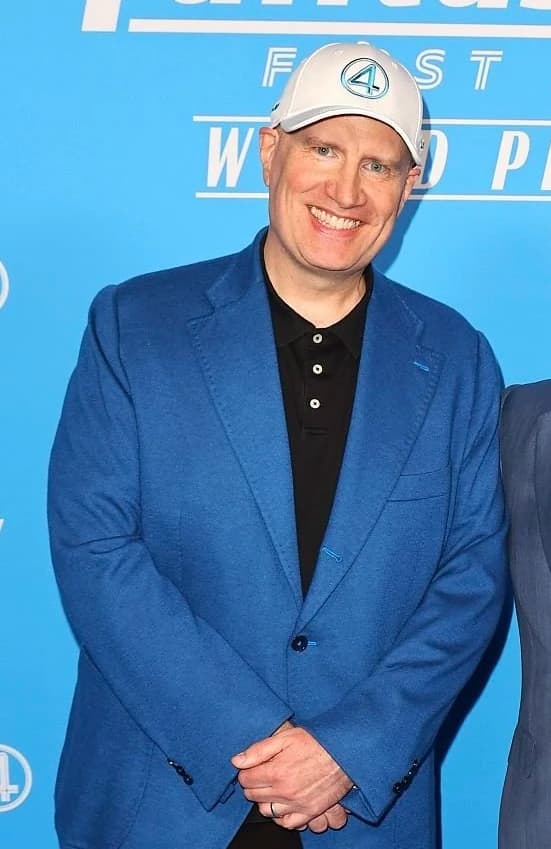
President, Marvel Studios
Public Views
Experience
Documented career positions
Kevin Feige (born June 2, 1973) is an American film and television producer who has served as the president of Marvel Studios since 2007. Widely recognized as the principal architect of the Marvel Cinematic Universe (MCU), Feige is considered one of the most successful and influential figures in contemporary cinema. Under his leadership, Marvel Studios transformed from an independent production house into a global media powerhouse, fundamentally altering the landscape of blockbuster filmmaking through the introduction of a highly interconnected, serialized shared universe. Born in Boston, Massachusetts, Feige spent much of his youth in Westfield, New Jersey, where he moved at the age of three. His early exposure to the entertainment industry was influenced by his maternal grandfather, Robert E. Short, a television producer in the 1950s who worked on long-running soap operas such as The Guiding Light and As the World Turns. During his upbringing, Feige developed an avid interest in film, citing major franchises like Star Wars, Indiana Jones, and the Back to the Future trilogy as pivotal inspirations. Following high school, Feige attended the University of Southern California (USC), the alma mater of several directors he admired, including George Lucas, Ron Howard, and Robert Zemeckis. After five previous applications to the prestigious USC School of Cinematic Arts were rejected, Feige was accepted on his sixth attempt, eventually graduating with a degree in film in 1995. In 2023, he was awarded an honorary doctorate by the institution. Feige began his professional career shortly after graduation, securing an internship that led to a position as an assistant to producer Lauren Shuler Donner. Working with Donner, he contributed to productions such as the disaster film Volcano (1997) and the romantic comedy You’ve Got Mail (1998). His deep knowledge of Marvel Comics proved instrumental during the development of the 2000 film X-Men, where Donner appointed him as an associate producer. This work brought him to the attention of Avi Arad, then the head of Marvel Studios, who subsequently hired Feige as his second-in-command. In 2007, Feige was appointed president of Marvel Studios. His tenure began with a strategic shift in the studio’s business model: rather than licensing characters to other studios, Marvel would finance and produce its own films. This vision culminated in the release of Iron Man (2008), which launched the Marvel Cinematic Universe. By prioritizing interconnected storytelling, casting against type, and maintaining creative continuity, Feige oversaw an unprecedented string of commercial successes, most notably The Avengers (2012), which served as the first major convergence of the franchise's characters. In October 2019, Feige’s role was expanded when he was named chief creative officer for Marvel Entertainment, granting him oversight of Marvel Comics, Marvel Television, and Marvel Animation. Feige’s work has garnered immense financial and critical attention; the films produced under his supervision have collectively grossed over $31 billion at the global box office. Notable milestones include the massive success of Avengers: Endgame (2019), which became one of the highest-grossing films of all time. Additionally, his work on Black Panther (2018) earned the film a nomination for the Academy Award for Best Picture—a first for a superhero film—and represented a significant cultural milestone. Regarding his personal life, Feige maintains a low profile, emphasizing privacy despite his public-facing role. He has been married to Caitlin Feige, a cardiothoracic nurse, since approximately 2007. The couple has two children, a daughter born in 2009 and a son born in 2012. He remains a member of the Producers Guild of America and continues to manage the expanding development of the Marvel brand across film and streaming platforms.
Architect of the Marvel Cinematic Universe producing over 30 interconnected films that have collectively grossed nearly 30 billion dollars globally the most successful franchise in cinema history
Produced Avengers Endgame which briefly held the title of the highest-grossing film of all time and revolutionized the concept of the massive multi-franchise cinematic crossover event
Faced intense scrutiny and was forced to execute a massive unprecedented creative pivot in 2023/2024 following the assault conviction of Jonathan Majors who was positioned as the central villain of the next five years of Marvel films
Heavily criticized by legendary auteurs like Martin Scorsese and Francis Ford Coppola who accused his superhero films of monopolizing theaters destroying the mid-budget film industry and resembling theme park rides rather than true cinema
Oversaw a highly publicized decline in Marvels renowned visual effects quality in the early 2020s leading to massive unionization efforts by overworked and underpaid VFX artists who explicitly blamed Marvels brutal post-production schedules
Nominated for the Academy Award for Best Picture for Black Panther marking the first time a superhero film received the prestigious nomination
Appointed Chief Creative Officer of Marvel Entertainment in 2019 assuming total creative control over Marvels publishing animation and television divisions
Served as an associate producer on the 2000 film X-Men, marking a key early credit at Marvel Studios.
Appointed President of Production at Marvel Studios in March 2007.
Promoted to President of Marvel Studios in May 2008 following the successful release of Iron Man.
Received the Motion Picture Showman of the Year award at the International Cinematographers Guild’s Publicists Guild Awards in 2013.
Honoured with a star on the Hollywood Walk of Fame in 2017.
Received the Albert R. Broccoli Britannia Award for Worldwide Contribution to Entertainment from BAFTA in 2018.
Earned an Academy Award nomination for Best Picture as a producer of Black Panther in 2018, the first superhero film to receive that honor.
Awarded the David O. Selznick Achievement Award in Theatrical Motion Pictures by the Producers Guild of America in 2019.
Oversaw the release of Avengers: Endgame in 2019, which became the highest-grossing film of all time upon its release.
Appointed Chief Creative Officer of Marvel Entertainment, Marvel Comics, Marvel Television, and Marvel Animation in October 2019.
Received an honorary doctorate from the University of Southern California in 2023.
Provided an endowment in November 2025 to establish the Kevin Feige Division of Film & Television Production at the USC School of Cinematic Arts.
In 2021, Kevin Feige was reportedly 'angry and embarrassed' regarding the handling of Scarlett Johansson’s breach of contract lawsuit against The Walt Disney Company over the simultaneous streaming and theatrical release of Black Widow. While not a defendant, Feige was publicly associated with the conflict due to his long-standing professional relationship with the actress and his leadership of the studio.
In 2022, Marvel Studios faced widespread criticism and negative media coverage regarding the working conditions of visual effects (VFX) artists. Reports from industry workers described a 'toxic' culture of mandatory overtime, tight deadlines, and heavy workloads, with critics pointing to Marvel’s studio management and project volume as primary contributors to these industry-wide issues.
In 2023, Marvel Studios faced significant backlash following the use of generative AI in the opening credit sequence for the series 'Secret Invasion.' The decision to use AI technology during the WGA writers' strike drew criticism for its ethical implications and concerns regarding the displacement of human artists in the creative industry.
In 2023, the sudden firing of high-level executive Victoria Alonso, who oversaw VFX and post-production, became a point of controversy and public scrutiny. Media reports linked the departure to internal friction at the studio, including disagreements over the studio's corporate direction, the handling of VFX productions, and Alonso's public stance on political issues.