We're loading the full news article for you. This includes the article content, images, author information, and related articles.
Major stock markets in Asia slumped on Monday after Washington and Tehran threatened to intensify hostilities, as the Iran war enters its fourth week.
Trading floors across Asia are witnessing a violent market correction today as the standoff between Washington and Tehran escalates into a direct military confrontation. The blockade of the Strait of Hormuz, now entering its fourth week, has moved beyond a logistical nightmare into a full-scale geopolitical crisis, with global financial markets reacting with panic to the threat of imminent bombardment.
As United States President Donald Trump issues a 48-hour ultimatum for the immediate reopening of the shipping lane, the global economy faces a supply shock of historic proportions. With 20% of the world’s petroleum and liquefied natural gas (LNG) supplies effectively frozen at the chokepoint, the conflict is no longer a regional skirmish. For emerging economies like Kenya, which are heavily dependent on imported refined petroleum to sustain transport, manufacturing, and agricultural logistics, this crisis threatens to trigger a devastating, sustained wave of inflation and energy insecurity.
Financial markets have responded to the threat of kinetic warfare with immediate, sharp contractions. On Monday morning, Japan's benchmark Nikkei 225 index plummeted 3.4% as institutional investors engaged in a flight to safety, divesting from equities to hedge against a systemic energy crunch. In South Korea, the Kospi index suffered an even more precipitous decline, dropping by almost 5%.
The sell-off is driven by a fundamental fear: that the world is moving toward a prolonged supply disruption that no central bank intervention can mitigate. The volatility is not merely speculative it is tied to the reality that the Strait of Hormuz—the narrow artery through which the vast majority of Persian Gulf oil flows to the rest of the world—has been shuttered since the military engagements on 28 February. Traders are pricing in the reality that even if the blockade were lifted today, the damage to global maritime insurance premiums and tanker availability would likely suppress supply chains for months to come.
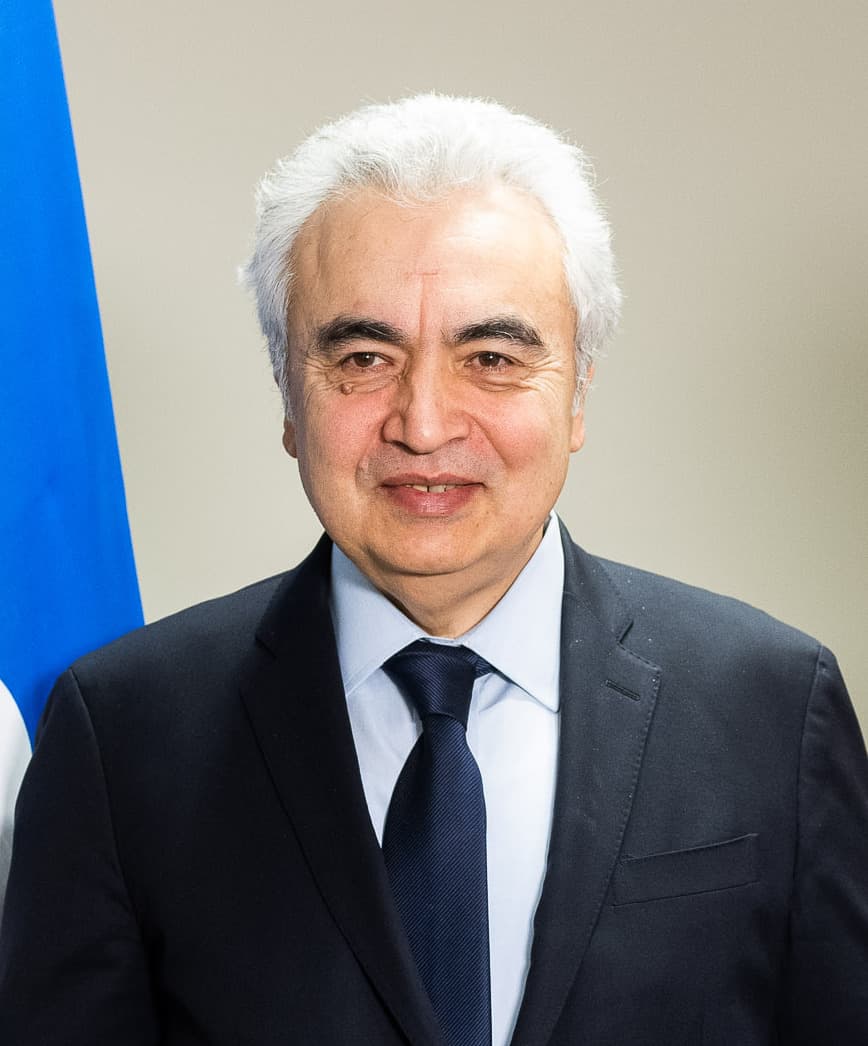
International Energy Agency (IEA) chief Fatih Birol provided a sobering assessment of the situation from the National Press Club in Australia. Birol, widely considered the world’s foremost authority on global energy markets, described the current situation as a tripartite catastrophe. He compared the scale of the disruption to the oil crises of the 1970s combined with the inflationary and logistical shocks seen following the Russian invasion of Ukraine in 2022.
Birol’s assessment underscores the danger of the "double-crisis" scenario. Unlike the 1970s, modern manufacturing is deeply integrated into a just-in-time supply chain model. A sustained halt in energy flows does not merely raise prices it brings industrial production, public transportation networks, and distribution grids to a grinding halt.
For a reader in Nairobi, the distance between the Strait of Hormuz and the Kenyan economy is rapidly shrinking. Kenya remains highly vulnerable to global oil price volatility, as the country sources the vast majority of its refined petroleum products from Middle Eastern suppliers. With the shilling already under pressure, a sustained spike in global crude prices, coupled with the logistical bottlenecks created by the regional conflict, could be catastrophic.
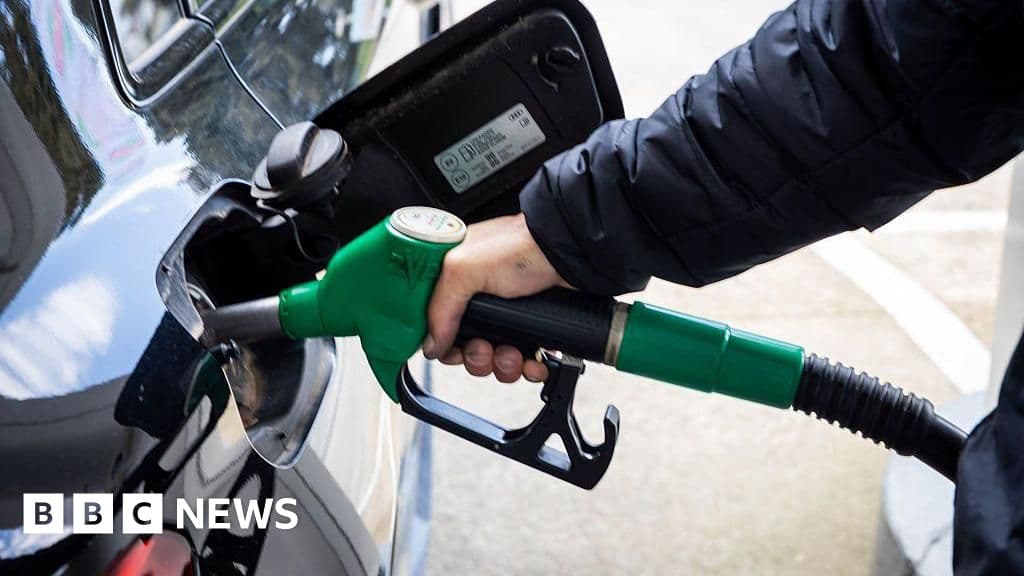
Energy analysts at the University of Nairobi warn that a prolonged blockade could force the Energy and Petroleum Regulatory Authority (EPRA) to hike pump prices by an additional 20% to 30% within the next billing cycle. This would not merely affect motorists it would act as an immediate tax on every sector of the economy. The cost of food distribution, powered by diesel-dependent road freight, would skyrocket. Public transport fares in Nairobi and across the country would likely see immediate upward revisions, further reducing the disposable income of millions of households already struggling with existing inflationary pressures.
The situation reached a breaking point this weekend when President Trump issued a categorical threat on social media. The statement, released at 23:44 GMT on Saturday, explicitly warned that failure to open the strait within 48 hours would result in the United States military "obliterating" Iranian power plants. Iran has responded with equally aggressive rhetoric, threatening to target regional energy infrastructure in retaliation for any such strike.
The threat to attack power plants is a significant escalation from previous geopolitical maneuvers, which have traditionally focused on naval deterrence. By signaling an intent to destroy the Iranian electrical grid and critical energy infrastructure, the rhetoric has moved into the realm of total economic warfare. As the clock ticks down on the 48-hour window, global leaders are left with few options to de-escalate. The standoff has effectively paralyzed the international diplomatic community, with observers noting that both sides have painted themselves into a corner where retreat is viewed as a loss of strategic credibility.
The reality is that we have arrived at a moment where military calculus has entirely overtaken economic pragmatism. As the world waits to see whether the ultimatum results in a reopening of the strait or a widening of the regional conflict, the only certainty is that the era of accessible, reliable global energy supply has, for the moment, come to an abrupt and painful end.
Keep the conversation in one place—threads here stay linked to the story and in the forums.
Sign in to start a discussion
Start a conversation about this story and keep it linked here.
Other hot threads
E-sports and Gaming Community in Kenya
Active 10 months ago
Popular Recreational Activities Across Counties
Active 10 months ago
The Role of Technology in Modern Agriculture (AgriTech)
Active 10 months ago
Investing in Youth Sports Development Programs
Active 10 months ago
Key figures and persons of interest featured in this article