We're loading the complete profile of this person of interest including their biography, achievements, and contributions.
Chief Justice of Kenya (2011–2016)
Public Views
Experience
Documented career positions
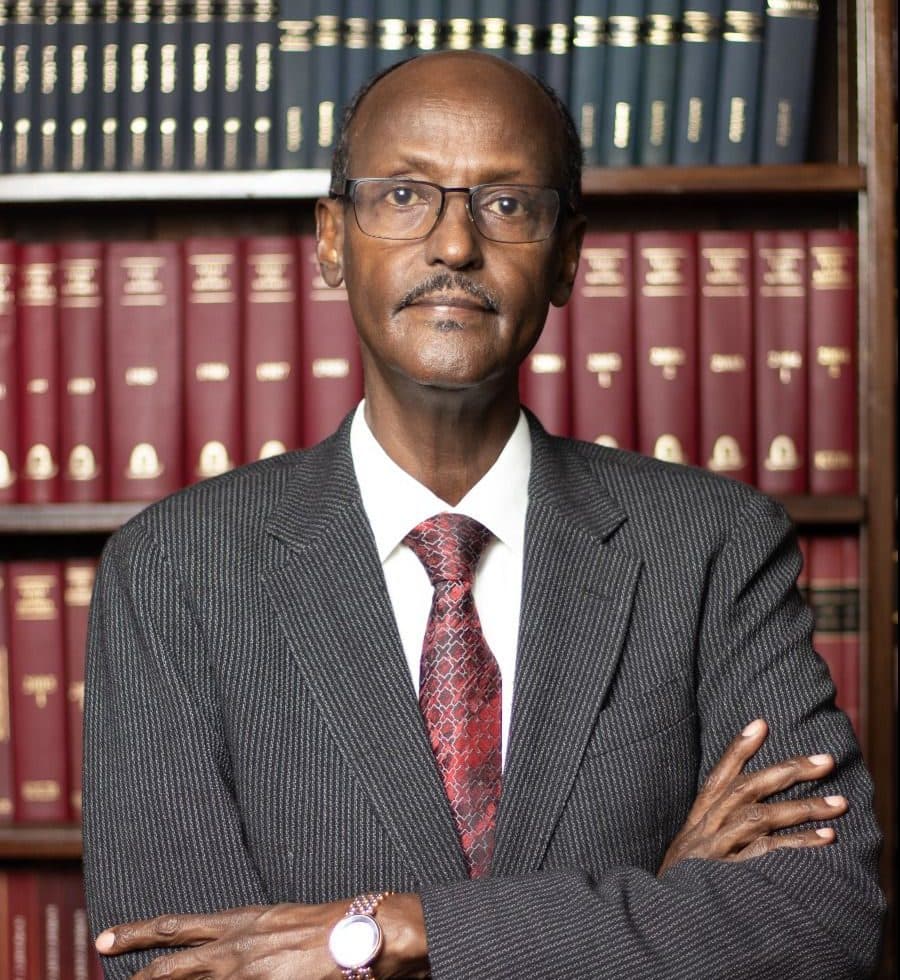
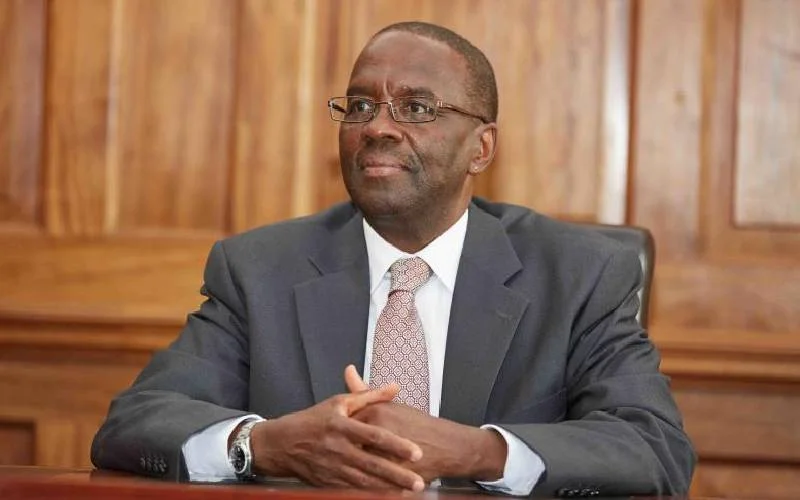
Willy Munyoki Mutunga (born 16 June 1947) is a distinguished Kenyan jurist, intellectual, and social justice advocate who served as the first Chief Justice of Kenya and President of the Supreme Court of Kenya under the 2010 Constitution. His career is defined by a lifelong commitment to human rights, constitutional reform, and the transformation of the judiciary from an arm of government into a robust, independent institution. Born in Kilonzo, Nzambani, in Kitui District, Mutunga hails from a modest background. He attended local primary schools before attending Kitui School, and later, the prestigious Strathmore College in Nairobi. He pursued his undergraduate and master’s studies in law at the University of Dar es Salaam in Tanzania, graduating with a Bachelor of Laws in 1971 and a Master of Laws in 1974. During his time in Tanzania, he was deeply influenced by Pan-Africanist thinkers and socialist debates, which shaped his ideological outlook on justice and governance. He later earned a Doctorate in Jurisprudence from Osgoode Hall Law School at York University in Toronto, Canada, during his period of exile in the late 1980s. Mutunga’s professional career began in 1974 when he joined the University of Nairobi as a law lecturer, becoming one of the first indigenous Kenyans to teach constitutional law. During the 1970s and 1980s, he emerged as a vocal critic of the authoritarian administration under President Daniel arap Moi. His activism, particularly his role in the University Staff Union, led to his arrest and detention without trial for 16 months between 1982 and 1983. Following his release, he went into exile in Canada, where he continued to advocate for democratic change in Kenya. Upon his return, Mutunga became a central figure in Kenya’s civil society. He served as the Vice-Chairman (1991–1993) and Chairman (1993–1995) of the Law Society of Kenya, where he championed the use of the society as a platform for political reform. He was a founding member and executive director of the Kenya Human Rights Commission (KHRC) and held significant leadership roles with the Ford Foundation, where he supported constitutional-building initiatives in East Africa. In 2011, Mutunga was selected by the Judicial Service Commission and subsequently appointed by President Mwai Kibaki as the Chief Justice of Kenya. His tenure, which lasted from June 2011 to June 2016, was transformative. Tasked with operationalizing the 2010 Constitution, he implemented the Judiciary Transformation Framework, an ambitious roadmap aimed at restoring public trust, eradicating corruption, reducing case backlogs, and expanding access to justice. He sought to decolonize the Kenyan legal system by emphasizing indigenous jurisprudence and human rights. After reaching the mandatory retirement age of 70, Mutunga retired from the judiciary in June 2016. Since his departure, he has remained active in public life, serving as the Commonwealth Special Envoy to the Maldives, a scholar-in-residence, and an adjunct professor. He continues to influence the national discourse through his writings on constitutionalism, social justice, and the ongoing need for democratic reforms in Kenya. Throughout his life, Mutunga has been recognized for his resilience, intellectual rigor, and unwavering advocacy for an equitable, people-centered legal system.
AI-powered civic intelligence rating
First Chief Justice appointed under the 2010 Constitution
Oversaw the 'Judiciary Transformation Framework' to reform the Kenyan judiciary
Presided over the first presidential election petition in 2013
Was detained in the 1980s for his pro-democracy activism
His appointment was controversially challenged due to his activism and his ear-stud, which critics deemed 'un-judicial'
The Supreme Court's 2013 decision to uphold Uhuru Kenyatta's election was met with criticism from the opposition
News articles featuring Willy Mutunga
Long-standing human rights and pro-democracy activist
Former Law Lecturer, University of Nairobi
Graduated with a Bachelor of Laws degree from the University of Dar es Salaam in 1971.
Admitted to the Roll of Advocates on June 19, 1972.
Graduated with a Master of Laws degree from the University of Dar es Salaam in 1974.
Joined the Faculty of Law at the University of Nairobi as a lecturer in 1974.
Served as Secretary-General of the University Staff Union at the University of Nairobi from 1979 to 1980.
Detained without trial for 16 months between 1982 and 1983 due to his political activism.
Obtained a Doctorate of Jurisprudence (SJD) from Osgoode Hall Law School at York University, Canada, in 1992.
Served as Vice-Chairman of the Law Society of Kenya from 1991 to 1993.
Served as Vice President of the Kenya Human Rights Commission from 1992 to 1997.
Served as Chairman of the Law Society of Kenya from 1993 to 1995.
Served as Executive Director of the Kenya Human Rights Commission from 1998 to 2003.
Received the Lifetime Achievement Award for the Protection and Promotion of Human Rights from the Kenya National Commission on Human Rights in 2003.
Designated as Senior Counsel in 2003.
Appointed the 13th Chief Justice of Kenya and President of the Supreme Court on June 22, 2011.
Awarded the Elder of the Order of the Golden Heart (EGH) in 2012 for his contributions to judicial reform.
Spearheaded the Judiciary Transformation Framework (2012–2016) to modernize and professionalize the Kenyan judiciary.
Retired as Chief Justice of Kenya on June 16, 2016, upon reaching the mandatory retirement age.
Served as a Commonwealth Special Envoy to the Maldives from 2016 to 2017.
Served as a Distinguished Scholar-in-Residence at Fordham Law’s Leitner Center for International Law and Justice from 2016 to 2017.
Served as a foreign expert advising the Constitution Review Commission of the Gambia on its draft constitution in 2019.
Appointed as an Adjunct Professor of Public Law at Kabarak University School of Law in 2021.
In 2011, during his nomination for Chief Justice, Mutunga faced public and religious backlash regarding his decision to wear a stud in his left ear. Critics, including religious leaders, questioned his morality and argued the stud symbolized values that were inconsistent with Kenyan traditions and judicial decorum.
In 2013, following the Supreme Court's unanimous decision to uphold Uhuru Kenyatta’s presidential election victory, Mutunga faced widespread criticism and unsubstantiated allegations of bribery from opposition supporters. He vehemently denied these claims, asserting that the ruling was based on the court's interpretation of the constitution and deadlines rather than external pressure.
Throughout his tenure, Mutunga frequently alleged that the Kenyan judiciary was being sabotaged by a 'mafia-style' cartel of corrupt judges, politicians, and businesspeople. These public declarations drew attention to internal systemic corruption but also led to criticism regarding his inability to fully eradicate these entrenched networks before his retirement.
In 2013, Mutunga was embroiled in an internal institutional conflict following leaked emails that suggested a 'war strategy' against the then-Chief Registrar of the Judiciary, Gladys Shollei. The controversy exposed deep-seated infighting and administrative friction within the judiciary's leadership.
In 2016, Mutunga oversaw the initial internal investigation into bribery allegations against Supreme Court Judge Philip Tunoi. The scandal, involving claims that Tunoi had accepted a $2 million bribe to influence an election petition, severely tested the judiciary’s credibility and highlighted the challenges of maintaining institutional integrity.