We're loading the full news article for you. This includes the article content, images, author information, and related articles.
Kenya remains in violation of Article 81(b) of the Constitution regarding gender equity. Here is why the two-thirds gender rule remains a broken promise.

When Kenyans overwhelmingly voted to ratify the 2010 Constitution, the promise of an equitable future was not merely aspirational it was codified in the supreme law of the land. Article 81(b) of the Constitution established a clear, non-negotiable mandate: no more than two-thirds of the members of elective or appointive bodies shall be of the same gender. Sixteen years later, this constitutional bedrock remains a functional nullity, casting a long, shadow over the legitimacy of the nation's legislative processes.
The failure to implement the two-thirds gender rule is not a technical oversight or a bureaucratic delay it is a systematic political choice. As the country navigates the 2026 legislative landscape, the continued absence of legislative mechanisms to enforce this rule highlights a deep-seated resistance within the political establishment to dilute the entrenched status quo. For the informed Kenyan citizen, this is no longer just a policy debate—it is a crisis of constitutional governance that demands immediate institutional rectification.
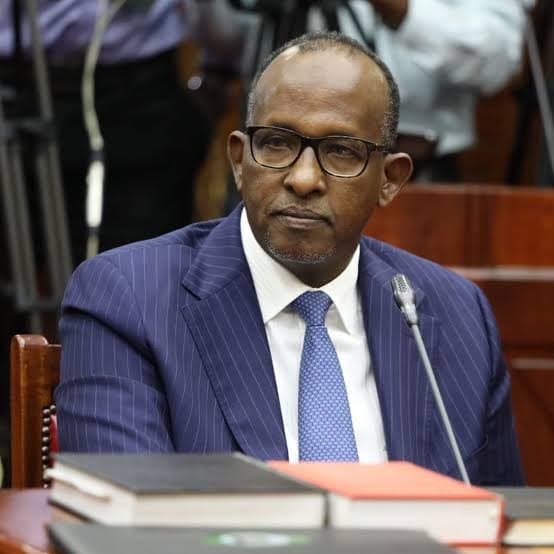
Since the constitutional enactment, the legislative history surrounding the two-thirds gender rule has been marked by a cyclical pattern of introduction, debate, and eventual collapse. Numerous attempts, most notably the recurring legislative efforts led by former Leader of Majority Aden Duale in previous parliaments, have been met with a combination of parliamentary absenteeism, lack of quorum, and thinly veiled political obstructionism. The argument against the rule is often framed in fiscal terms—the cost of expanding Parliament—but economists and legal scholars argue this is a deflection from the core issue of power distribution.
The political cost of compliance is perceived as too high by sitting members whose seats would effectively be threatened by the introduction of quota-driven mechanisms. By refusing to legislate the gender rule, the political class has effectively granted itself a perpetual exemption from the constitution they swore to uphold. This has resulted in a legislative body that consistently fails to reflect the demographic reality of the nation, where women constitute approximately 50.5 percent of the population according to the latest Kenya National Bureau of Statistics projections.
The discrepancy between constitutional aspiration and political reality is best illustrated by the cold, hard numbers that define the current legislative composition. The refusal to implement the rule has far-reaching implications for representation, policy-making, and the diversity of legislative priorities.
Kenya is frequently cited as a leader in democratic innovation in East Africa, yet on the metrics of gender inclusion, the country is lagging behind neighbors who were once considered peers or followers in democratic development. Rwanda, following its post-conflict reconstruction, prioritized gender parity as a central pillar of its state-building strategy, achieving near-parity in the legislature. Uganda, too, has utilized special women’s seats to ensure a baseline of representation that, while imperfect, provides a more stable floor than the current Kenyan model.
The cost of this exclusion extends beyond the hallowed halls of Parliament. In counties where women are consistently sidelined from decision-making roles, policy outcomes regarding agriculture, maternal health, and local infrastructure are frequently disconnected from the lived realities of the majority of the population. When a village in the North Eastern region or a municipality in Western Kenya is governed by councils dominated by one gender, the policy priorities naturally skew toward issues that fail to account for the unique challenges faced by the female demographic—challenges that are, by extension, the challenges of the entire family unit.
The path toward resolving the gender rule crisis requires moving beyond the current performative parliamentary debates. Experts suggest that the solution may not lie in further parliamentary debates, which have historically failed, but in a constitutional challenge that triggers the dissolution of Parliament as envisioned by the Chief Justice’s advisory opinions. Such a move would be drastic, costly, and politically volatile, yet it is the only constitutional mechanism left to break the gridlock that has paralyzed the system for sixteen years.
Civil society organizations and gender rights advocates must pivot their strategy from lobbying individual Members of Parliament to pressuring the executive and the judiciary to enforce compliance. The time for waiting for a voluntary change of heart within the political class has long passed. As the nation approaches future electoral cycles, the demand must be for a commitment to constitutional compliance, not as an optional policy preference, but as a condition for the legitimacy of the next government.
Until the two-thirds gender rule ceases to be a broken promise and becomes a reality of the Kenyan state, the Constitution remains an unfinished project. True democratic progress is not measured by the frequency of elections or the vibrancy of campaigns, but by the ability of a nation to live up to the promises it made to its own people in the pursuit of a more perfect union. How much longer will the architects of this democracy continue to dismantle the very foundation upon which they stand?
Keep the conversation in one place—threads here stay linked to the story and in the forums.
Sign in to start a discussion
Start a conversation about this story and keep it linked here.
Other hot threads
E-sports and Gaming Community in Kenya
Active 10 months ago
The Role of Technology in Modern Agriculture (AgriTech)
Active 10 months ago
Popular Recreational Activities Across Counties
Active 10 months ago
Investing in Youth Sports Development Programs
Active 10 months ago
Key figures and persons of interest featured in this article