We're loading the complete profile of this person of interest including their biography, achievements, and contributions.
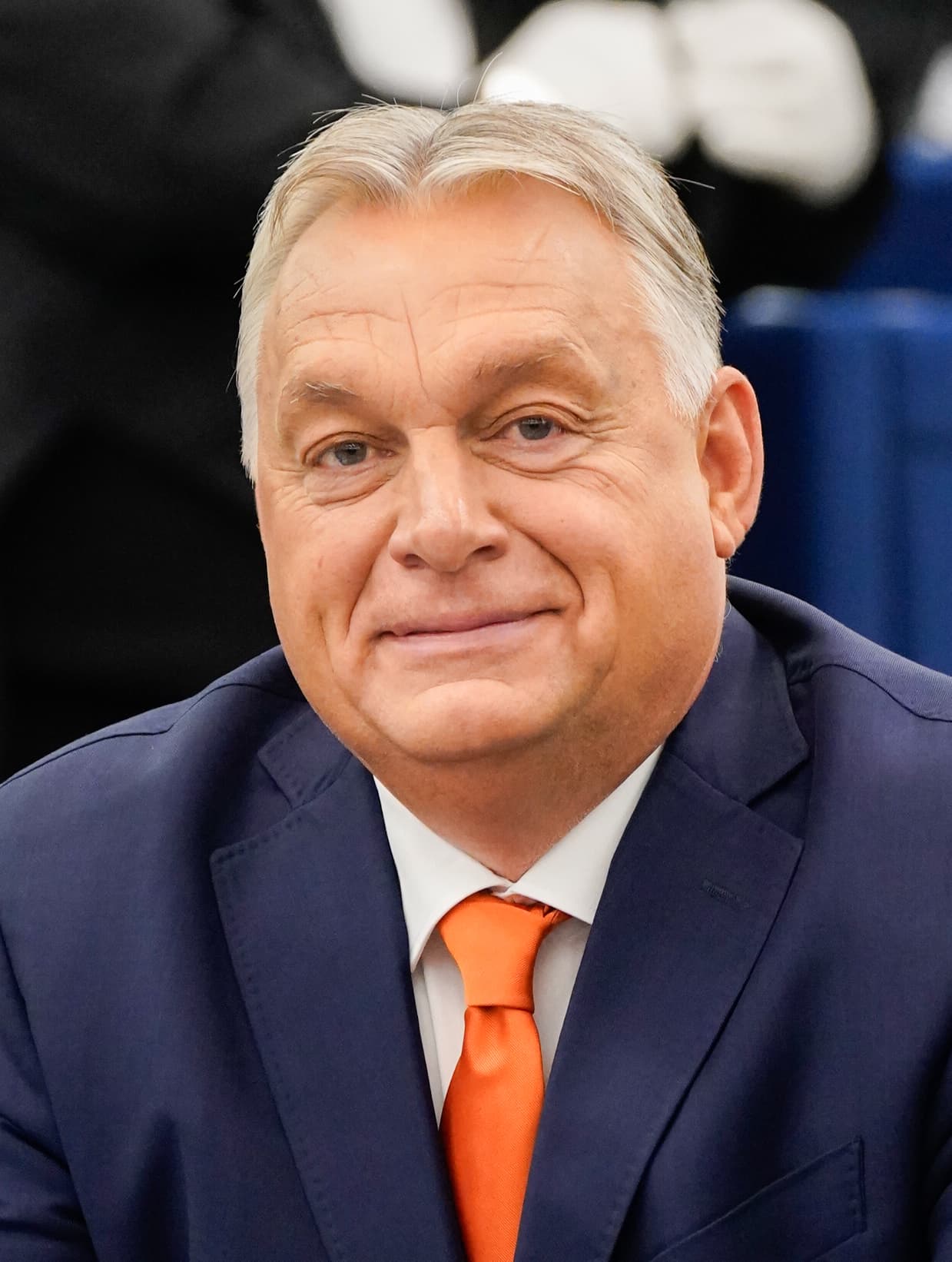
Prime Minister of Hungary
Public Views
Experience
Documented career positions
Viktor Mihály Orbán (born May 31, 1963) is a Hungarian politician who has served as the Prime Minister of Hungary since 2010. He previously held the office from 1998 to 2002. As the leader of Fidesz—the Hungarian Civic Alliance—Orbán has become one of the most prominent and polarizing figures in modern European politics, characterized by his advocacy for "illiberal democracy," national conservatism, and a robust nationalist agenda. Born in the village of Alcsútdoboz and raised in Székesfehérvár, Orbán showed early intellectual and political aptitude. He studied law at Eötvös Loránd University in Budapest, graduating in 1987. During his time as a student, he was a founding member of the Bibó István College, an intellectual hub that fostered anti-communist thought. In 1988, he co-founded the Alliance of Young Democrats (Fidesz), which began as a liberal student movement. Orbán gained national prominence on June 16, 1989, when he delivered a bold speech at the reburial of Imre Nagy, the leader of the 1956 Hungarian Revolution. In the address, he demanded the withdrawal of Soviet troops and the calling of free elections, positioning himself at the forefront of Hungary’s democratic transition. Following the fall of communism, Orbán was elected to the National Assembly in 1990. He led Fidesz as it underwent a significant ideological shift from a liberal student organization to a center-right, national-conservative party during the 1990s. In 1998, at the age of 35, he became the youngest Prime Minister in Hungary’s post-communist history, leading a coalition government. His first term saw Hungary join NATO and implement market-oriented economic reforms, though his administration was ousted in 2002 after losing to the Hungarian Socialist Party. Orbán returned to power in 2010 in a landslide victory, securing a two-thirds "supermajority" in the National Assembly. This legislative dominance allowed his government to fundamentally rewrite the Hungarian constitution and restructure the political and legal landscape. Since 2010, he has been re-elected in 2014, 2018, and 2022, consistently maintaining his party’s firm grip on power. His governance has been defined by policies that critics describe as democratic backsliding, including the consolidation of media ownership under government-allied entities, changes to the electoral system, and judicial reforms that have drawn intense scrutiny from the European Union. Ideologically, Orbán has positioned himself as a staunch defender of national sovereignty and traditional Christian identity. He is perhaps best known internationally for his firm opposition to mass migration, particularly during the 2015 European migrant crisis, and his critical stance toward European integration, often clashing with EU institutions over rule-of-law standards. He has fostered closer diplomatic and economic ties with nations such as Russia, China, and Turkey, balancing these against Hungary’s commitments to the European Union and NATO. In his personal life, Orbán has been married to Anikó Lévai, a lawyer and economist, since 1986. They have five children and multiple grandchildren. A noted sports enthusiast, Orbán has maintained a long-standing interest in football, having played for several teams in his youth and remaining actively involved in supporting Hungarian football infrastructure. Orbán’s legacy remains a subject of intense global debate. Supporters celebrate him as a decisive protector of Hungarian national interests and a bulwark against perceived liberal overreach. Critics, including human rights organizations and European parliamentary leaders, argue that his governance has eroded democratic norms, weakened independent institutions, and isolated Hungary from its democratic allies. Regardless of these divisions, his sustained influence has undeniably reshaped the trajectory of contemporary Hungarian politics.
Longest-serving current head of government in the European Union, dominating Hungarian politics for over a decade and a half
Successfully established a model of 'illiberal democracy' that has become the absolute blueprint for right-wing populist movements globally
Led the massive, highly controversial 2015 border fence initiative to physically block Syrian and Middle Eastern migrants from entering Hungary during the European migrant crisis
Routinely accused by the European Parliament and the European Court of Justice of destroying the rule of law, leading the EU to freeze billions of euros in cohesion funds meant for Hungary
Maintains a highly controversial, apologetic diplomatic relationship with Vladimir Putin and Xi Jinping, deeply fracturing NATO unity during the Ukraine war
Passed legislation explicitly banning the portrayal of homosexuality and gender reassignment to minors, drawing fierce condemnation from the EU and international human rights watchdogs
News articles featuring Viktor Orbán
Co-founded the István Bibó College in 1983.
Co-founded the sociological journal Századvég in 1984.
Co-founded the Alliance of Young Democrats (Fidesz) on March 30, 1988.
Delivered a historic speech at the reburial of Imre Nagy on June 16, 1989, calling for free elections and the withdrawal of Soviet troops.
Elected as a Member of the Hungarian Parliament in 1990.
Served as the leader of the Fidesz parliamentary group from 1990 to 1993.
Elected vice-chairman of the Liberal International in 1992.
Elected president of Fidesz in 1993.
Elected Prime Minister of Hungary for the first time in 1998.
Oversaw Hungary's formal accession to NATO in 1999.
Received the Freedom Award of the American Enterprise Institute and the New Atlantic Initiative in 2001.
Received the Josef Strauss Award from the Hanns Seidel Foundation in 2001.
Received the Grand Cross of the National Order of Merit from France in 2001.
Elected as a vice-president of the European People's Party in 2002.
Awarded the Mérite Européen prize by the European People's Party in 2004.
Awarded the Papal Grand Cross of the Order of Saint Gregory the Great in 2004.
Elected Prime Minister of Hungary in 2010, securing a mandate that began a series of consecutive re-elections in 2014, 2018, and 2022.
Received the 'Person of the Year' award at the 26th Economic Forum in Krynica, Poland, in 2016.
Became the longest-serving Prime Minister in the history of Hungary on November 29, 2020.
Awarded the Supreme Order of the Turkic World by the Organization of Turkic States in 2024.
In 2021, Orbán's government passed the 'Child Protection' act, which restricts the depiction of homosexuality and gender reassignment to minors. The legislation drew widespread international condemnation, including from European Union leaders, for conflating LGBTQ+ individuals with child abusers and infringing on fundamental human rights.
Since 2010, the European Commission has repeatedly accused Orbán's administration of dismantling democratic institutions and violating the rule of law. These conflicts, particularly over judicial independence and corruption, led the EU to suspend billions of euros in funding to Hungary starting in 2022, though some funds were later released amid ongoing disputes over reform implementation.
In early 2024, a major political scandal erupted involving a presidential pardon issued to an individual convicted of covering up child sexual abuse at a state-run orphanage. The fallout from this decision forced the resignations of President Katalin Novák and Justice Minister Judit Varga, both close allies of Orbán.
Orbán's government has faced persistent, long-standing allegations of systemic corruption, including the misuse of EU development funds to enrich family members and political allies. Transparency International has frequently ranked Hungary as one of the most corrupt member states in the European Union.
Since returning to power in 2010, Orbán has been criticized for systematically eroding media freedom by facilitating the takeover of independent news outlets by government-aligned oligarchs. Investigations have also linked his government to the use of Pegasus spyware to conduct surveillance on journalists and political opponents.
Throughout the Russian invasion of Ukraine, Orbán has faced sharp criticism from NATO and EU partners for maintaining close diplomatic and economic ties with Vladimir Putin. He has frequently obstructed or delayed EU sanctions against Russia and opposed providing direct military aid to Ukraine.
In 2015, during the European migrant crisis, Orbán ordered the construction of a border fence along Hungary's southern frontier to block asylum seekers. The policy and the subsequent treatment of migrants, including the creation of 'transit zones,' were later ruled unlawful by the European Court of Human Rights.