We're loading the complete profile of this person of interest including their biography, achievements, and contributions.
President of Eritrea
Public Views
Experience
Documented career positions
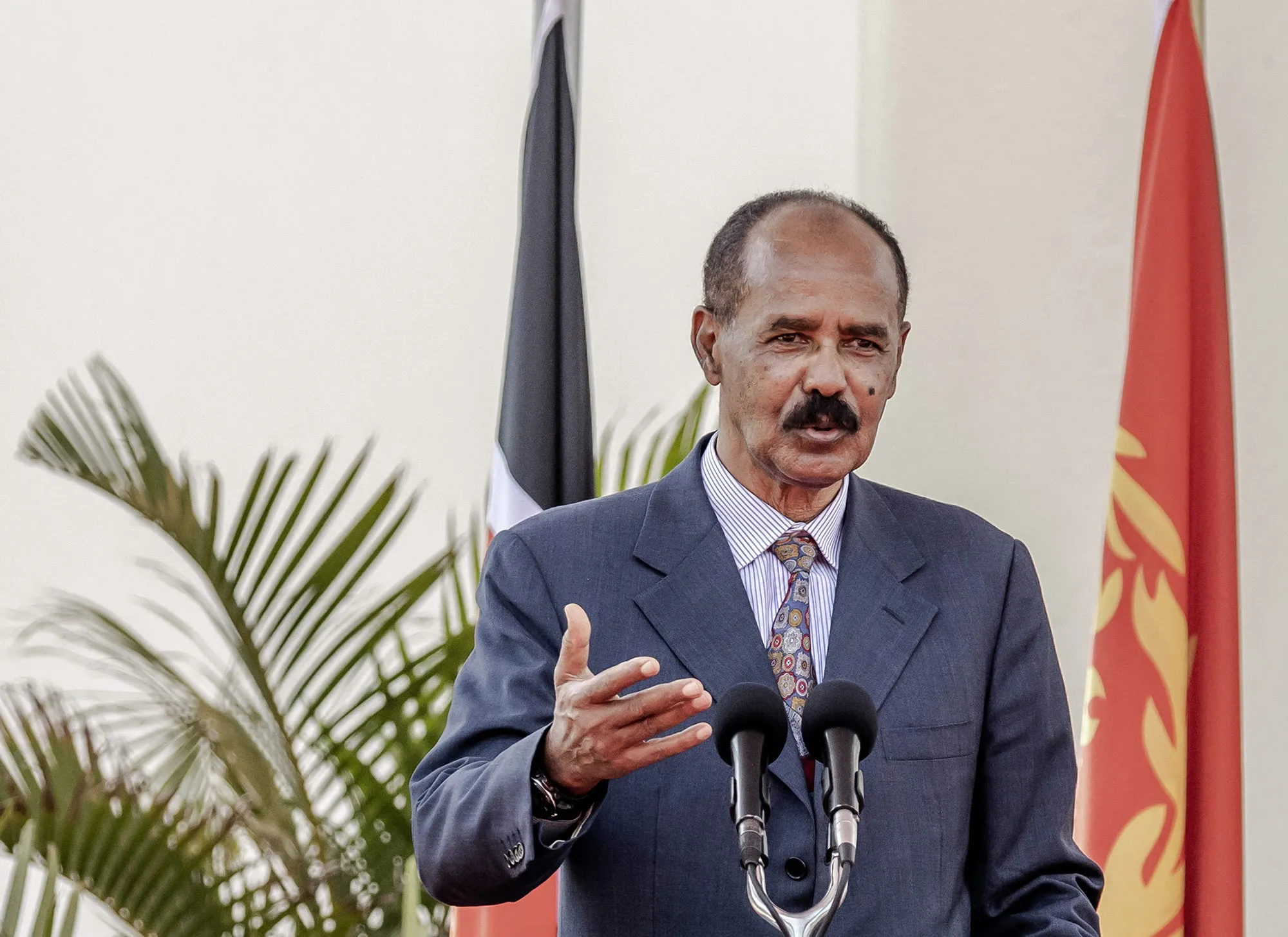
Isaias Afwerki (born 2 February 1946) is the first and only President of Eritrea, in office since the country attained independence in 1993. A revolutionary leader and founding figure of the Eritrean People’s Liberation Front (EPLF), Afwerki spent three decades waging an armed struggle against successive Ethiopian governments, culminating in Eritrea’s de facto independence in 1991 and formal statehood after a UN-supervised referendum. He emerged from the liberation war as a dominant nationalist figure, revered by supporters as the architect of Eritrean sovereignty. Since independence, Afwerki has presided over one of the world’s most closed and centralized political systems. Eritrea operates as a one-party state with no national elections, no constitution fully implemented, no independent media, and mandatory, open-ended national service, conditions that have driven widespread emigration and international isolation. Despite this, Afwerki has reasserted himself in recent years as a strategic regional actor in the Horn of Africa, particularly through alliances with Ethiopia and Somalia and opposition to Western and multilateral pressure, positioning Eritrea as an influential—if opaque—geopolitical player.
AI-powered civic intelligence rating
Led Eritrea to independence (1991–1993): Oversaw the successful conclusion of a 30-year liberation war and the birth of a sovereign state.
Built a unified post-war state: Established central authority and national institutions following independence.
Maintained regime survival under isolation: Withstood decades of sanctions, diplomatic pressure, and economic hardship.
Absence of democratic governance: No national elections since independence; constitution ratified in 1997 never implemented.
Indefinite national service: Mandatory, open-ended conscription widely condemned as forced labor.
Severe human-rights record: Arbitrary detention, lack of due process, and total media suppression documented by UN bodies.
News articles featuring Isaias Afwerki
Re-emerged as a regional power broker: Played a pivotal role in the Ethiopia–Eritrea rapprochement (2018) and wider Horn of Africa realignments.
Mass migration crisis: Eritrea remains one of the world’s top refugee-producing countries relative to population size.