We're loading the complete profile of this person of interest including their biography, achievements, and contributions.
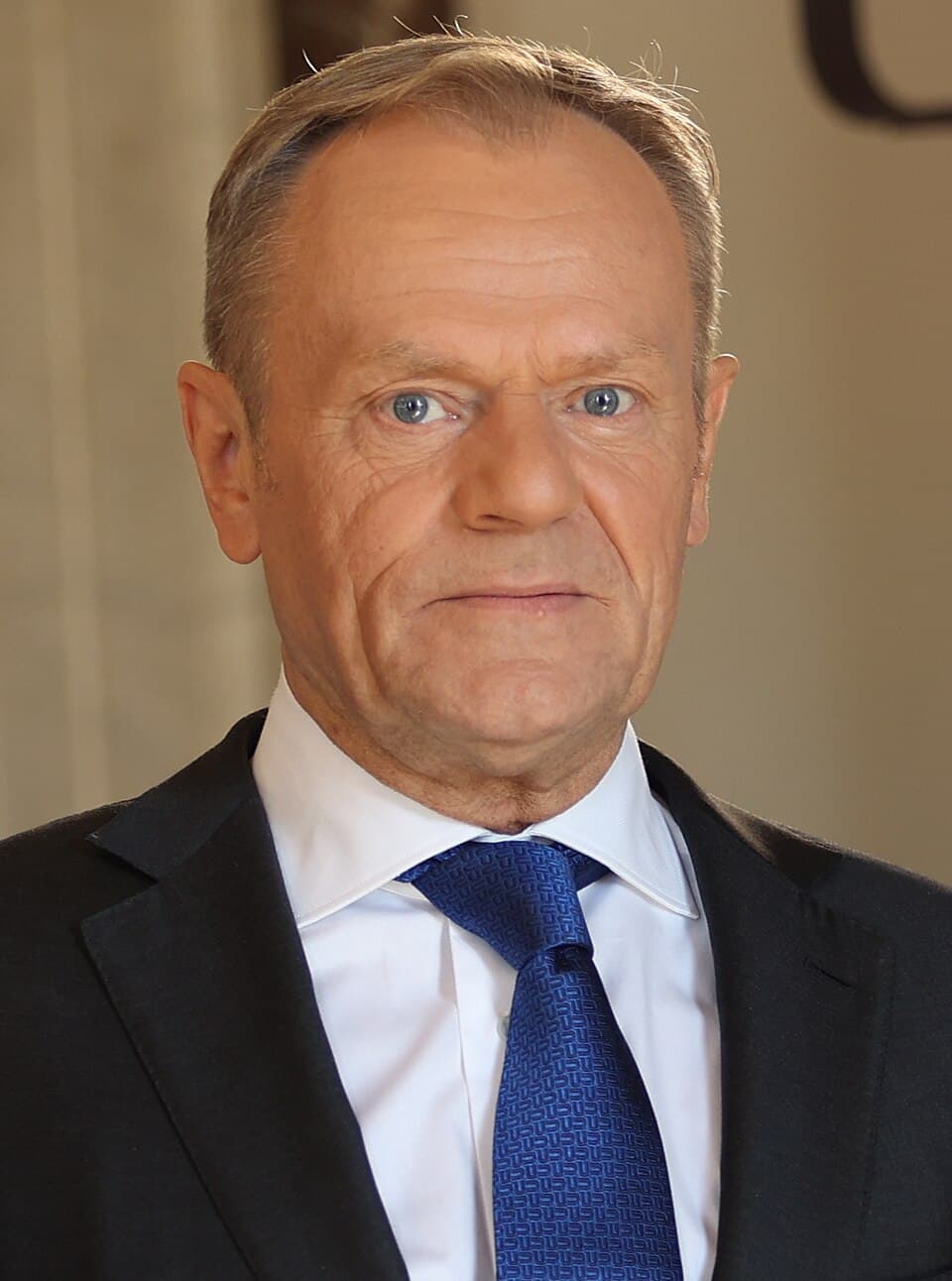
Prime Minister of Poland
Public Views
Experience
Documented career positions
Donald Franciszek Tusk (born April 22, 1957) is a prominent Polish politician, historian, and the current Prime Minister of Poland, a position he has held since December 2023. A central figure in Polish and European politics for over three decades, Tusk is widely recognized as a champion of liberal democratic values, pro-European integration, and free-market principles. He is the only individual to have served as both a multi-term Prime Minister of Poland and as President of the European Council. Born and raised in the port city of Gdańsk, Tusk is of Polish and Kashubian heritage. His early life was shaped by the geopolitical realities of communist-era Poland. As a teenager, he witnessed the violent suppression of striking workers in 1970, an event he has cited as a formative moment in his political awakening. He enrolled at the University of Gdańsk in 1976 to study history, where he emerged as a student activist against the communist regime. He was instrumental in founding the Independent Students' Association (NZS) and became a prominent figure within the Solidarity movement. During the period of martial law in the early 1980s, he operated underground, co-founding the periodical *Przegląd Polityczny* (Political Review), which advocated for economic liberalism and the principles of liberal democracy. Following the collapse of communism in 1989, Tusk’s career in formal politics began in the early 1990s. He co-founded the Liberal Democratic Congress (KLD), a pro-business party, and was first elected to the Sejm (the lower house of the Polish parliament) in 1991. After the KLD merged with the Democratic Union to form the Freedom Union, Tusk continued his parliamentary work, serving as Deputy Speaker of the Senate starting in 1997. In 2001, he co-founded the Civic Platform (PO), a centrist party that would become a dominant force in Polish politics. He served as the party’s leader from 2003 to 2014 and again from 2021 to 2025, ultimately merging the party into the Civic Coalition (KO). Tusk first ascended to the premiership in 2007, serving as Prime Minister of Poland until 2014. During this tenure, his government focused on economic stabilization, maintaining steady growth during the global financial crisis of 2008, and fostering closer ties with European Union partners. In 2011, he became the first Prime Minister of the Third Polish Republic to be re-elected, cementing his status as one of Poland's most significant political figures of the post-communist era. In 2014, Tusk resigned as Prime Minister to accept the presidency of the European Council. During his two terms in Brussels (2014–2019), he navigated the European Union through multiple crises, including the Greek debt crisis, the European migrant crisis, and the United Kingdom's decision to leave the EU. Following his tenure in Europe, he served as the President of the European People's Party (EPP) from 2019 to 2022. In 2021, Tusk returned to active Polish politics, assuming leadership of the Civic Platform to challenge the ruling Law and Justice (PiS) party. In the 2023 parliamentary election, he successfully united opposition forces, leading to his appointment as Prime Minister for the third time in December 2023. His current administration has prioritized judicial reform, the restoration of rule-of-law standards, and the strengthening of Poland's position within the European Union. Tusk is married to Małgorzata Tusk, a historian, and they have two children, Michał and Katarzyna. His political legacy is characterized by his unwavering commitment to liberal conservatism and his efforts to integrate Poland firmly within the Western liberal order.
AI-powered civic intelligence rating
Engineered a historic political comeback to win the 2023 Polish parliamentary elections, unseating the populist PiS government and instantly restoring Warsaw's strained relationship with Brussels
Served as the President of the European Council (2014–2019), navigating the EU through the Brexit negotiations and the Greek debt crisis
His aggressive, rapid purging of PiS appointees from the state-run TV network (TVP) and the national prosecutor's office in early 2024 sparked immense legal controversy, with the Polish President (a PiS ally) accusing Tusk of violating the constitution and acting like a dictator
Deeply resented by the populist right in Poland who view him as an elitist, globalist puppet controlled by Germany and the bureaucrats in Brussels
His government faces intense friction with Ukrainian leadership regarding the massive influx of cheap Ukrainian agricultural exports, forcing Tusk to appease angry Polish farmers by blocking grain shipments
News articles featuring Donald Tusk
Oversaw the unfreezing of €137 billion in EU structural funds for Poland after successfully passing legislation to restore the independence of the Polish judiciary
Leading the most aggressive military expansion in modern European history, making Poland the premier land army in NATO
Co-founded the Independent Students' Association (NZS) in 1980.
Founded the underground monthly political journal Przegląd Polityczny in 1983.
Elected to the Sejm (lower house of the Polish parliament) for the first time in 1991.
Appointed deputy chairman of the Freedom Union (UW) in 1994.
Elected to the Senate of Poland and served as Deputy Marshal in 1997.
Co-founded the Civic Platform (PO) political party in 2001.
Became the leader of the Civic Platform (PO) in 2003.
Elected Prime Minister of Poland in 2007.
Awarded the International Charlemagne Prize of Aachen in 2010 for his commitment to European unification.
Re-elected Prime Minister of Poland in 2011, becoming the first to win re-election in post-communist Poland.
Elected President of the European Council in 2014.
Re-elected as President of the European Council for a second term in 2017.
Elected President of the European People's Party (EPP) in 2019.
Returned to lead the Civic Platform (PO) party in 2021.
Elected Prime Minister of Poland for a second time in 2023.
Awarded the Chatham House Prize in 2024 for his efforts to restore democracy and the rule of law in Poland.
In 2012, Tusk faced significant public criticism during the collapse of Amber Gold, a financial pyramid scheme, after it was revealed that his son, Michał Tusk, had worked for OLT Express, a subsidiary linked to the firm. Opposition politicians accused the Tusk government of failing to properly supervise state institutions and warn citizens about the fraudulent nature of the business, though Tusk denied any involvement in wrongdoing.
Throughout his political career, Tusk has been a frequent target of accusations from the Law and Justice (PiS) party, which has repeatedly labeled him a 'German agent' or a traitor who serves foreign interests. These allegations often date back to a 2005 smear campaign regarding his grandfather's service in the German Wehrmacht during World War II, a claim that has been widely dismissed by historians and critics as a political tactic.
Following the 2010 Smolensk air disaster that killed President Lech Kaczyński and 95 others, Tusk faced years of intense criticism from PiS members, who alleged that his government was complicit in a cover-up or incompetent in its handling of the investigation. While official Polish and international investigations concluded the crash was an accident, the topic remained a deeply polarizing political issue used to attack his credibility for over a decade.
In 2023, the Polish government passed a law establishing a committee to investigate 'Russian influence' in Poland, which was widely criticized by domestic and international observers as a targeted attempt to disqualify Tusk from public office. Known colloquially as 'Lex Tusk,' the legislation was eventually amended following widespread backlash and concerns regarding its constitutionality and democratic implications.