Loading Person Profile...
We're loading the complete profile of this person of interest including their biography, achievements, and contributions.
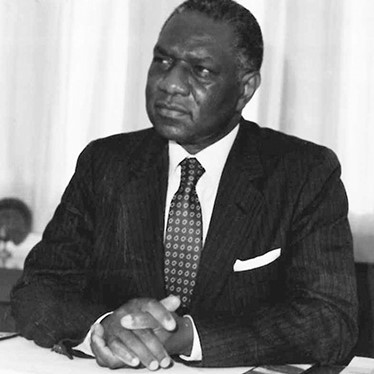

Founder of ICIPE & Renowned Entomologist
Thomas Risley Odhiambo was a Kenyan entomologist and institution-builder who turned a visionary idea into enduring scientific infrastructure. Educated at Makerere and at Queens’ College, Cambridge, he returned to Nairobi and, in 1970, founded the International Centre of Insect Physiology and Ecology (icipe). He argued—first in a widely noted Science review—that Africa needed a few centres of excellence to tackle vector-borne disease and crop loss, then set about creating one: recruiting top scientists, starting in modest barracks at the University of Nairobi’s Chiromo campus, and training a generation of African researchers. Under his leadership, icipe grew into a world-class hub whose “4Hs” lens—human, animal, plant, and environmental health—advanced work on tsetse and mosquito vectors, cereal and horticultural pests, and beneficial insects such as bees and silkworms.

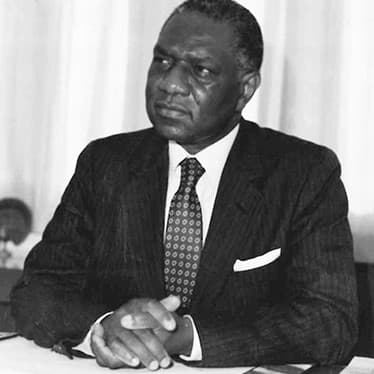
Prof. Thomas R. Odhiambo
Founder of ICIPE & Renowned Entomologist
Trusted Network
Our editorial and intelligence teams connect influential profiles with vetted businesses offering premium services across Kenya. Discover partners aligned with Prof. Thomas R. Odhiambo’s focus areas.
Get to know the story behind the profile.
Thomas Risley Odhiambo was a Kenyan entomologist and institution-builder who turned a visionary idea into enduring scientific infrastructure. Educated at Makerere and at Queens’ College, Cambridge, he returned to Nairobi and, in 1970, founded the International Centre of Insect Physiology and Ecology (icipe). He argued—first in a widely noted Science review—that Africa needed a few centres of excellence to tackle vector-borne disease and crop loss, then set about creating one: recruiting top scientists, starting in modest barracks at the University of Nairobi’s Chiromo campus, and training a generation of African researchers. Under his leadership, icipe grew into a world-class hub whose “4Hs” lens—human, animal, plant, and environmental health—advanced work on tsetse and mosquito vectors, cereal and horticultural pests, and beneficial insects such as bees and silkworms. Beyond insect science, Odhiambo architected pan-African knowledge institutions. He founded the African Academy of Sciences and served as its first president, helped launch the Kenya National Academy of Sciences, and was among the founding figures linked to TWAS. His leadership was recognized globally: he shared the 1987 Africa Prize for Leadership for the Sustainable End of Hunger with Senegal’s President Abdou Diouf and was elected to bodies such as the Pontifical Academy of Sciences. The throughline of his career—building African-led institutions able to solve African problems—left a durable legacy in policy, research capacity, and scientific self-reliance across the continent.
Highlights that showcase impact and influence.
Founder and first Director of ICIPE (1970)
Founder of the African Academy of Sciences (1985)
First recipient of the Africa Prize for Leadership (1987)
Published hundreds of scientific papers
Received numerous honorary doctorates and global science awards

A timeline of pivotal roles and responsibilities.
Lecturer, University of Nairobi
Founder & Director, ICIPE (1970-1994)
Founder & President, African Academy of Sciences (1985-1999)
Vice-Chancellor, Moi University
Credible mentions and reporting that reference this profile.
Fast answers for readers and reporters.
Thomas Risley Odhiambo was a Kenyan entomologist and institution-builder who turned a visionary idea into enduring scientific infrastructure. Educated at Makerere and at Queens’ College, Cambridge, he returned to Nairobi and, in 1970, founded the International Centre of Insect Physiology and Ecology (icipe). He argued—first in a widely noted Science review—that Africa needed a few centres of excellence to tackle vector-borne disease and crop loss, then set about creating one: recruiting top scientists, starting in modest barracks at the University of Nairobi’s Chiromo campus, and training a generation of African researchers. Under his leadership, icipe grew into a world-class hub whose “4Hs” lens—human, animal, plant, and environmental health—advanced work on tsetse and mosquito vectors, cereal and horticultural pests, and beneficial insects such as bees and silkworms.