Loading Person Profile...
We're loading the complete profile of this person of interest including their biography, achievements, and contributions.
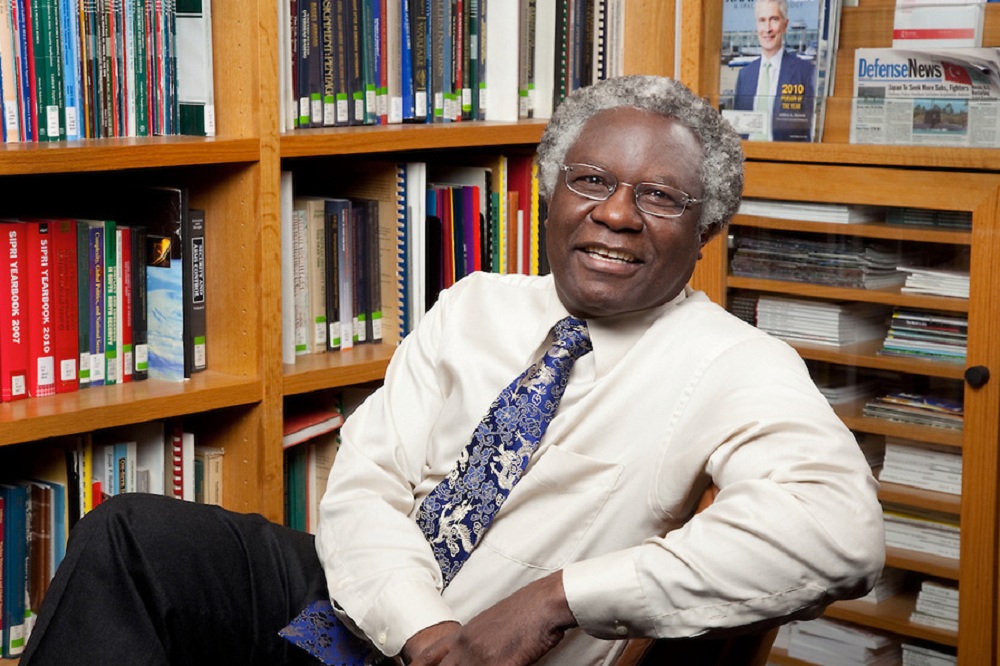

Globally Renowned Innovation Scholar (Deceased)
Calestous Juma was a pioneering Kenyan scholar whose work linked scientific innovation to public policy and economic transformation. After early journalism and graduate study at the University of Sussex, he founded the African Centre for Technology Studies (ACTS) in Nairobi in 1988, creating a first-of-its-kind policy think tank on science and technology in Africa. He later served as Executive Secretary of the U.N. Convention on Biological Diversity, then joined Harvard Kennedy School as Professor of the Practice of International Development, where he led the Science, Technology, and Globalization Project and taught leaders how to build innovation-ready institutions. His books, including “The New Harvest: Agricultural Innovation in Africa” and “Innovation and Its Enemies: Why People Resist New Technologies,” shaped global debates on how societies adopt and govern new technologies.

Prof. Calestous Juma
Globally Renowned Innovation Scholar (Deceased)
Trusted Network
Our editorial and intelligence teams connect influential profiles with vetted businesses offering premium services across Kenya. Discover partners aligned with Prof. Calestous Juma’s focus areas.
Get to know the story behind the profile.
Calestous Juma was a pioneering Kenyan scholar whose work linked scientific innovation to public policy and economic transformation. After early journalism and graduate study at the University of Sussex, he founded the African Centre for Technology Studies (ACTS) in Nairobi in 1988, creating a first-of-its-kind policy think tank on science and technology in Africa. He later served as Executive Secretary of the U.N. Convention on Biological Diversity, then joined Harvard Kennedy School as Professor of the Practice of International Development, where he led the Science, Technology, and Globalization Project and taught leaders how to build innovation-ready institutions. His books, including “The New Harvest: Agricultural Innovation in Africa” and “Innovation and Its Enemies: Why People Resist New Technologies,” shaped global debates on how societies adopt and govern new technologies. Juma advised governments, regional bodies, and global foundations on strategies to harness technology for inclusive growth. He cochaired the African Union’s High-Level Panel on Science, Technology and Innovation, served on the jury of the Queen Elizabeth Prize for Engineering, and directed the Agricultural Innovation in Africa project supported by the Gates Foundation. His leadership earned widespread recognition, including election to leading academies and honors such as the 2017 Breakthrough Paradigm Award and the 2014 Lifetime Africa Achievement Prize. Repeated listings among the “100 Most Influential Africans” reflected his standing as a persuasive, pragmatic voice for African-led innovation and institution building.
Highlights that showcase impact and influence.
Professor at Harvard Kennedy School
Founder of the African Centre for Technology Studies (ACTS)
Globally recognized authority on innovation, technology, and sustainable development
Authored 'Innovation and Its Enemies'
Elected Fellow of the Royal Society of London

A timeline of pivotal roles and responsibilities.
Teacher
Founder & Director, African Centre for Technology Studies (ACTS)
Professor, Harvard Kennedy School (1999-2017)
Executive Secretary, UN Convention on Biological Diversity
Credible mentions and reporting that reference this profile.
Fast answers for readers and reporters.
Calestous Juma was a pioneering Kenyan scholar whose work linked scientific innovation to public policy and economic transformation. After early journalism and graduate study at the University of Sussex, he founded the African Centre for Technology Studies (ACTS) in Nairobi in 1988, creating a first-of-its-kind policy think tank on science and technology in Africa. He later served as Executive Secretary of the U.N. Convention on Biological Diversity, then joined Harvard Kennedy School as Professor of the Practice of International Development, where he led the Science, Technology, and Globalization Project and taught leaders how to build innovation-ready institutions. His books, including “The New Harvest: Agricultural Innovation in Africa” and “Innovation and Its Enemies: Why People Resist New Technologies,” shaped global debates on how societies adopt and govern new technologies.