We're loading the complete profile of this person of interest including their biography, achievements, and contributions.
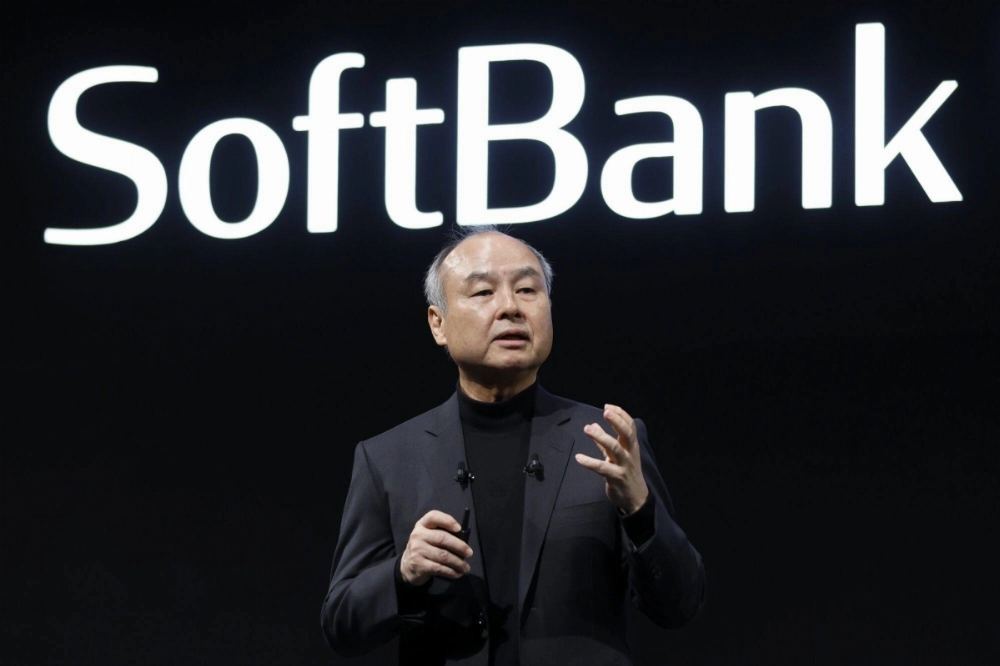
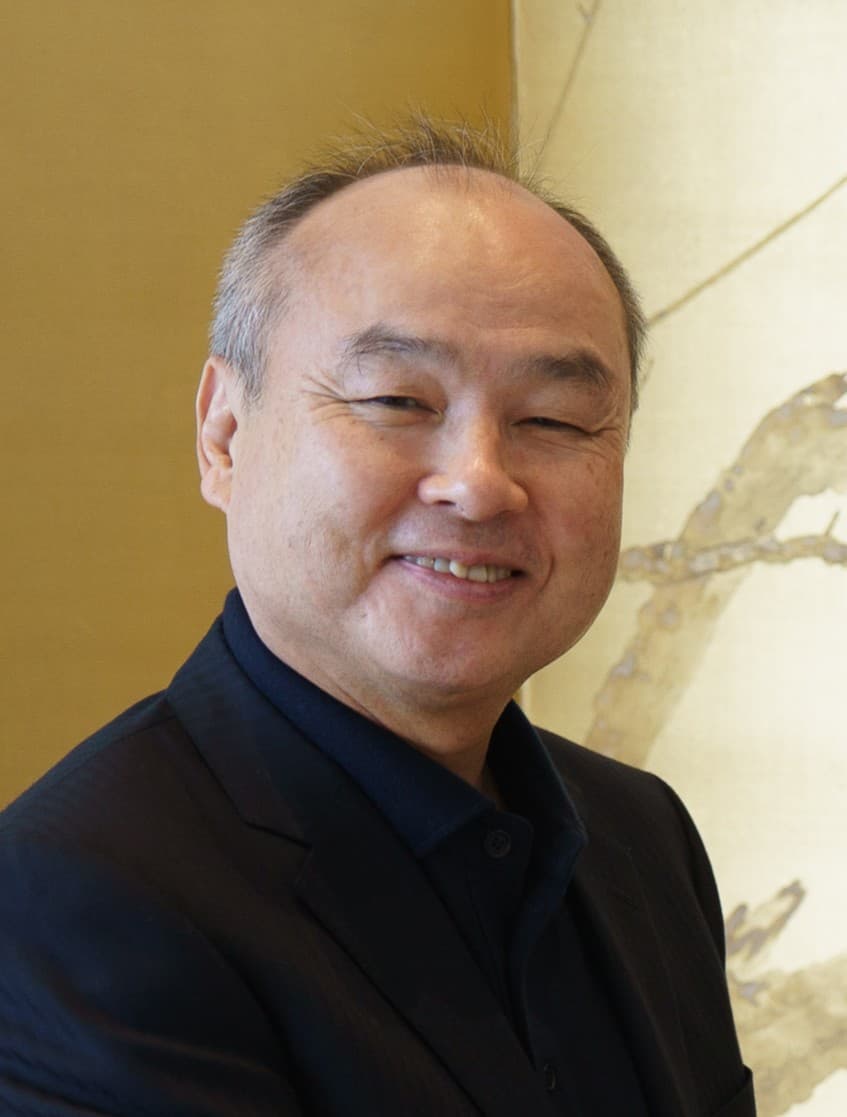
CEO, SoftBank Group
Public Views
Experience
Documented career positions
Masayoshi Son (born Masayoshi Yasumoto on August 11, 1957) is a prominent Japanese entrepreneur, investor, and philanthropist. He is best known as the founder, chairman, and chief executive officer of SoftBank Group, a global technology-focused investment conglomerate. Renowned for his aggressive investment strategies and long-term vision, Son is a central figure in the global venture capital landscape, having fundamentally shaped Japan’s technology and telecommunications sectors. Born in Tosu, Saga Prefecture, Japan, Son is a third-generation Zainichi Korean. His family roots trace back to the Japanese colonial period, during which his grandfather migrated to Japan as an economic migrant. Growing up, his family faced significant societal discrimination, which prompted them to adopt the Japanese surname Yasumoto. In his youth, Son demonstrated early entrepreneurial instincts and a drive for success. At the age of 16, he relocated to the United States, finishing high school in Oakland, California, and subsequently enrolling at the University of California, Berkeley. There, he studied economics and computer science, graduating in 1980. During his student years, Son exhibited his inventiveness by developing an electronic translator, which he successfully sold to Sharp Corporation for approximately $1.7 million. Upon returning to Japan in 1981, Son founded SoftBank, initially operating as a software distributor and publisher for the burgeoning personal computer market. Over the following decades, he transformed the company into a diversified multinational holding firm. SoftBank’s trajectory was marked by early, highly lucrative investments in internet-era companies, most notably a $20 million investment in Alibaba Group in 2000. This stake grew into one of the most profitable investments in history, providing the capital necessary to propel SoftBank’s subsequent global expansions. Son’s investment philosophy is characterized by a "cluster of No. 1s" strategy—aiming to acquire dominant stakes in market leaders across various technology sectors, including telecommunications, artificial intelligence, and e-commerce. In 2017, he solidified this approach by launching the SoftBank Vision Fund, an unprecedented venture capital vehicle backed by major sovereign wealth funds and global tech giants. The Vision Fund allowed Son to deploy capital at an unmatched scale, taking significant positions in companies such as Uber, DoorDash, ARM Holdings, and various AI startups. While these high-risk, high-reward bets have occasionally resulted in significant volatility—including major losses during the dot-com crash and subsequent market downturns—Son’s reputation for resilience and his long-term "300-year plan" for SoftBank have remained defining features of his leadership. In his personal life, Son is a naturalized Japanese citizen. He met his wife, Masami Ohno, while studying at UC Berkeley, and the couple has two daughters. He is an avid proponent of technological advancement, often emphasizing the potential of artificial intelligence to revolutionize the future of humanity. Beyond his business interests, he is a notable figure in Japanese culture, having owned the Fukuoka SoftBank Hawks professional baseball team. Today, Son continues to helm SoftBank Group, pivoting the conglomerate increasingly toward the AI infrastructure sector, including major collaborations aimed at advancing generative AI technology and large-scale computing capacity. His legacy is that of a bold financier who bridged the gap between traditional Japanese industry and the volatile, high-growth global technology market.
Created the $100 billion Vision Fund, the world's largest tech-focused VC fund
Early $20 million investment in Alibaba turned into tens of billions
Acquired Arm Holdings, a critical semiconductor IP company
The WeWork debacle ($4.4 billion loss) and relationship with Adam Neumann
Record-breaking financial losses for SoftBank in 2022 ($23 billion)
Criticism for inflating tech startup valuations globally
News articles featuring Masayoshi Son
Richest man in Japan (periodically)
Patented an electronic dictionary device and sold the design to Sharp Corporation for approximately $1 million in 1979.
Graduated from the University of California, Berkeley with a degree in economics in 1980.
Founded SoftBank in Tokyo on September 3, 1981, initially as a distributor of computer software.
Took SoftBank public on the over-the-counter market in 1994.
Invested $2 million in Yahoo! in 1995 and subsequently founded Yahoo! Japan as a joint venture in 1996.
Invested $20 million in Alibaba in 2000, which became one of the most successful venture capital investments in history.
Acquired Vodafone Japan for $15.6 billion in 2006, marking SoftBank's entry into the mobile telecommunications market.
Acquired a majority stake in the U.S. wireless carrier Sprint Corporation in 2013 for approximately $21.6 billion.
Acquired British semiconductor company ARM Holdings for $32 billion in 2016.
Established the SoftBank Vision Fund, a $100 billion investment fund dedicated to technology, in 2017.
Oversaw the successful IPO of Arm Holdings on the Nasdaq stock exchange in 2023.
In 2019, Masayoshi Son faced significant criticism and financial losses following the collapse of WeWork's proposed IPO and subsequent valuation nosedive. Son publicly admitted that his investment judgment was 'poor' and that he had 'overestimated' the value of the company while ignoring serious corporate governance issues.
In 2018, SoftBank and Masayoshi Son faced widespread public and media backlash for maintaining deep investment ties with Saudi Arabia's sovereign wealth fund following the murder of journalist Jamal Khashoggi. While Son publicly condemned the killing as an 'act against humanity,' he faced criticism for refusing to sever the financial partnership, citing responsibility to the Saudi people and the need to continue the fund's work.
In 2020, SoftBank came under scrutiny regarding its $1 billion investment in the German payment processor Wirecard, which collapsed shortly thereafter due to a massive accounting fraud scandal. Observers and regulators questioned the adequacy of SoftBank's due diligence, as the investment was made despite existing allegations of financial irregularities at the company.
Throughout the late 2010s and early 2020s, Son faced persistent criticism from business analysts and corporate governance experts regarding the high-risk, aggressive investment strategy of the SoftBank Vision Fund. Critics argued that his practice of 'bidding up' startup valuations and providing excess capital disregarded fundamental business metrics, ultimately leading to historic losses for the firm and damaging his reputation as a shrewd investor.