We're loading the complete profile of this person of interest including their biography, achievements, and contributions.
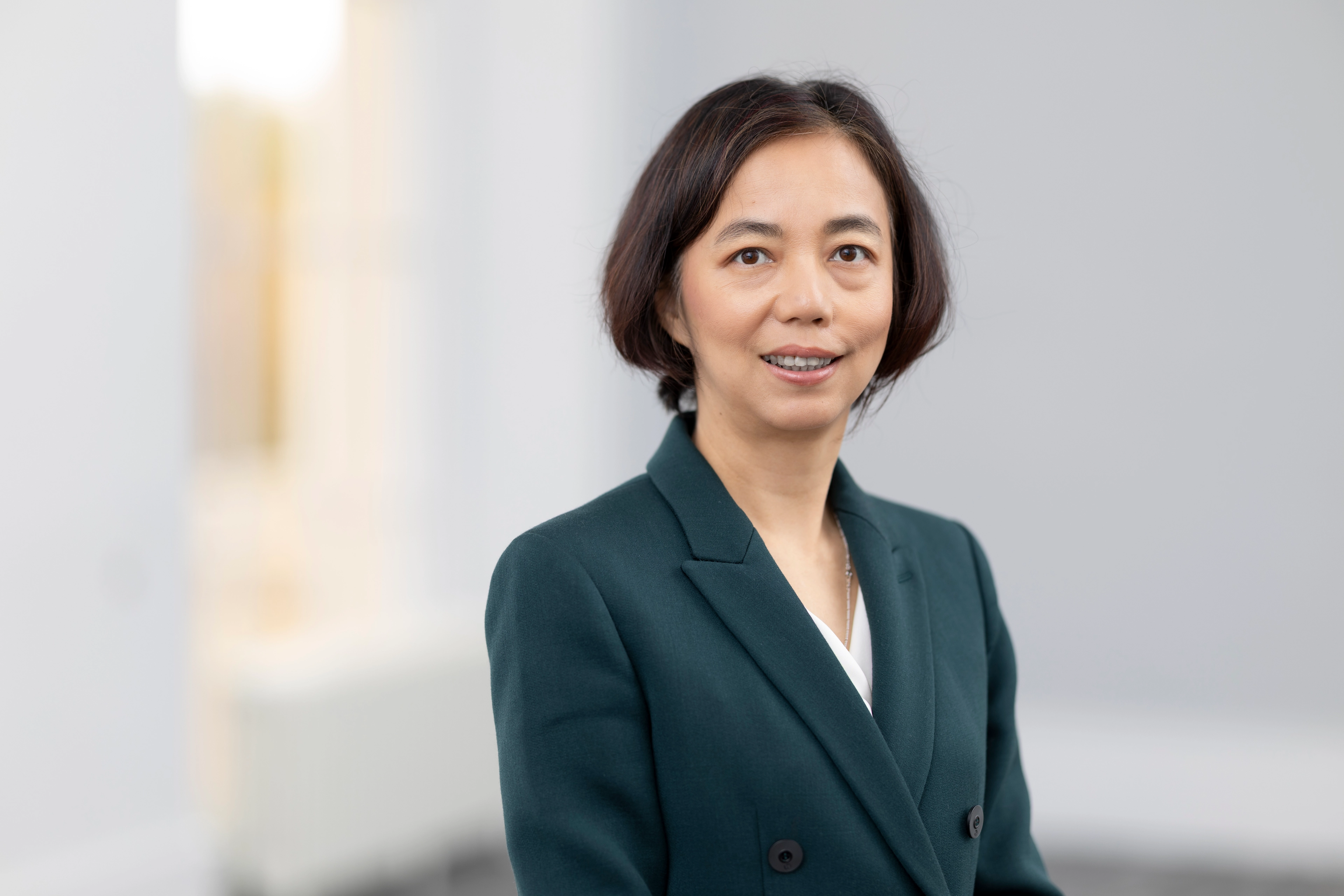
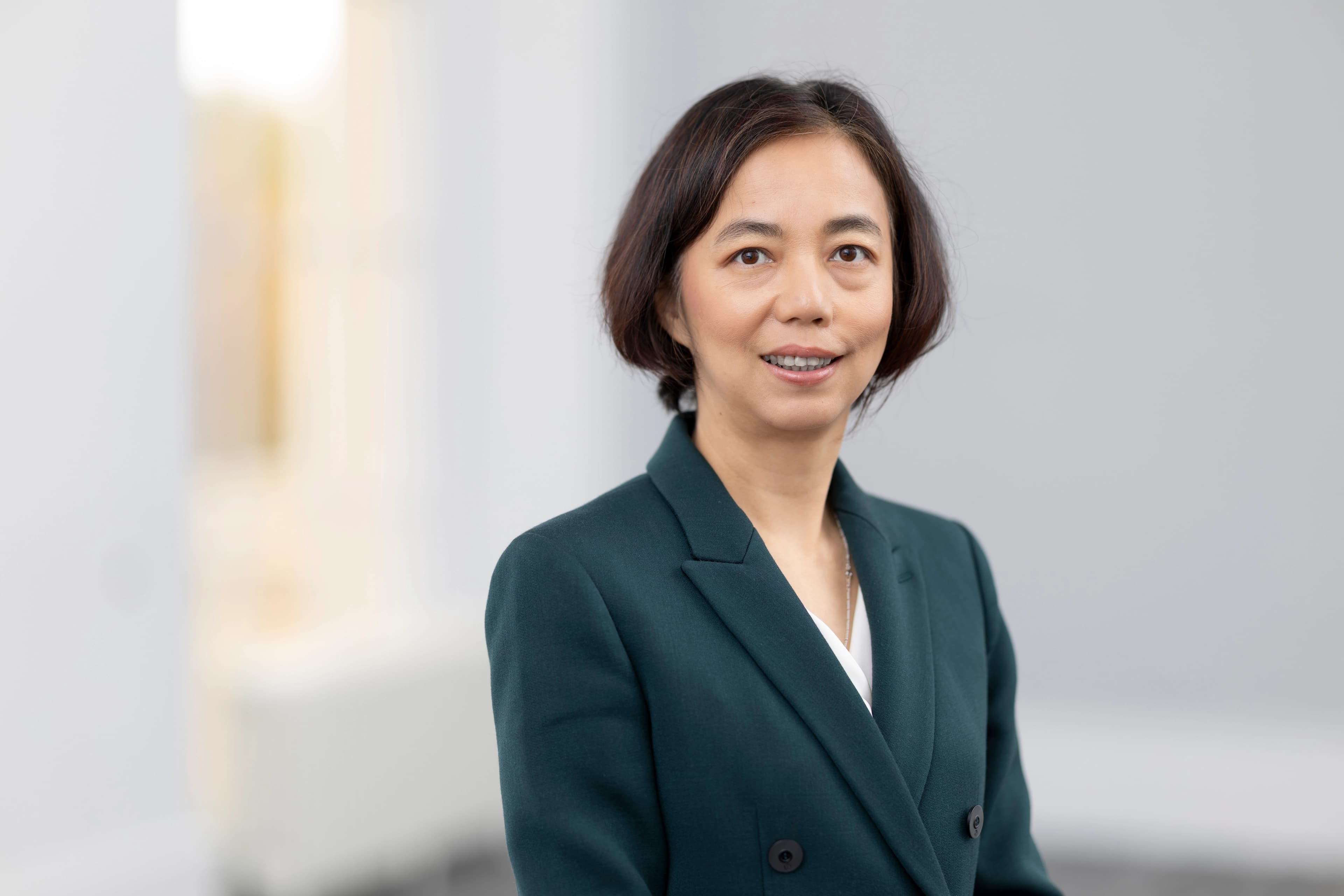
Co-Director, Stanford HAI & Founder, World Labs
Public Views
Experience
Documented career positions
Fei-Fei Li (born July 3, 1976) is a Chinese-born American computer scientist widely recognized as a pioneer in the field of artificial intelligence. Often referred to as the "Godmother of AI," she is best known for her groundbreaking contributions to computer vision, particularly the development of ImageNet, a massive visual database that catalyzed the modern deep learning revolution. Currently, she serves as the inaugural Sequoia Professor in the Department of Computer Science at Stanford University and is a founding co-director of the Stanford Institute for Human-Centered Artificial Intelligence (HAI). In 2024, she founded World Labs, a startup focused on developing "spatial intelligence" technology to enable AI to understand and interact with three-dimensional physical environments. Born in Beijing, China, Li was raised in Chengdu, Sichuan. In 1992, at the age of 16, she immigrated to the United States with her parents, settling in Parsippany, New Jersey. Her early experience in the U.S. was defined by economic challenges; she worked part-time jobs, including as a waitress and dry-cleaning assistant, while attending Parsippany High School. Encouraged by her high school math teacher, she pursued rigorous academic interests, eventually winning a scholarship to Princeton University. In 1999, she graduated with a Bachelor of Arts in physics with high honors. She subsequently earned her Ph.D. in electrical engineering from the California Institute of Technology (Caltech) in 2005, where her doctoral research focused on visual recognition and computational models. Li’s academic career began with faculty positions at the University of Illinois Urbana-Champaign (2005–2006) and Princeton University (2007–2009). She joined the Stanford University faculty in 2009 as an assistant professor. Her work at Stanford quickly gained international prominence through the creation of ImageNet. At a time when the AI community was largely focused on refining algorithms, Li hypothesized that the path to better machine learning lay in larger, more diverse datasets. She led the effort to crowdsource the annotation of millions of images, creating a hierarchical database that provided the necessary infrastructure for training deep convolutional neural networks. The annual ImageNet Large Scale Visual Recognition Challenge (ILSVRC) became a critical benchmark for the field, and its public release is widely credited with kickstarting the rapid advancement of deep learning and computer vision in the 2010s. From 2013 to 2018, Li served as the director of the Stanford Artificial Intelligence Laboratory (SAIL). During a sabbatical from 2017 to 2018, she served as a vice president at Google and the chief scientist of AI/ML at Google Cloud, where she contributed to the democratization of AI tools through platforms like AutoML. Beyond her technical contributions, Li is a vocal advocate for diversity and inclusion in technology. She co-founded the non-profit organization AI4ALL in 2017, which aims to increase representation in AI education for women and underrepresented minorities. She has also served on the boards of companies such as Twitter. In recent years, Li has expanded her focus toward "spatial intelligence," arguing that AI models need to move beyond language and image generation to understand the physical world in three dimensions. This ambition led to the founding of World Labs in 2024, a company that develops "large world models" capable of perceiving and interacting with 3D space. Li’s extensive professional honors include election to the National Academy of Engineering (2020), the National Academy of Medicine (2020), and the American Academy of Arts and Sciences (2021). In 2025, she was awarded the prestigious Queen Elizabeth Prize for Engineering for her foundational role in advancing deep learning. She is also a prolific researcher, with hundreds of peer-reviewed articles to her name, and an author of the memoir, *The Worlds I See: Curiosity, Exploration, and Discovery at the Dawn of AI*. She is married to computer scientist Silvio Savarese, with whom she has two children. Through her academic leadership, research, and policy advocacy, Li continues to shape the ethical and technical trajectory of artificial intelligence, emphasizing a human-centered approach to technological development.
Creator of ImageNet (2009), the foundational dataset that revolutionized computer vision and directly enabled the deep learning explosion of the 2010s
Co-Director of the Stanford Institute for Human-Centered AI (HAI), establishing the premier global academic institution dedicated to ensuring AI benefits humanity
Founded World Labs in 2024, rapidly raising over $230 million from a16z and reaching a $1 billion valuation to pioneer 'Spatial Intelligence' and 3D world models
Faced significant controversy during her tenure as Chief Scientist at Google Cloud (2017–2018) regarding 'Project Maven,' a highly classified Pentagon drone contract; internal leaked emails showed her deeply concerned about the public relations fallout of Google building 'weaponized AI,' eventually leading to Google abandoning the contract and her return to Stanford
Frequently clashes with the 'doomer' factions of the AI industry (like Eliezer Yudkowsky), arguing that hyper-focusing on hypothetical terminator-style extinction events distracts lawmakers from immediate, tangible harms like algorithmic bias and worker displacement
News articles featuring Fei-Fei Li
Co-Founder of AI4ALL, a non-profit dedicated to increasing diversity and inclusion in AI education and research
Earned a B.A. in physics from Princeton University in 1999, graduating with High Honors.
Awarded the Paul and Daisy Soros Fellowship for New Americans in 1999.
Obtained an M.S. in electrical engineering from the California Institute of Technology in 2001.
Received a Ph.D. in electrical engineering from the California Institute of Technology in 2005.
Received the Microsoft Research New Faculty Fellowship in 2006.
Received the National Science Foundation (NSF) CAREER Award in 2009.
Joined Stanford University as an assistant professor in 2009.
Established ImageNet, a massive visual database that became a catalyst for the modern deep learning and AI revolution, in 2009.
Received the Alfred P. Sloan Faculty Award in 2011.
Served as the Director of the Stanford Artificial Intelligence Laboratory (SAIL) from 2013 to 2018.
Recognized as one of the Leading Global Thinkers by Foreign Policy in 2015.
Named one of the 'Great Immigrants: The Pride of America' by the Carnegie Corporation of New York in 2016.
Received the IEEE PAMI Mark Everingham Prize and the IAPR J.K. Aggarwal Prize in 2016.
Co-founded AI4ALL, a nonprofit organization dedicated to increasing diversity and inclusion in AI, in 2017.
Served as Vice President at Google and Chief Scientist of AI/ML at Google Cloud from 2017 to 2018.
Received the Intel Lifetime Achievements Innovation Award in 2017.
Named an ACM Fellow in 2018.
Appointed as Co-Director of the Stanford Institute for Human-Centered Artificial Intelligence (HAI) in 2019.
Received the IEEE PAMI Longuet-Higgins Prize and the National Geographic Society Further Award in 2019.
Elected as a member of the National Academy of Engineering and the National Academy of Medicine in 2020.
Received the Caltech Distinguished Alumni Award in 2020.
Joined the board of directors of Twitter as an independent director in 2020.
Elected as a member of the American Academy of Arts and Sciences in 2021.
Awarded the IEEE PAMI Thomas Huang Memorial Prize in 2022.
Received an honorary doctorate from Harvey Mudd College in 2022.
Appointed to the United Nations Scientific Advisory Board by Secretary-General António Guterres in 2023.
Named one of Time magazine’s 100 Most Influential People in AI in 2023.
Published the popular science memoir 'The Worlds I See: Curiosity, Exploration and Discovery at the Dawn of AI' in 2023.
Founded the AI startup World Labs in 2024.
Awarded the VinFuture Prize in 2024.
Received the Woodrow Wilson Award from Princeton University in 2024.
Awarded the Queen Elizabeth Prize for Engineering in 2025.
Named as one of the 'Architects of AI' and included in Time’s Person of the Year for 2025.
Received an honorary doctorate from Yale University in 2025.
In 2018, while serving as Chief Scientist of AI/ML at Google Cloud, Li faced public scrutiny during the 'Project Maven' controversy. Leaked internal emails revealed that she expressed concern regarding the potential for negative media coverage ('red meat to the media') regarding Google's involvement in a military-linked drone surveillance project, which led some critics to question whether her primary focus was on corporate optics rather than the ethical implications of the technology.
During her tenure at Google (2017–2018), Li led the establishment of a Google AI research lab in Beijing. This initiative drew criticism from some U.S. lawmakers and commentators who expressed concern over potential dual-use technology transfers to China, given the country's 'military-civilian fusion' policies, although Li maintained that the lab focused on basic research.