We're loading the complete profile of this person of interest including their biography, achievements, and contributions.
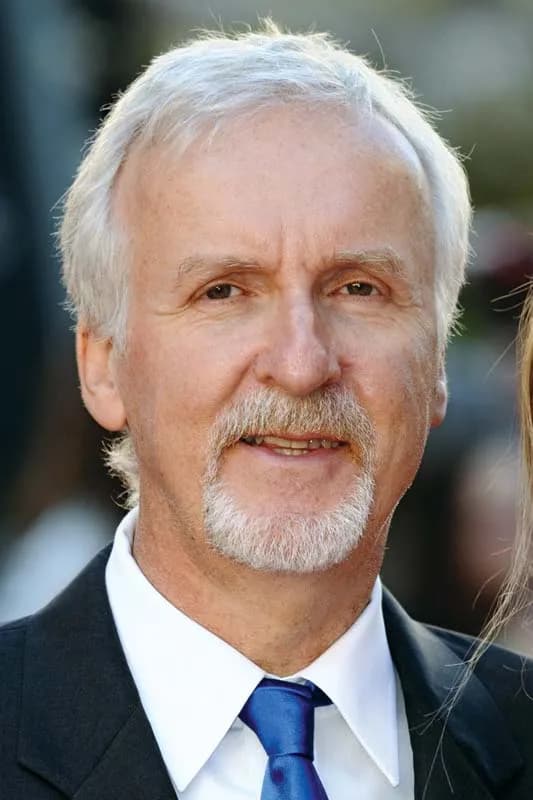
Film Director, Explorer & Innovator
Public Views
Experience
Documented career positions
James Francis Cameron, born August 16, 1954, in Kapuskasing, Ontario, Canada, is a prominent filmmaker, inventor, and deep-sea explorer, widely recognized for his pioneering contributions to cinema and oceanographic research. Throughout his career, Cameron has established himself as one of the most successful and influential directors in motion picture history, blending technical innovation with expansive, high-budget storytelling. His films are celebrated for their groundbreaking visual effects and have frequently set global box-office records. Cameron spent his childhood in Chippawa, Ontario, before his family relocated to Brea, California, in 1971, when he was 17. His interest in film was ignited as a teenager after viewing Stanley Kubrick's 2001: A Space Odyssey. In California, he enrolled at Fullerton Community College to study physics, though he eventually transitioned to English literature before departing to pursue his own creative path. During this period, he worked various jobs, including as a machinist and a truck driver, while spending significant time at the University of Southern California library to self-educate on film technology, specifically optical printing and special effects. His professional career began in the late 1970s at New World Pictures, a production company operated by Roger Corman, where he gained foundational experience as a miniature model maker, art director, and production assistant. Cameron made his directorial debut with the 1981 film Piranha II: The Spawning. Although the film did not achieve critical success, it served as a catalyst for his transition to writing and directing his own projects. In 1984, he achieved a major breakthrough with the science fiction action film The Terminator, which not only established his reputation as a filmmaker capable of delivering high-concept, commercially viable hits but also launched the career of actor Arnold Schwarzenegger. Throughout the 1980s and 1990s, Cameron directed a string of highly successful films that pushed the boundaries of visual effects and action cinema, including Aliens (1986), The Abyss (1989), Terminator 2: Judgment Day (1991), and True Lies (1994). In 1997, he wrote, directed, and produced the historical epic Titanic, which became the first film to gross more than $1 billion worldwide. Titanic garnered 14 Academy Award nominations, tying a record at the time, and won 11, including Best Picture, Best Director, and Best Film Editing. Following a hiatus from narrative feature filmmaking, Cameron returned in 2009 with the science fiction epic Avatar, a project that utilized revolutionary 3D motion-capture technology and virtual production techniques. The film surpassed Titanic to become the highest-grossing film in history at that time. He continued the franchise with Avatar: The Way of Water (2022) and Avatar: Fire and Ash (2025), further cementing his status as a leader in cinematic technology. Beyond his film career, Cameron is an accomplished deep-sea explorer. His fascination with the ocean led him to form Earthship Productions, through which he has produced various documentaries, including Ghosts of the Abyss (2003) and Aliens of the Deep (2005). As a National Geographic explorer-in-residence, he has led numerous expeditions to shipwrecks and hydrothermal vents. In 2012, he achieved a historic milestone by becoming the first person to complete a solo dive to the Challenger Deep, the deepest point in the Mariana Trench, piloting the custom-built submersible Deepsea Challenger. Cameron’s personal life has been a subject of public interest throughout his career. He has been married five times: to Sharon Williams (1978–1984), Gale Anne Hurd (1985–1989), Kathryn Bigelow (1989–1991), Linda Hamilton (1997–1999), and Suzy Amis, whom he married in 2000. He and Amis have three children, and he also has a daughter with Hamilton. Cameron’s legacy is defined by his synthesis of technical ingenuity and grand-scale storytelling. He is frequently cited as a visionary who has fundamentally transformed the industry's approach to 3D cinematography, performance capture, and underwater production. Alongside his artistic contributions, he is a dedicated advocate for environmental sustainability, frequently using his platform to promote climate action, ocean conservation, and indigenous rights. He maintains citizenship in both Canada and New Zealand, continuing to influence both the creative and scientific communities.
Directed three of the four highest-grossing films in human history single-handedly dominating the global box office for over two decades
Fundamentally revolutionized visual effects performance capture and modern 3D cinematography through the creation of the Avatar franchise
Successfully piloted a custom-built submersible to the absolute deepest point of the Earths oceans the Challenger Deep in the Mariana Trench
His notoriously intense demanding and dictatorial behavior on set frequently leads to extreme friction with cast and crew earning him a reputation as one of the most difficult directors in Hollywood to work for
Faced significant backlash from some Indigenous groups who argued that the narrative of the Avatar films relies heavily on the white savior trope and appropriates Indigenous cultures for entertainment
Often criticized for taking an agonizingly long time between film releases spending over a decade to deliver the first Avatar sequel
News articles featuring James Cameron
Won three Academy Awards for Titanic including Best Picture and Best Director famously declaring himself King of the World
Began his directing career with the short film Xenogenesis in 1978.
Gained major recognition as a writer and director with the release of The Terminator in 1984.
Directed the critically acclaimed and commercially successful film Aliens in 1986.
Directed The Abyss in 1989, which featured pioneering underwater filming and visual effects techniques.
Directed Terminator 2: Judgment Day in 1991, which set new standards for computer-generated imagery in film.
Wrote, directed, and produced the historical epic Titanic in 1997, which became the first film to gross over $1 billion worldwide.
Won Academy Awards for Best Picture, Best Director, and Best Film Editing for Titanic in 1998.
Received honorary doctorate degrees from Carleton University and Brock University in 1998 for his contributions to the international film industry.
Co-founded the production company Lightstorm Entertainment.
Inducted into the Science Fiction Hall of Fame in 2002.
Released Avatar in 2009, which utilized a revolutionary 3D Fusion Camera System and became a record-breaking box office success.
Honored with a Visual Effects Society (VES) Lifetime Achievement Award in 2010.
Named one of Time magazine's 100 most influential people in the world in 2010.
Appointed as a National Geographic Explorer-in-Residence in 2011.
Became the first person to complete a solo descent to the bottom of the Mariana Trench, the deepest part of the ocean, in the Deepsea Challenger submersible in 2012.
Awarded the prestigious Explorers Club Medal in 2013 for his achievements in deep-sea exploration and technology.
Won a Primetime Emmy Award for Outstanding Documentary or Nonfiction Series for producing Years of Living Dangerously in 2014.
Co-founded the plant-based protein company Verdient Foods in 2017 to promote sustainable food production.
Named a Companion of the Order of Canada, the country's highest honor, in 2019.
Won a Primetime Emmy Award for Outstanding Documentary or Nonfiction Series for producing the nature series Secrets of the Whales in 2021.
Officially invested as a Companion of the Order of Canada at a ceremony at Rideau Hall in 2024.
Inducted into the Orange County Hall of Fame in 2025 for his contributions to film and his educational background in the region.
Won his seventh Saturn Award for Best Director in 2026, setting the record for the most wins in that category.
In the 1980s, science fiction author Harlan Ellison sued James Cameron and the studio behind 'The Terminator', alleging that the film plagiarized his 'Outer Limits' episodes 'Soldier' and 'Demon with a Glass Hand'. To avoid a prolonged legal battle, the production company settled out of court, and an acknowledgment to Ellison's work was added to the film's credits.
Following the 2009 release of 'Avatar', Cameron faced numerous copyright infringement and plagiarism lawsuits from various individuals, including artist Roger Dean, screenwriter Bryant Moore, and others who claimed the film borrowed from their concepts or works. Cameron and his studio, 20th Century Fox, successfully defended themselves against all these claims, with courts consistently finding that the film was an original work and dismissing the lawsuits.
Throughout his career, Cameron has faced recurring public and industry criticism regarding his demanding, perfectionist, and sometimes abrasive on-set behavior. While collaborators have frequently praised his visionary capabilities, reports from productions like 'The Abyss' and 'Titanic' have documented instances of intense pressure and conflict with cast and crew members, though Cameron has acknowledged and expressed regret for his past behavior in later interviews.