We're loading the full news article for you. This includes the article content, images, author information, and related articles.
In a massive blow to cartels threatening Kenya's food security, police in Eldoret have seized 600 bags of counterfeit fertiliser, exposing a syndicate adulterating government-subsidised inputs.
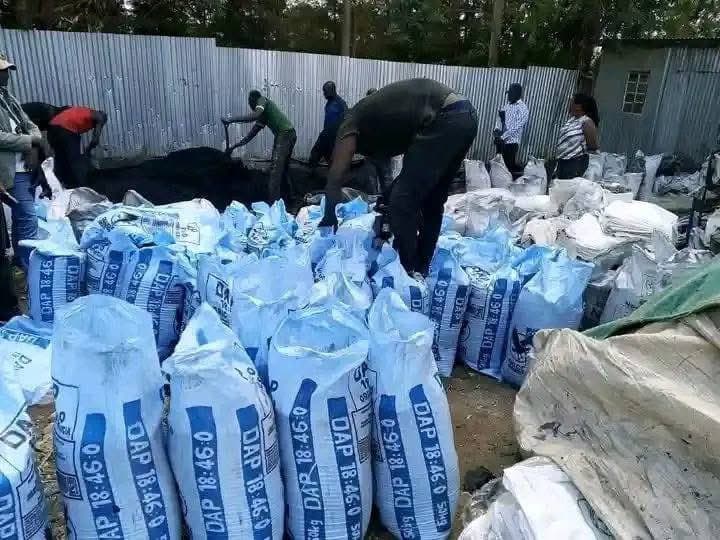
In a massive blow to cartels threatening Kenya's food security, police in Eldoret have seized 600 bags of counterfeit fertiliser, exposing a syndicate adulterating government-subsidised inputs.
The war on economic sabotage moved to the country's breadbasket this weekend as police in Eldoret, Uasin Gishu County, intercepted a significant cache of fake fertiliser. The raid, which netted 600 bags, has peeled back the layers of a cynical trade that preys on the desperation of farmers and undermines the government's flagship subsidy programme. The seizure is not just a law enforcement success; it is a crime scene investigation into the attempted murder of the impending harvest.
According to preliminary reports, the unscrupulous traders were repackaging adulterated substances—often sand or calcium carbonate mixed with colouring agents—into bags branded with reputable company logos and government subsidy tags. These bags were then being sold to unsuspecting farmers at premium prices. This double blow hits hard: the farmer loses money on the purchase and then loses the season's crop due to nutrient-deficient soil.
For the farmers of the North Rift, this is a betrayal of the highest order. With planting season approaching and the cost of living soaring, every seed and every ounce of fertiliser represents a calculated risk for survival. "We buy these bags thinking the government has helped us, only to find we are burying sand in our farms," lamented a local farmers' representative. The impact of such scams ripples through the economy—lower yields lead to higher maize flour prices, exacerbating inflation for the entire nation.
Food security is national security. The government's subsidy programme was designed to lower production costs and boost output. By infiltrating this supply chain, these cartels are effectively sabotaging the state's economic recovery plan. The police have indicated that this raid is just the beginning, with intelligence pointing to a wider network operating across the grain belt. The suspects are expected to face charges including obtaining money by false pretences and counterfeiting, but calls are mounting for stricter penalties for crimes that threaten the national food reserve.
Authorities are now urging farmers to be hyper-vigilant. The National Cereals and Produce Board (NCPB) and other agencies are rolling out verification systems, including SMS codes on bags, to help farmers authenticate inputs. However, as the cartels get more sophisticated in their packaging, the burden often falls on the farmer to spot the difference. This raid serves as a grim reminder that in Kenya's agricultural sector, the predators are not just pests in the field, but criminals in the warehouse.
Keep the conversation in one place—threads here stay linked to the story and in the forums.
Sign in to start a discussion
Start a conversation about this story and keep it linked here.
Other hot threads
E-sports and Gaming Community in Kenya
Active 9 months ago
The Role of Technology in Modern Agriculture (AgriTech)
Active 9 months ago
Popular Recreational Activities Across Counties
Active 9 months ago
Investing in Youth Sports Development Programs
Active 9 months ago