We're loading the full news article for you. This includes the article content, images, author information, and related articles.
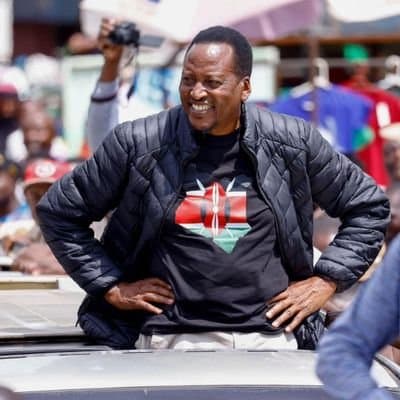
Governor George Natembeya warns that the Linda Mwananchi movement risks splitting the opposition vote, potentially handing President Ruto a 2027 re-election.

The political arithmetic of Kenya’s next electoral cycle is proving to be as brutal as it is predictable. Trans Nzoia Governor George Natembeya has issued a stark, uncompromising warning to the burgeoning Linda Mwananchi faction, cautioning that any attempt to formalize their dissent into a new political entity would effectively dismantle the opposition’s chances of unseating President William Ruto in 2027.
For the opposition, the stakes could not be higher. The internal friction within the Orange Democratic Movement (ODM) has created a fault line that threatens to derail the broad-based resistance strategy essential for challenging an entrenched incumbency. As political maneuvering intensifies, Governor Natembeya’s intervention serves as a sobering reminder of the historical cost of fragmentation in a winner-take-all electoral system.
The Linda Mwananchi movement—a vocal, youth-led faction within ODM—has positioned itself as the antithesis to the current party leadership’s accommodationist stance toward the government. Led by Nairobi Senator Edwin Sifuna, the group includes prominent legislators such as Embakasi East MP Babu Owino, Kisii Senator Richard Onyonka, and Vihiga Senator Godfrey Osotsi. Their core grievance centers on what they term a betrayal of party ideals through the recent "broad-based" political arrangement with the Kenya Kwanza administration.
While the movement has successfully tapped into genuine grassroots frustration over the cost of living and governance, Governor Natembeya argues that the transition from a movement to a political party is a strategic error. In a candid assessment provided during a televised interview this week, Natembeya characterized the potential split as a disaster in waiting. He noted that the movement’s policy critiques mirror the sentiments of the broader opposition, meaning that a formal separation would not necessarily create a new ideological force, but rather divide the existing opposition voter base.
The governor’s analysis is rooted in cold, hard electoral logic. Kenya’s political history is littered with the wreckage of fragmented opposition parties. In the 1992 and 1997 general elections, the opposition held a combined majority of votes but failed to unseat the incumbent because their support was splintered across multiple ethnic and regional blocs. These historical failures allowed President Daniel arap Moi to maintain power with roughly 36 percent of the total vote—a scenario that modern opposition leaders are desperate to avoid repeating.
Natembeya emphasized that the opposition cannot afford the luxury of vanity projects. He articulated a reality that many in the party hierarchies are hesitant to voice: that the Linda Mwananchi group, by branching off, would effectively be handing President Ruto an easier path to re-election. According to the governor, the current dispute should remain an internal matter rather than an existential crisis for the party, urging the factions to prioritize unity over individual identity.
Governor Natembeya was quick to distance himself from the internal squabbles of the ODM party, maintaining a stance of cautious observation. He clarified that he has not attended any Linda Mwananchi events and that, as a leader within the broader Azimio la Umoja One Kenya Coalition, he remains a spectator to the unfolding drama. However, his detached status has arguably given him the freedom to articulate the fears held by many in the wider opposition ecosystem.
The tension within the ODM has split the party into two distinct camps: those advocating for integration into the current government structure, and those pushing for a militant, outside-government stance. This dichotomy presents a significant challenge to the party’s cohesion. Leaders of the Linda Mwananchi movement, however, argue that they are not just looking for power but are attempting to hold the government and their own party leadership accountable. They contend that the "10-point agenda" which formed the basis of the current cooperation has been a failure, serving more as a political facade than a genuine policy framework for national recovery.
As the clock ticks toward the next general election, the pressure on opposition leaders to reconcile will only intensify. The Kenyan electoral landscape is unforgiving to disorganization. The central question remains whether the leaders of the Linda Mwananchi movement can find a path to influence policy without severing the structural ties that make the opposition a viable alternative government.
The history of Kenyan politics provides a clear trajectory: whenever the opposition has acted as a unified bloc, it has proven capable of significant democratic shifts. Whenever it has allowed itself to dissolve into factions, it has effectively cleared the way for the incumbent. Governor Natembeya’s warning is not merely an opinion it is a restatement of the governing realities of the state. Whether that message is heard in the halls of power, or ignored in favor of the allure of a new political vehicle, will determine the face of the 2027 race. Ultimately, the opposition stands at a crossroads: remain an uncomfortable whole, or shatter into a collection of insignificant parts.
Keep the conversation in one place—threads here stay linked to the story and in the forums.
Sign in to start a discussion
Start a conversation about this story and keep it linked here.
Other hot threads
E-sports and Gaming Community in Kenya
Active 9 months ago
The Role of Technology in Modern Agriculture (AgriTech)
Active 9 months ago
Popular Recreational Activities Across Counties
Active 9 months ago
Investing in Youth Sports Development Programs
Active 9 months ago
Key figures and persons of interest featured in this article