We're loading the full news article for you. This includes the article content, images, author information, and related articles.
A government-approved plan to have a Chinese state firm and Kenya's national pension fund build, own, and operate the critical Nairobi-Nakuru highway for 30 years has sparked fierce opposition from motorists, who cite threats to national sovereignty and unfair taxation.
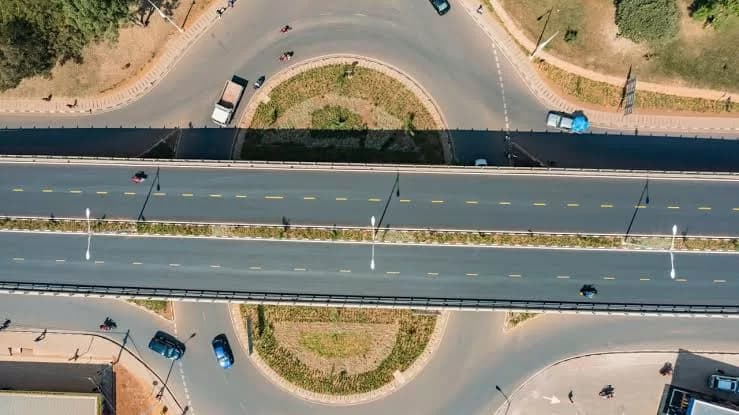
The Kenyan government has formally approved a consortium comprising China Road and Bridge Corporation (CRBC) and Kenya's National Social Security Fund (NSSF) to undertake the expansion and management of the vital Nairobi-Nakuru (A8) highway. The National Treasury’s Public-Private Partnership (PPP) Committee endorsed the project on Thursday, October 23, 2025, paving the way for the commencement of construction on the 175-kilometre Rironi-Mau Summit section. The project, estimated to cost between KSh 90 billion and KSh 200 billion, will be executed under a 30-year concession agreement, granting the consortium the right to build, operate, and transfer the highway. To recoup their investment, the consortium will introduce a tolling system, with proposed charges of KSh 8 per kilometre for passenger cars, subject to a 1% annual escalation.
The decision has been met with immediate and strong condemnation from the Motorists Association of Kenya (MAK). In a statement released Friday, October 24, 2025, MAK described the 30-year concession as a threat to Kenya's economic independence and sovereignty. The association argues that imposing tolls on the Northern Corridor, a critical artery for trade connecting Mombasa to Western Kenya and landlocked neighbours like Uganda and South Sudan, is discriminatory. "It is unacceptable to impose toll charges on Kenyans travelling westwards along the Northern Corridor while users of other major highways [like Thika Superhighway] enjoy free access," the association stated.
MAK has questioned the government's inability to fund the project through conventional means, such as taxes or development loans, without surrendering a strategic national asset to foreign control for three decades. The lobby group has launched an online petition to halt the project, arguing that Kenyans already contribute to road maintenance through the fuel levy, and introducing tolls amounts to double taxation. Concerns were also raised about the transparency of the PPP process, with MAK suggesting that delays in upgrading the perennially congested highway may have been engineered to justify private-sector involvement.
The Kenya National Highways Authority (KeNHA) and the National Treasury have defended the PPP model as a sustainable way to finance capital-intensive infrastructure projects without overburdening taxpayers or increasing public debt. Officials have highlighted that the CRBC-NSSF consortium was selected over a competing bid from another Chinese firm, Shandong Hi-Speed, because it proposed a lower base toll rate. A key detail of the agreement is that the consortium will bear the traffic and revenue risks, meaning the Kenyan taxpayer will not be liable to compensate the operator if traffic volumes fall below projections. This was a major sticking point that led to the cancellation of a previous, more expensive (KSh 190 billion) deal with a French consortium, which had demanded a government guarantee on revenue.
Transport Cabinet Secretary Davis Chirchir and Treasury Cabinet Secretary John Mbadi have previously stated that the expansion is essential to alleviate the chronic traffic congestion that plagues the route, which often results in motorists spending hours in gridlock, negatively impacting the economy. KeNHA has also noted that it conducted extensive public participation forums, engaging over 3,000 people across 65 meetings to incorporate public feedback into the project's design.
The involvement of the National Social Security Fund (NSSF) marks a significant shift in the pension fund's investment strategy. NSSF is expected to invest between KSh 20 billion and KSh 25 billion for a stake of up to 50% in the consortium. NSSF Managing Trustee David Koros stated that the investment is aimed at generating robust, long-term returns for pension contributors that are expected to outperform traditional investments like government securities. The move is part of a broader strategy to diversify the fund's portfolio and double its value to KSh 1 trillion in the medium term. However, the decision to use pension funds for a large-scale infrastructure project has drawn some criticism, with questions raised about the risk profile of such investments for workers' retirement savings.
The project is a central part of Kenya's Vision 2030 and the Bottom-Up Economic Transformation Agenda (BETA), aimed at enhancing regional trade and integration. The Northern Corridor is the busiest transport route in East and Central Africa, and its efficiency is crucial for the economies of Kenya and its landlocked neighbours. The shift towards PPPs, particularly with Chinese firms, reflects a broader trend in Africa as countries seek alternative financing for massive infrastructure needs amid growing debt concerns. While these partnerships can accelerate development, they also bring concerns about debt sustainability, labour practices, and long-term economic sovereignty, as seen in projects elsewhere on the continent. Construction is expected to begin by January 2026, with a completion target of June 2027. The outcome of this high-stakes project will be closely watched as a litmus test for Kenya's PPP framework and its long-term strategic partnership with China.
Keep the conversation in one place—threads here stay linked to the story and in the forums.
Sign in to start a discussion
Start a conversation about this story and keep it linked here.
Other hot threads
E-sports and Gaming Community in Kenya
Active 9 months ago
The Role of Technology in Modern Agriculture (AgriTech)
Active 9 months ago
Popular Recreational Activities Across Counties
Active 9 months ago
Investing in Youth Sports Development Programs
Active 9 months ago
Key figures and persons of interest featured in this article