We're loading the full news article for you. This includes the article content, images, author information, and related articles.
The Budget Committee Chair breaks ranks with the state, warning that a direct sale of 15% of Safaricom to Vodacom shortchanges taxpayers by billions.
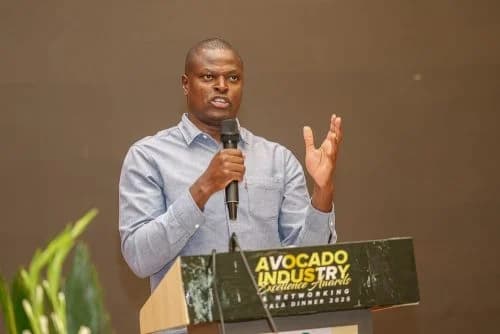
NAIROBI — In a sharp rebuke of his own government’s fiscal strategy, Kiharu MP and Budget Committee Chairperson Ndindi Nyoro has called for an immediate halt to the direct sale of a 15 percent state stake in Safaricom to South Africa’s Vodacom Group. His demand? Throw the doors open to competitive bidding.
Speaking at a church service in his constituency on Sunday, Nyoro argued that the proposed closed-door deal, priced at KES 34 per share, grossly undervalues Kenya’s most profitable asset. He warned that transferring majority control to a foreign entity without testing the market is akin to “selling the family cow to buy milk.”
At the heart of the dispute is the valuation of the 6 billion shares the National Treasury intends to offload. Treasury Cabinet Secretary John Mbadi has defended the deal, noting that the KES 34 price tag represents a 26 percent premium over Safaricom’s recent six-month trading average of KES 25-28 on the Nairobi Securities Exchange (NSE).
Nyoro, however, insists this math is flawed. He points to the telco’s 2021 peak of KES 45 per share and its massive earning potential, driven by M-Pesa and the Ethiopian expansion.
“Let us not rush to sell Safaricom shares,” Nyoro told the congregation. “Let’s open a competition of bids so that we can have many companies bidding... so that Kenyans can get full value for the stake we have.”
For the average Kenyan, this is not just a boardroom tussle; it is a question of economic sovereignty. Safaricom is not merely a telecom operator; it is the backbone of Kenya’s financial system through M-Pesa. Critics fear that ceding majority control (55 percent) to a Johannesburg-based entity could shift strategic priorities away from local needs.
The government argues the sale is a necessary evil. With debt repayments consuming nearly 40 percent of revenue, the KES 244.5 billion injection is earmarked for the National Infrastructure Fund and a new Sovereign Wealth Fund. CS Mbadi has maintained that the state’s remaining 20 percent stake, combined with regulatory safeguards, is sufficient to protect national interests.
“We are getting KES 34 per share; I do not know how you can negotiate better than that in the current market,” Mbadi stated in a recent interview, dismissing claims of undervaluation as lacking economic merit.
The controversy has exposed widening cracks within the ruling administration. Nyoro’s critique aligns him with unlikely allies, including former Deputy President Rigathi Gachagua, who recently characterized the asset sales as a desperate liquidation of “everything that is working.”
Nyoro also raised eyebrows by questioning the credentials of the government’s negotiators, alleging opacity in the transaction process. “The people who represented the government in this deal—probably some of them are not government employees... and maybe those people there are things they do with the buyers,” he alleged, without providing specific evidence.
As the Treasury pushes to finalize the transaction to meet fiscal targets, the call for a competitive process places the administration in a bind: proceed with the bird in hand, or risk the deal for a potentially higher—but uncertain—market valuation.
“Kenya needed money yesterday, today, and every other day,” Nyoro concluded. “But I will fight for our country until Kenyans get full value for their money.”
Keep the conversation in one place—threads here stay linked to the story and in the forums.
Sign in to start a discussion
Start a conversation about this story and keep it linked here.
Other hot threads
E-sports and Gaming Community in Kenya
Active 9 months ago
The Role of Technology in Modern Agriculture (AgriTech)
Active 9 months ago
Popular Recreational Activities Across Counties
Active 9 months ago
Investing in Youth Sports Development Programs
Active 9 months ago
Key figures and persons of interest featured in this article