We're loading the complete profile of this person of interest including their biography, achievements, and contributions.
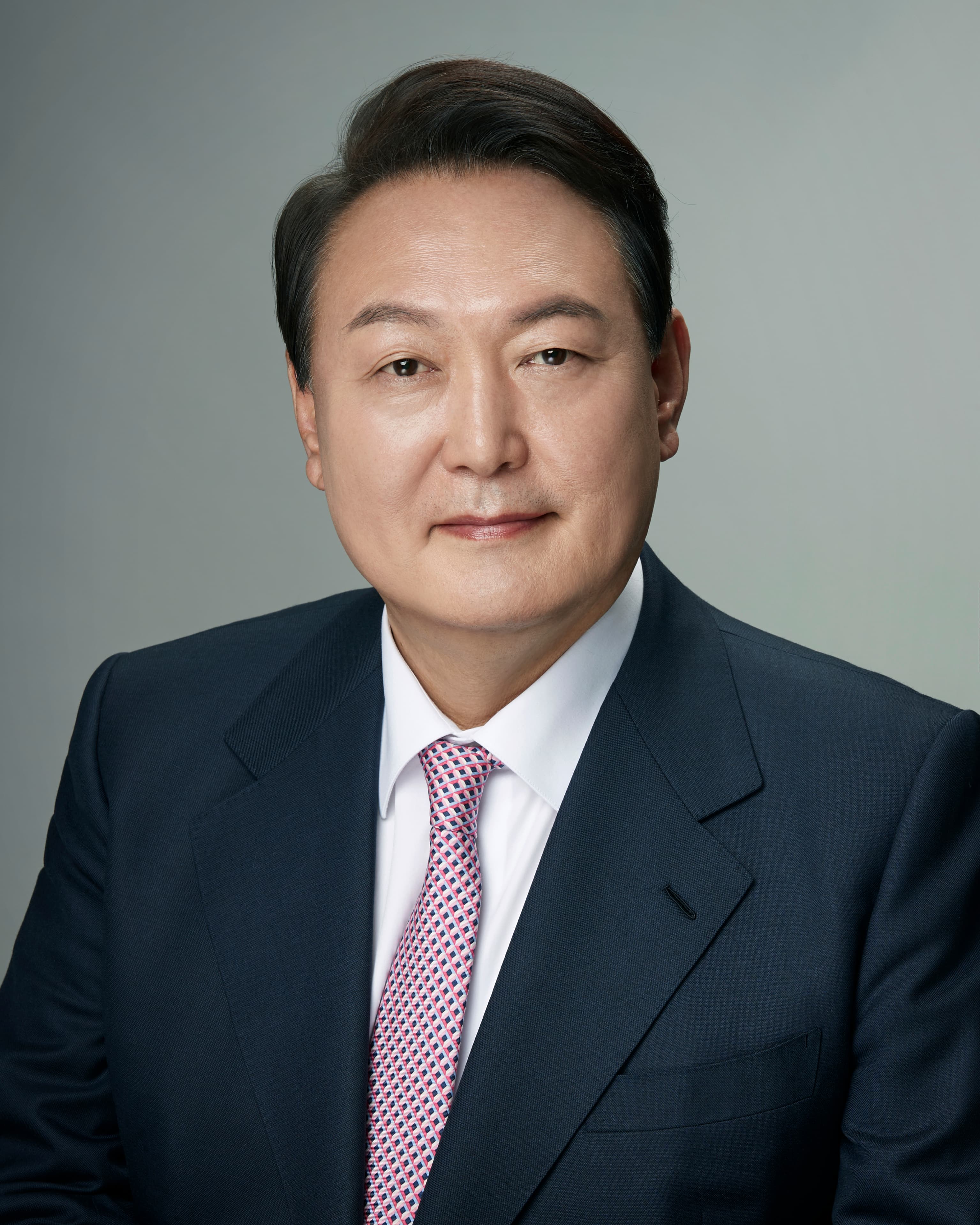
President of South Korea
Public Views
Experience
Documented career positions
Yoon Suk-yeol (born 18 December 1960) is a South Korean politician and former public prosecutor who served as the 13th president of South Korea from 2022 until his removal from office in 2025. His tenure, initially defined by a shift toward conservative policies and a hardline stance on national security, concluded in historic constitutional and political crisis following his attempted declaration of martial law in late 2024. Born in the Bomun-dong neighborhood of Seoul, Yoon was the son of Yoon Ki-joong, a prominent economist and professor at Yonsei University. He attended Chungam High School in Seoul, graduating in 1979, and went on to study law at Seoul National University, where he earned both his undergraduate and master's degrees. After several attempts, he passed the state bar examination in 1991. Yoon began his career as a public prosecutor in 1994 at the Daegu District Prosecutors' Office. Over the next three decades, he established a reputation as an incorruptible investigator known for pursuing high-profile political and corporate corruption. His career saw him serve in various district offices, including Seoul and Busan. A significant turning point in his reputation came in 2013 when he led a special investigation into the National Intelligence Service (NIS) for its involvement in public opinion manipulation during the 2012 presidential election. His insistence on investigating the matter led to professional friction with his superiors and his temporary demotion. He returned to prominence in 2016 as the lead investigator for the special prosecutor team that probed the corruption scandal involving President Park Geun-hye, Samsung vice-chairman Lee Jae-yong, and Choi Soon-sil, a case that ultimately led to the impeachment of President Park. In 2019, President Moon Jae-in appointed Yoon as Prosecutor General. However, his tenure as Prosecutor General became increasingly contentious, characterized by investigations into President Moon's own administration, leading to his resignation in March 2021. Following his resignation, Yoon entered electoral politics. He joined the conservative People Power Party (PPP) in July 2021 and successfully secured the party’s nomination for the 2022 presidential election. On March 9, 2022, he narrowly defeated Democratic Party nominee Lee Jae-myung by a margin of less than one percentage point, marking the closest election in South Korean history. Yoon assumed the presidency on May 10, 2022. Upon taking office, he moved the presidential executive office from the traditional Blue House complex to the Ministry of National Defense compound in the Yongsan district of Seoul, a move he characterized as a departure from imperial-style leadership. His presidency was marked by a foreign policy shift towards strengthening trilateral ties with the United States and Japan, and a more confrontational approach toward North Korea. Domestically, his administration faced significant challenges, including a legislative gridlock caused by the opposition-controlled National Assembly, low approval ratings, and various public controversies regarding his spouse, First Lady Kim Keon-hee. In December 2024, the administration reached a breaking point when Yoon declared martial law, citing the need to eliminate "pro-North Korean" anti-state forces. The declaration was met with immediate, widespread opposition; the National Assembly convened hours later and passed a motion to nullify the order, which Yoon subsequently complied with. The crisis triggered a rapid impeachment process. Yoon was impeached by the National Assembly on December 14, 2024, resulting in the suspension of his executive powers. The Constitutional Court subsequently upheld his removal from office in April 2025. Following his removal, Yoon faced legal proceedings, and in February 2026, he was convicted by the Seoul Central District Court on charges of orchestrating an insurrection and sentenced to life imprisonment.
Forged a historic, highly controversial rapprochement with Japan in 2023, setting aside decades of bitter historical disputes over wartime labor to build a unified security front against China and North Korea
Hosted the inaugural Nuclear Consultative Group (NCG) with the United States, securing explicit guarantees of US nuclear retaliation in the event of a North Korean attack
Suffers from dismally low domestic approval ratings, driven by a sputtering economy, frequent labor strikes (which he ruthlessly crushed using executive orders), and his perceived arrogant, unyielding governance style
His wife, First Lady Kim Keon-hee, is a perpetual source of scandal, embroiled in highly publicized allegations of stock manipulation and illegally accepting luxury gifts (the 'Dior Bag' scandal), which the opposition weaponized heavily in the 2024 elections
Criticized by human rights organizations and feminists for his campaign promises to abolish the Ministry of Gender Equality, leaning heavily into the grievances of young, anti-feminist South Korean men
Served as Prosecutor General of South Korea (2019–2021), earning a reputation as a relentless, fearless investigator who successfully prosecuted former Presidents Park Geun-hye and Lee Myung-bak
Graduated from Seoul National University with a law degree in 1983
Passed the state bar exam on his ninth attempt in 1991
Began his career as a prosecutor at the Daegu District Prosecutors' Office in 1994
Successfully prosecuted the National Police Agency's intelligence chief for bribery in 1999
Served on the special counsel team investigating the BBK incident in 2008
Led a high-profile special investigation team into the National Intelligence Service's alleged interference in the 2012 presidential election in 2013
Appointed to lead the special investigation into the corruption scandal involving President Park Geun-hye in 2016
Appointed as Chief of the Seoul Central District Prosecutors' Office in 2017
Appointed as the Prosecutor General of South Korea in 2019
Elected as the 20th President of South Korea in March 2022
Assumed office as the President of South Korea on May 10, 2022
In December 2024, Yoon declared emergency martial law, citing the need to eradicate 'anti-state forces.' The National Assembly unanimously voted to demand the lifting of the decree hours later, and the move led to his subsequent impeachment by parliament and removal from office by the Constitutional Court in April 2025.
Following his removal from office, Yoon faced criminal charges related to the 2024 martial law declaration. In February 2026, he was sentenced to life imprisonment for leading an insurrection and other related charges, including abuse of power and obstruction of justice.
Throughout his presidency, Yoon and his administration faced persistent criticism and political instability due to allegations involving his wife, Kim Keon-hee. These included scandals regarding the acceptance of luxury gifts, such as a Dior handbag, as well as accusations of stock price manipulation and political influence-peddling.
In 2022, shortly after a meeting with U.S. President Joe Biden in New York, Yoon was caught on a 'hot mic' using vulgar language. While the administration claimed he was referring to the South Korean parliament, the incident caused significant domestic and international embarrassment.
Yoon faced sustained domestic criticism and protests regarding his administration's interference in the investigation into the 2023 death of a young Marine. Critics alleged that presidential officials obstructed the probe into the Marine's death, which occurred during a search and rescue operation.
As a presidential candidate, Yoon campaigned on a platform that included the abolition of the Ministry of Gender Equality and Family, arguing against systemic discrimination in South Korea. This policy stance attracted significant controversy and criticism from women's rights advocates and liberal political factions.
Yoon's administration faced intense scrutiny and diplomatic criticism regarding his foreign policy concessions toward Japan, particularly concerning the compensation for wartime forced labor. Critics argued his approach prioritized improving ties with Tokyo at the expense of national pride and historical justice.