We're loading the complete profile of this person of interest including their biography, achievements, and contributions.
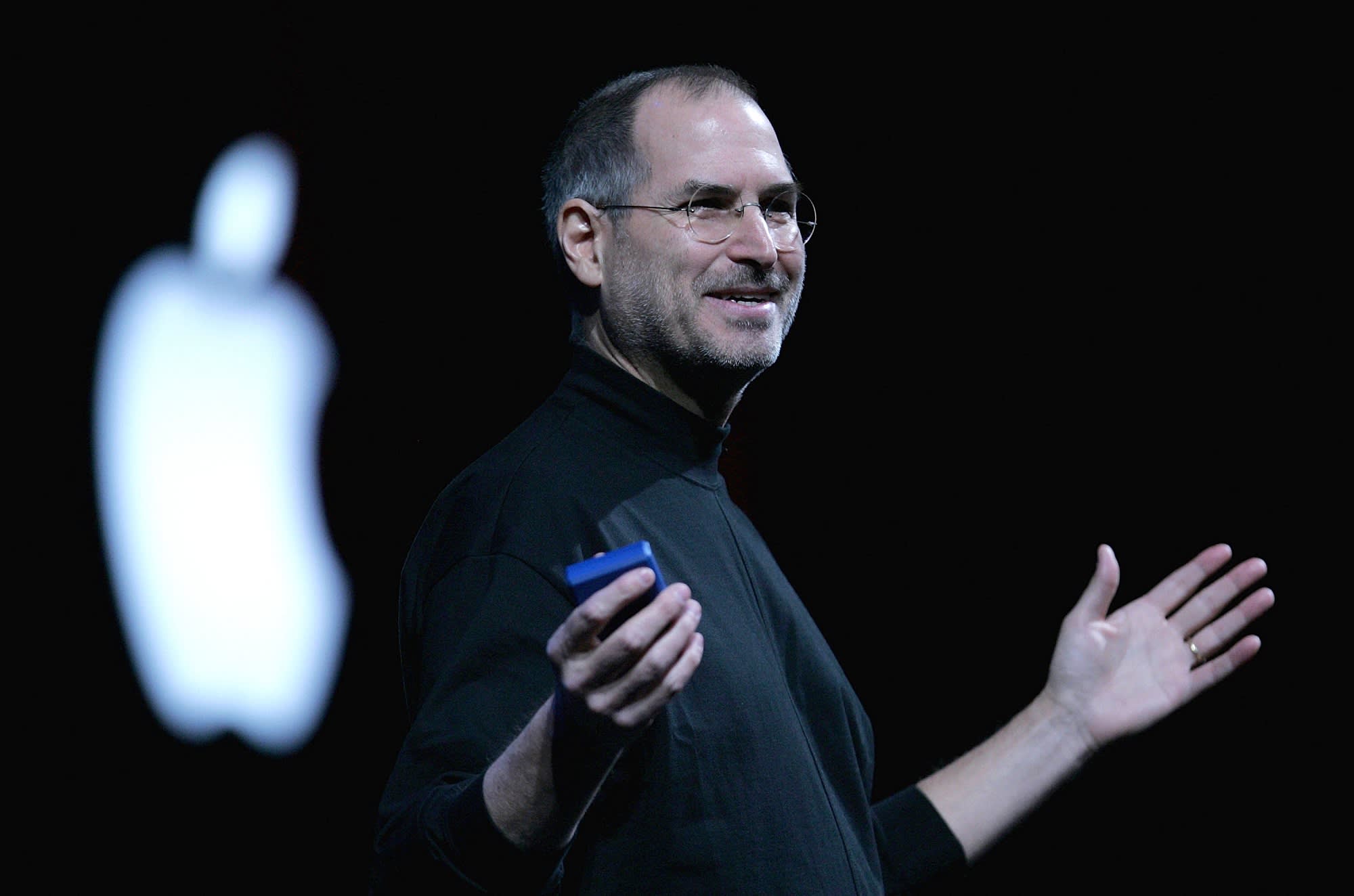
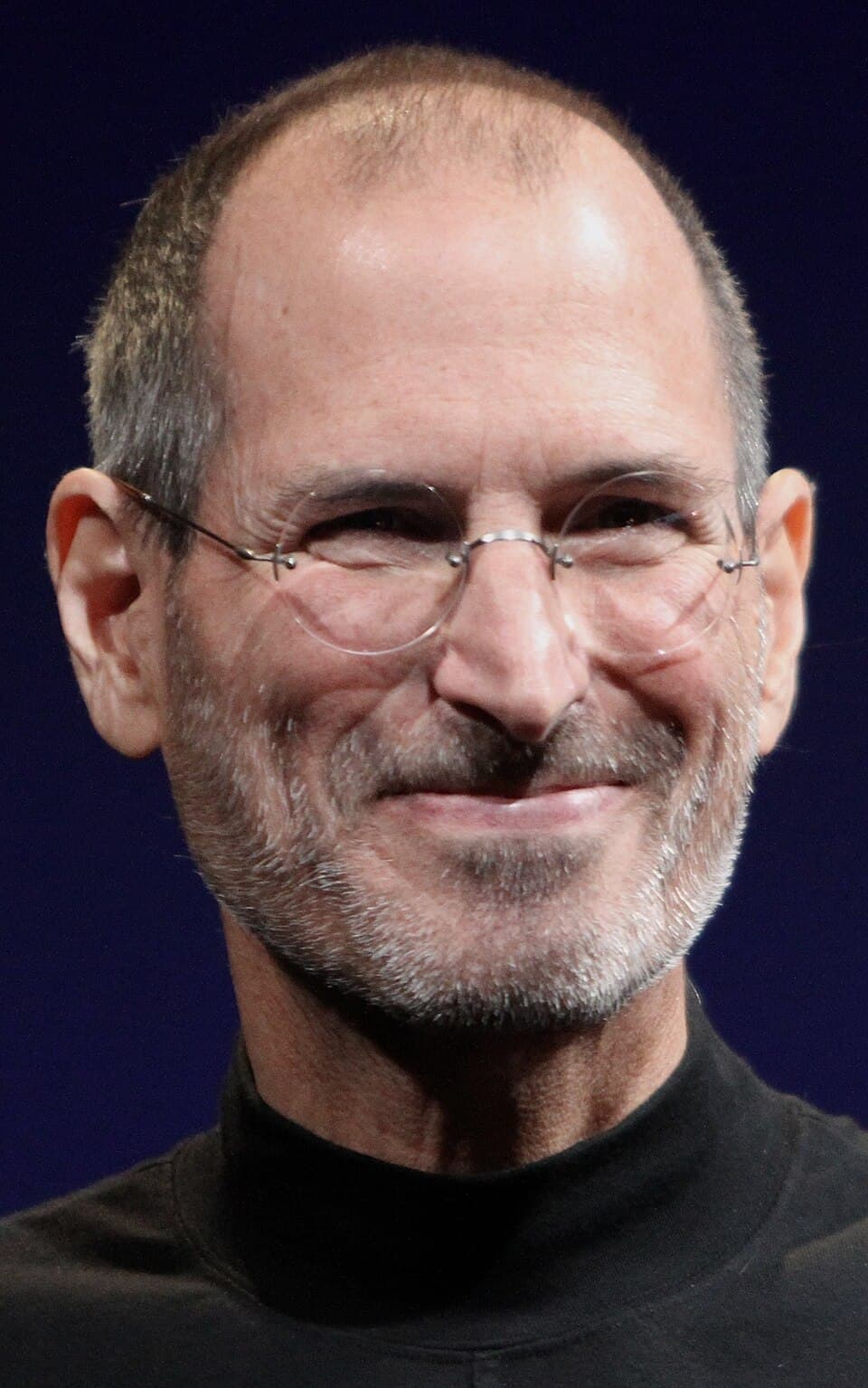
Co-Founder & Former CEO, Apple Inc. (Historical Entry)
Public Views
Experience
Documented career positions
Steven Paul Jobs (February 24, 1955 – October 5, 2011) was an American entrepreneur, inventor, and business magnate who co-founded Apple Inc. and served as its chairman and chief executive officer. Regarded as a pioneering figure in the personal computer revolution, Jobs was widely recognized for his visionary leadership, his focus on aesthetic design, and his ability to foresee the commercial potential of emerging technologies. His career, marked by both transformative successes and high-profile setbacks, fundamentally altered the telecommunications, music, film, and computing industries. Born in San Francisco, California, to Joanne Schieble and Abdulfattah Jandali, Jobs was placed for adoption shortly after birth and raised by Paul and Clara Jobs in Mountain View, California, in an area that would become known as Silicon Valley. Growing up in this environment, he developed a keen interest in electronics, often working on projects in his family garage. In 1972, he enrolled at Reed College in Portland, Oregon, but withdrew after only one semester. Despite leaving formal education, he continued to audit courses that interested him, including a calligraphy class that he later credited for the typography of early Apple products. Following his time at Reed, Jobs traveled to India to study Buddhism and worked briefly at the video game company Atari. In 1976, Jobs co-founded Apple Computer, Inc. alongside his friend Steve Wozniak and Ronald Wayne in his parents’ garage. The company’s initial success was driven by the Apple I and the subsequent Apple II, which became one of the first highly successful mass-produced microcomputers. In the early 1980s, Jobs spearheaded the development of the Macintosh, the first commercially successful personal computer to feature a graphical user interface and a mouse. Following a power struggle with Apple’s board of directors and CEO John Sculley, Jobs resigned from the company in 1985. After leaving Apple, Jobs founded the computer company NeXT, which focused on the education and business markets. While NeXT’s hardware was not a widespread commercial success, its software operating system, NEXTSTEP, later became the foundation for Apple's modern operating systems. In 1986, Jobs purchased the computer graphics division of Lucasfilm, which became Pixar Animation Studios. Under his leadership, Pixar produced "Toy Story" in 1995, the first full-length computer-animated feature film, and became a dominant force in the film industry before its eventual sale to The Walt Disney Company in 2006. In 1997, Apple acquired NeXT, facilitating Jobs’ return to the company he co-founded. He was named interim CEO and later became the permanent CEO, overseeing a massive turnaround for the firm. During this second tenure, Jobs oversaw the introduction of revolutionary consumer products, including the iMac, the iPod, the iPhone, and the iPad. These devices reshaped global consumer behavior and established Apple as one of the most valuable technology companies in the world. Regarding his personal life, Jobs married Laurene Powell in 1991, with whom he had three children: Reed, Erin, and Eve. He also had a daughter, Lisa Brennan-Jobs, from a previous relationship. In 2003, Jobs was diagnosed with a neuroendocrine tumor, a rare form of pancreatic cancer. He managed his health issues for several years, including a liver transplant in 2009, while continuing to lead Apple. In August 2011, he resigned as CEO and was appointed chairman of the board. He died on October 5, 2011, at his home in Palo Alto, California, due to complications from his cancer. His death prompted global tributes honoring his role as a technological innovator and his enduring impact on how modern society interacts with technology.
AI-powered civic intelligence rating
Co-founded Apple Inc., driving the creation of the Macintosh, iPod, iPhone, and iPad, which fundamentally reshaped global culture and communication
Engineered the greatest corporate turnaround in history, returning to a near-bankrupt Apple in 1997 and setting the foundation for it to become the most valuable company on Earth
Acquired and funded Pixar Animation Studios, serving as its majority shareholder and executive producer of the historic film Toy Story
Notoriously uncompromising and frequently abusive toward his employees; his abrasive management style and tendency to publicly humiliate engineers were highly documented in his authorized biography
Initially denied paternity of his daughter, Lisa Brennan-Jobs, for years despite DNA evidence, though he eventually reconciled and integrated her into his family
Faced severe criticism from medical professionals for initially refusing life-saving surgery for his pancreatic cancer, opting instead for alternative medicine and extreme fruit diets, a decision he later deeply regretted
Awarded the Presidential Medal of Freedom posthumously in 2022
Co-founded Apple Computer, Inc. with Steve Wozniak and Ronald Wayne on April 1, 1976.
Introduced the Apple II in 1977, which became one of the first highly successful mass-produced microcomputers.
Oversaw Apple Computer's initial public offering (IPO) on December 12, 1980, which generated more capital than any IPO since Ford Motor Company in 1956.
Introduced the Macintosh in 1984, the first commercially successful personal computer to feature a mouse-driven graphical user interface.
Founded NeXT Inc. in 1985 after resigning from his executive roles at Apple.
Acquired The Graphics Group from Lucasfilm in 1986, which he later renamed Pixar Animation Studios.
Facilitated the acquisition of NeXT by Apple in 1996, which brought his NeXTSTEP operating system technology to Apple and led to his return to the company.
Appointed as interim CEO of Apple Inc. in September 1997, marking his return to the leadership of the company.
Oversaw the release of the iMac in 1998, which revitalized Apple's brand and financial health.
Appointed as permanent CEO of Apple Inc. in 2000.
Oversaw the launch of the iPod in 2001, which revolutionized the portable music industry.
Opened the first two Apple Retail Stores in May 2001, located in Tysons Corner, Virginia and Glendale, California.
Launched the iTunes Store in 2003, creating a new standard for legal digital music distribution.
Oversaw the sale of Pixar Animation Studios to The Walt Disney Company in 2006, which made him Disney's largest individual shareholder at the time.
Introduced the iPhone in 2007, a device that fundamentally transformed the smartphone industry and mobile computing.
Named Fortune magazine's 'Most Powerful Person in Business' in 2007.
Named 'CEO of the Decade' by Fortune magazine in 2009.
Introduced the iPad in 2010, which popularized the modern tablet computer market.
Inducted into the California Hall of Fame in 2011 for his significant contributions to technology and the state of California.
Posthumously awarded the Grammy Trustees Award in 2012 for his contribution to music technology.
Posthumously awarded the Presidential Medal of Freedom by President Barack Obama in 2012.
Presided over Apple during the early revelations of severe, abusive labor conditions and high suicide rates at Foxconn manufacturing plants in China
In 2006, Apple conducted an internal investigation into the backdating of stock options, which revealed that options were granted on dates when the stock price was lower to maximize potential profits. While the investigation concluded that Jobs was aware of the backdating practices, Apple stated he did not receive any personal financial benefit, and no criminal charges were brought against him.
In the late 1970s and early 1980s, Jobs faced significant personal criticism for initially denying paternity of his daughter, Lisa Brennan-Jobs, despite a court-ordered DNA test confirming his fatherhood. He refused to pay child support for years before eventually reconciled with her later in her life.
Starting in 2011, Apple was named as a defendant in a class-action antitrust lawsuit alleging that Jobs and other Silicon Valley executives formed 'no-poach' agreements to suppress the wages of engineers by agreeing not to recruit each other's employees. Although Jobs had passed away by the time a settlement was reached in 2014, the evidence presented in the case highlighted his personal involvement in the scheme.
Throughout his tenure as CEO, particularly between 2004 and 2009, Jobs faced persistent criticism from shareholders and investors for a lack of transparency regarding his health. It was later revealed that he had been suffering from a rare form of pancreatic cancer and underwent a liver transplant, details he did not fully disclose to the public or the company's board for several years.
Jobs was widely criticized throughout his career for a volatile and demanding management style, which former employees described as frequently including public humiliation and verbal abuse. This behavior generated significant discourse regarding his leadership ethics and the often hostile environment he fostered within his companies.