We're loading the complete profile of this person of interest including their biography, achievements, and contributions.
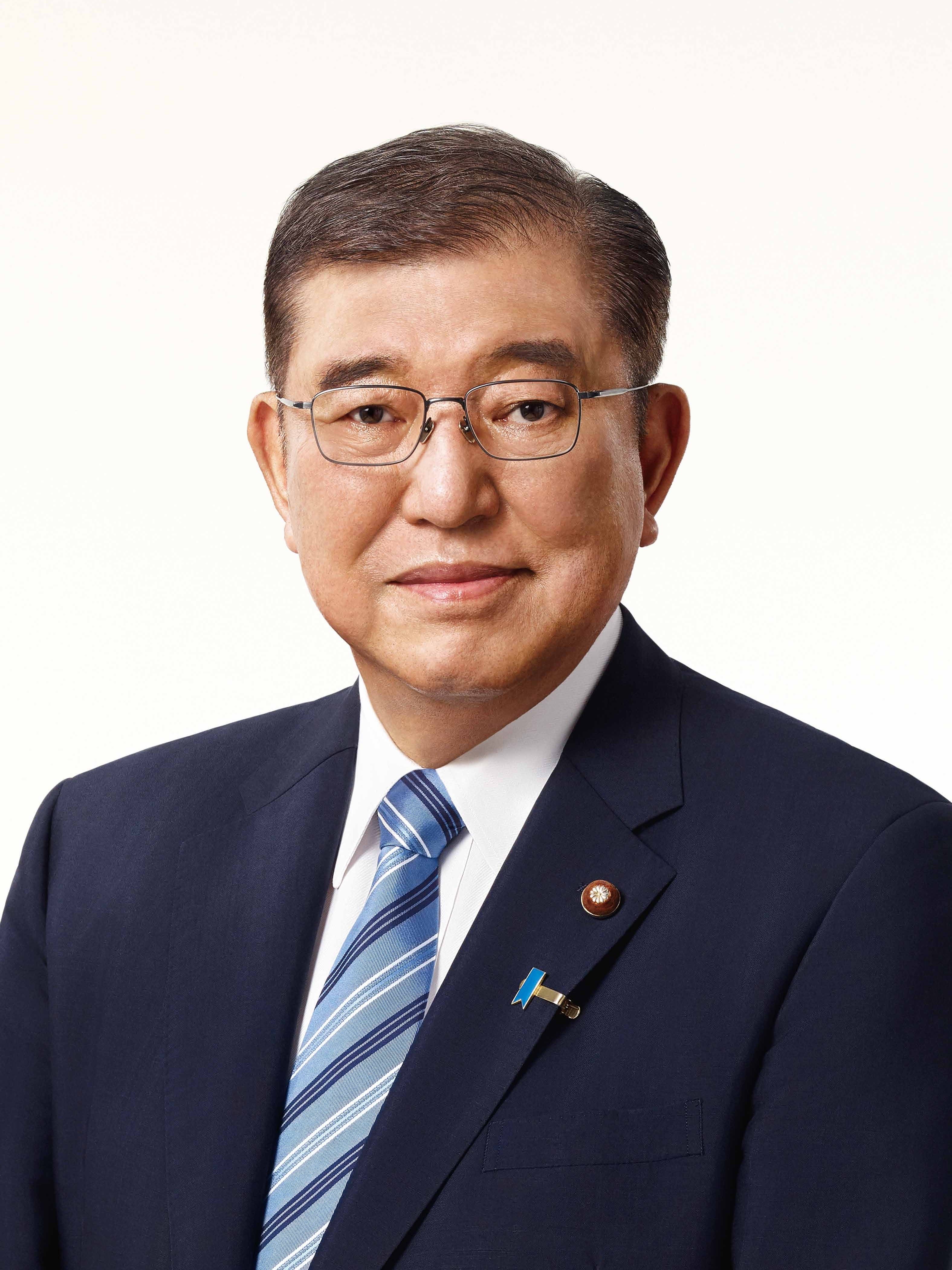
Prime Minister of Japan
Public Views
Experience
Documented career positions
Shigeru Ishiba is a Japanese politician who served as the Prime Minister of Japan from October 2024 to October 2025. A long-standing member of the Liberal Democratic Party (LDP), Ishiba built a career defined by his expertise in defense and agricultural policy, as well as his reputation as a policy-focused maverick who frequently challenged his party’s established leadership. Over a political career spanning nearly four decades, he held numerous cabinet and party positions before finally ascending to the premiership following a hard-fought leadership victory in September 2024. Born on February 4, 1957, in Chiyoda, Tokyo, Ishiba was raised primarily in Tottori Prefecture, where his family maintained their ancestral home. His father, Jirō Ishiba, was a significant political figure who served as the Governor of Tottori Prefecture and later as the Minister for Home Affairs. Ishiba attended Tottori University Junior High School before moving back to the Tokyo area to complete his secondary education at Keio Senior High School. He went on to study law at Keio University, graduating in 1979. Following his university studies, Ishiba began a career in the private sector, working at the Mitsui Bank (now Sumitomo Mitsui Banking Corporation) for four years. Ishiba’s trajectory into politics was influenced by his father’s legacy and personal connections. Following his father’s death in 1981, he left the banking industry and joined the LDP, where he initially worked within the faction led by former Prime Minister Kakuei Tanaka. In 1986, at the age of 29, Ishiba was elected to the House of Representatives representing the Tottori 1st district. At the time of his election, he was the youngest member of the House of Representatives. His early parliamentary career saw him focus heavily on agricultural and defense policy. His political path was not linear; in 1993, he briefly left the LDP to join the Japan Renewal Party amid the collapse of the LDP’s long-standing hold on power, but he returned to the LDP fold in 1997. Throughout the 2000s and 2010s, Ishiba became a prominent ministerial figure, serving as the Director-General of the Defense Agency (2002–2004) under Junichiro Koizumi, Minister of Defense (2007–2008) under Yasuo Fukuda, and Minister of Agriculture, Forestry and Fisheries (2008–2009) under Tarō Asō. During the administration of Shinzo Abe, Ishiba served as the LDP Secretary-General from 2012 to 2014 and later as the Minister of State for Regional Revitalization. Despite his service in these roles, he was frequently viewed as an internal critic, often advocating for reform and expressing dissent against the prevailing party consensus, which earned him a reputation as an outsider or "maverick" within the LDP. Ishiba’s pursuit of the party presidency was characterized by persistence. He ran for LDP leader multiple times—specifically in 2008, 2012, 2018, and 2020—before finally succeeding in the 2024 leadership election. His victory on September 27, 2024, came after the resignation of Prime Minister Fumio Kishida. Ishiba was subsequently elected Prime Minister by the National Diet on October 1, 2024. His premiership, however, proved brief and politically turbulent. Following his inauguration, Ishiba called a snap general election in October 2024, which resulted in the LDP-led coalition losing its majority in the House of Representatives. Faced with legislative difficulties and further setbacks in the 2025 House of Councillors election, Ishiba announced his resignation in September 2025. He was succeeded as Prime Minister by Sanae Takaichi in October 2025. Beyond his political activities, Ishiba is known for his unconventional interests, which have been widely covered in the Japanese media. He is a self-proclaimed "otaku" with a keen interest in military history, plastic model building, and trains. He has also been a vocal advocate for regional revitalization through the promotion of local food cultures, including his establishment of a parliamentary league dedicated to ramen. A Protestant Christian, Ishiba has maintained a distinct public persona, often separating his personal interests from his rigorous policy-oriented approach to governance. His legacy remains that of a highly experienced, if often polarizing, institutional figure who sought to reshape the LDP from within.
AI-powered civic intelligence rating
Elected Prime Minister of Japan and President of the LDP (2024), successfully overcoming decades of institutional opposition within his own party
Served as Minister of Defense and Director General of the Defense Agency, establishing himself as Japan's foremost authority on national security architecture
Leading the most dramatic and rapid remilitarization of Japan since World War II, doubling defense spending to reach NATO-level thresholds
Faces intense domestic resistance from Japan's historically pacifist electorate regarding his proposals to form an 'Asian NATO' and heavily base US/Japanese nuclear-sharing agreements on the island
His insistence on renegotiating the US-Japan Status of Forces Agreement (SOFA) to grant Tokyo more jurisdictional control over US troops frequently creates diplomatic friction with the Pentagon
Inherited a severely damaged LDP brand following the massive 2023/2024 political slush-fund scandal that destroyed multiple rival party factions
Highly popular among the rural Japanese electorate and rank-and-file party members for his willingness to criticize powerful LDP factions
Elected to the House of Representatives in 1986, becoming the youngest member of the Diet at age 29.
Appointed Parliamentary Vice-Minister of Agriculture, Forestry and Fisheries in 1992.
Served as Deputy Director-General of the Japan Defense Agency in 2001.
Appointed Director-General of the Japan Defense Agency in 2002, serving until 2004.
Served as Minister of Defense from 2007 to 2008.
Appointed Minister of Agriculture, Forestry and Fisheries in 2008, serving until 2009.
Appointed Chairperson of the LDP Policy Research Council in 2009, serving until 2011.
Appointed Secretary-General of the Liberal Democratic Party in 2012, serving until 2014.
Appointed as the first Minister for Overcoming Population Decline and Vitalizing the Local Economy in 2014, serving until 2016.
Established his own political faction, Suigetsukai, in 2015.
Elected President of the Liberal Democratic Party on his fifth attempt in September 2024.
Sworn in as the 102nd Prime Minister of Japan on October 1, 2024.
Designated as the 103rd Prime Minister of Japan by the National Diet in November 2024.
Resigned from the position of Prime Minister of Japan in October 2025.
In March 2025, Prime Minister Ishiba faced significant controversy after distributing 100,000 yen gift certificates to 15 newly elected LDP lawmakers. The action sparked accusations of violating political contribution laws, leading to a lawsuit and widespread public criticism that the move was insensitive given the existing distrust surrounding the LDP's history of financial scandals.
Throughout his tenure (2024–2025), Ishiba faced sustained criticism for his perceived failure to adequately address the LDP's major 'slush fund' scandal that preceded his administration. Critics argued that his reform efforts were insufficient and that he failed to sufficiently hold implicated lawmakers accountable, which contributed to the party's declining public support.
Following his decision to call a snap election in October 2024, Ishiba's administration faced severe political backlash when the LDP and its coalition partner lost their parliamentary majority in the lower house. This electoral defeat significantly weakened his political authority and led to persistent internal and external pressure for his resignation.
Ishiba was frequently criticized for indecisive leadership and policy volatility, most notably his reversal on the medical expense co-payment cap. These incidents fueled public perceptions of weak administration and an inability to effectively manage government policy, ultimately contributing to his declining approval ratings.
During his time in office, Ishiba faced recurring criticism from the conservative-nationalist wing of the LDP, who accused him of being 'too accommodating' toward China. This ideological rift, combined with his moderate stance on various historical and social issues, exacerbated internal party friction throughout his premiership.