We're loading the complete profile of this person of interest including their biography, achievements, and contributions.
President of Indonesia
Public Views
Experience
Documented career positions
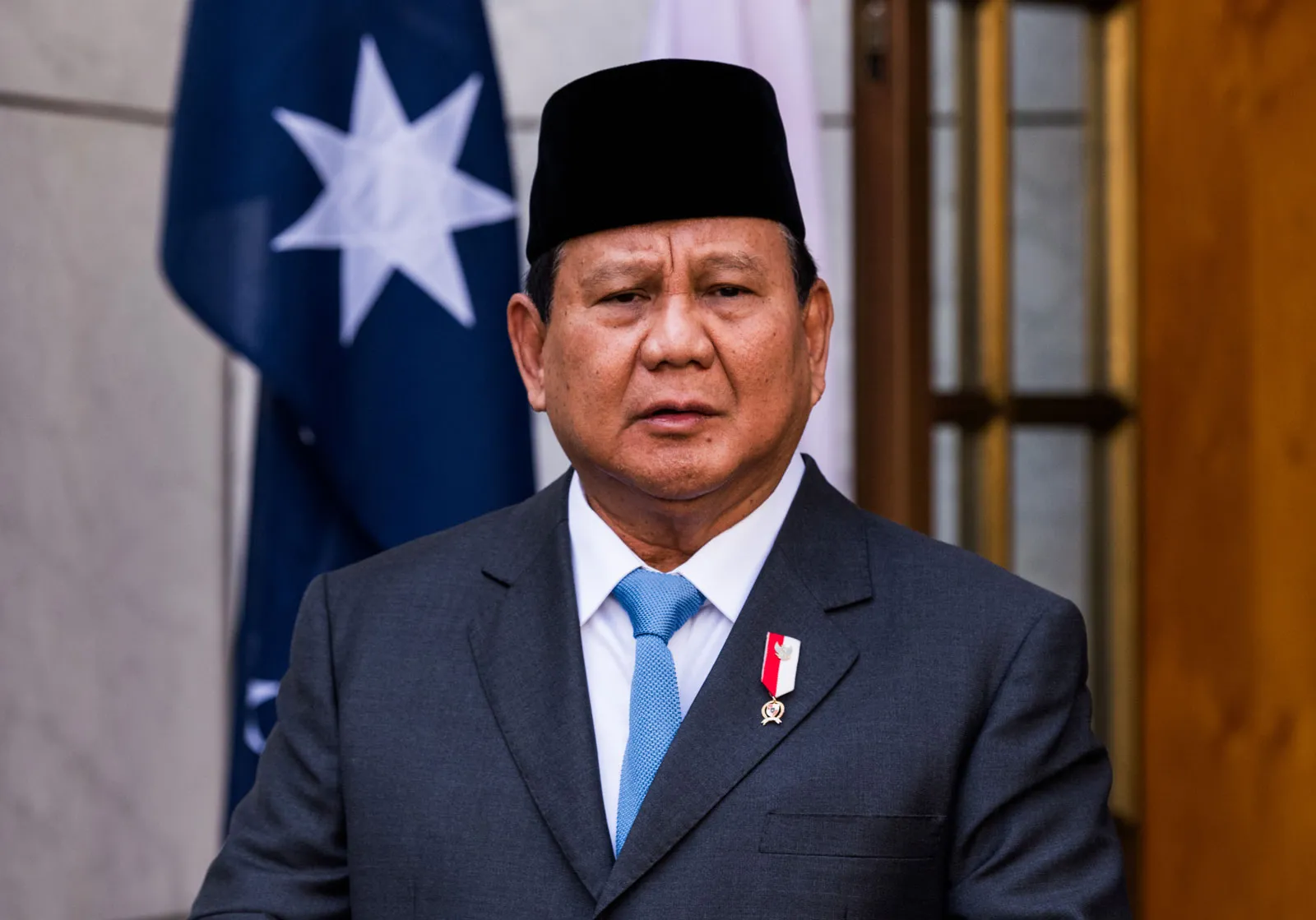
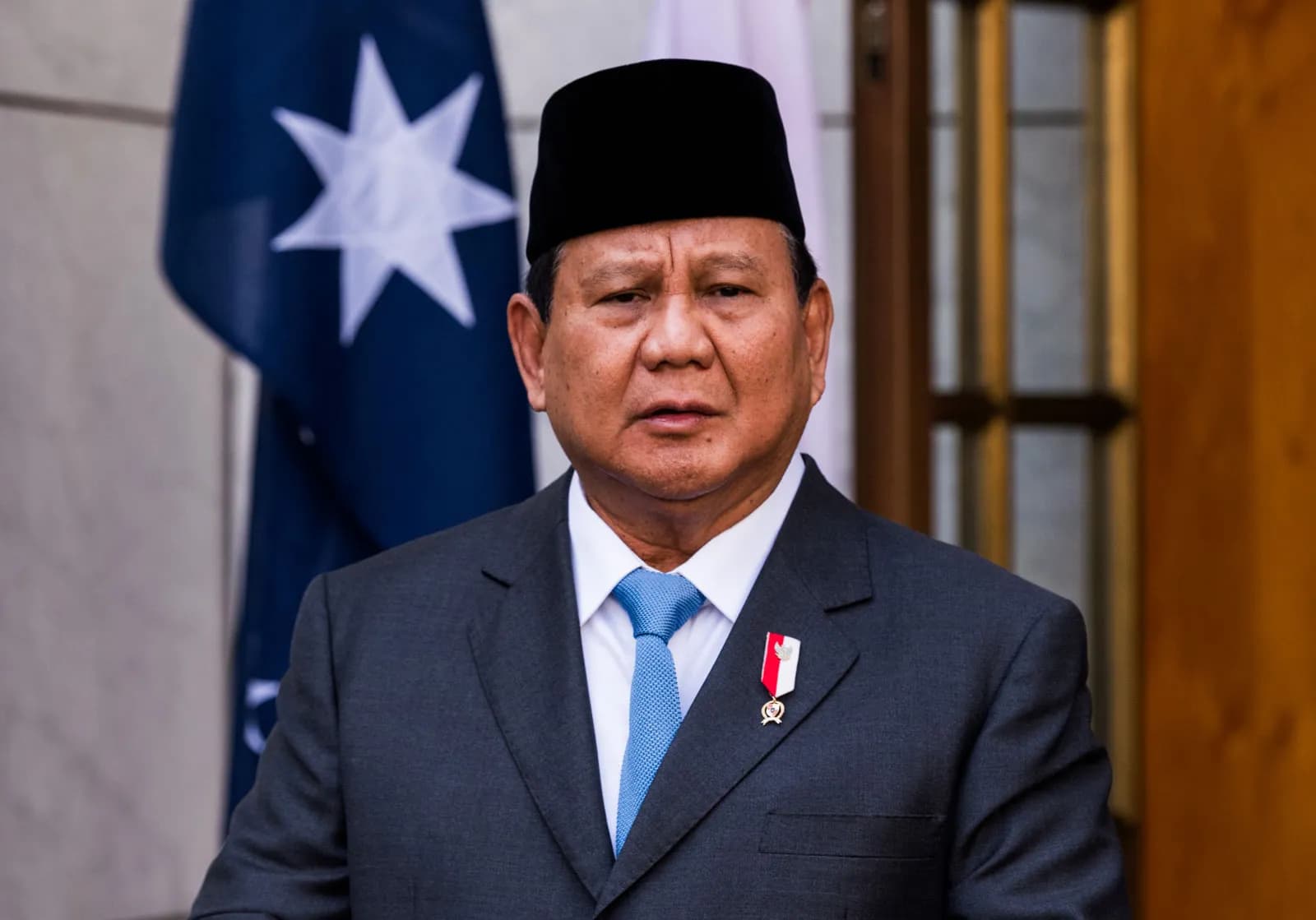
Prabowo Subianto Djojohadikusumo (born 17 October 1951) is an Indonesian politician, businessman, and retired military officer currently serving as the eighth president of Indonesia. He assumed office on October 20, 2024, following a successful campaign in the 2024 presidential election. His rise to the presidency represents the culmination of a decades-long career that has spanned the military, private sector, and national politics, marking him as one of the most significant and polarizing figures in contemporary Indonesian history. Born in Jakarta, Prabowo came from a prominent and politically influential family. His father, Sumitro Djojohadikusumo, was a renowned economist who served as a cabinet minister under both presidents Sukarno and Suharto. Due to his father’s involvement in the PRRI-Permesta rebellion against the Sukarno administration, Prabowo spent much of his childhood in exile, attending international schools in Singapore, Hong Kong, Malaysia, Switzerland, and the United Kingdom. He eventually returned to Indonesia and enrolled in the Indonesian Military Academy in Magelang in 1970, graduating in 1974. Prabowo’s military career was defined by his long service in the Special Forces (Kopassus), where he gained a reputation as a disciplined and assertive officer. In the 1970s and 1980s, he participated in various military operations, including deployments to East Timor, where he rose to become the youngest commander of a Nanggala unit. He received training in the United States at Fort Bragg and Fort Benning and also underwent anti-terrorism training in Germany. By 1998, he had reached the rank of lieutenant general and was serving as the commander of the Army Strategic Reserve Command (Kostrad). However, this period also brought intense controversy; Prabowo has been the subject of long-standing allegations regarding human rights abuses, including the kidnapping and torture of pro-democracy student activists during the final days of the Suharto regime and allegations of involvement in operations in East Timor and Papua. Following the collapse of the Suharto government in 1998, Prabowo was discharged from the military, a decision tied to these investigations. Following his military discharge, Prabowo pursued a career in business before entering politics in 2004. He initially sought the presidential nomination of the Golkar Party but failed to secure it. In 2008, he co-founded the Gerindra Party, which served as his primary political vehicle. He made his first national foray as a vice-presidential candidate alongside Megawati Sukarnoputri in the 2009 election, an unsuccessful bid. He subsequently contested the presidency in 2014 and 2019, both times losing to Joko Widodo. Despite the bitterness of these electoral contests, Prabowo joined the Joko Widodo administration in 2019 as the Minister of Defence, a position he held until his inauguration as president in 2024. Prabowo’s 2024 presidential campaign, in which he paired with Gibran Rakabuming Raka—the eldest son of his predecessor, Joko Widodo—was successful, with his coalition securing a decisive victory in the first round. Sworn in on October 20, 2024, at age 73, he became the oldest person to assume the Indonesian presidency. His administration has focused on themes of national self-sufficiency and economic development. Throughout his transition from a military general to a democratic leader, his career has remained marked by the duality of his military past—often cited by human rights organizations—and his enduring popularity as a nationalist leader. Personally, Prabowo was married to Siti Hediati Hariyadi, the daughter of former president Suharto, with whom he has one son, Didit Hediprasetyo; the couple later divorced.
AI-powered civic intelligence rating
Elected President of Indonesia in 2024 in a massive single-round victory, successfully uniting the political establishment and the youth vote
Served as Minister of Defense (2019–2024), overseeing a massive modernization of the Indonesian National Armed Forces (TNI) and negotiating complex international arms deals
Transformed the Gerindra Party into one of the most powerful political machines in the archipelago
His military past under the Suharto dictatorship is highly controversial; he was discharged from the military in 1998 and banned from entering the United States for decades due to credible allegations of orchestrating the kidnapping and torture of pro-democracy activists and atrocities in East Timor (He denies all human rights violations)
His 2024 election was marred by accusations of massive state interference and nepotism, particularly after the Constitutional Court (led by Jokowi's brother-in-law) altered age limits to allow Jokowi's 36-year-old son, Gibran Rakabuming Raka, to run as Prabowo's Vice President
Successfully positioned Indonesia as the indispensable, dominant force in the global nickel supply chain, vital for the global EV transition
Entered the Indonesian Military Academy in 1970.
Graduated from the Indonesian Military Academy in 1974.
Served as commander of Kopassus Group 1 (Nanggala) in 1976.
Underwent military training in the United States at Fort Bragg in 1980 and Fort Benning in 1985.
Received training with the GSG 9 anti-terrorism unit in Germany in 1981.
Promoted from captain to major in the Indonesian Army in 1983.
Appointed Commandant General of Kopassus, the Indonesian Army Special Forces, in 1995.
Appointed Commander of the Army Strategic Reserve Command (Kostrad) in March 1998.
Discharged from military service in 1998.
Competed for the Golkar Party's presidential nomination in 2004.
Co-founded the Great Indonesia Movement Party (Gerindra) in 2008.
Ran as a vice-presidential candidate on the ticket of Megawati Sukarnoputri in the 2009 presidential election.
Served as the presidential candidate for the Gerindra Party in the 2014 presidential election.
Served as the presidential candidate for the Gerindra Party in the 2019 presidential election.
Appointed as the 26th Minister of Defense of Indonesia by President Joko Widodo in 2019.
Awarded the honorary rank of four-star general by President Joko Widodo in 2024.
Elected as the 8th President of Indonesia in February 2024.
Inaugurated as the 8th President of Indonesia on October 20, 2024.
Criticized by environmental groups for massive deforestation initiatives tied to his 'food estate' agricultural projects and nickel mining operations
In 1998, Prabowo was discharged from the Indonesian military following an investigation by the Officers Honorary Council (DKP), which found him responsible for the kidnapping and torture of pro-democracy activists during the final days of the Suharto regime. He admitted to ordering the abductions but maintained that he acted under orders.
Following the May 1998 riots in Jakarta, Prabowo faced allegations regarding his role and the potential negligence of his command during the violence that led to the downfall of President Suharto. While he was never charged with a crime in relation to these events, the controversy significantly impacted his military career and subsequent public image.
Throughout his career, Prabowo has faced persistent allegations of human rights abuses in East Timor and West Papua during his time as a military commander. These allegations led to a long-standing travel ban imposed by the United States, which was only lifted in 2020 after he was appointed as Indonesia's Minister of Defense.
Following the 2014 and 2019 presidential elections, Prabowo contested the official results, alleging massive and systematic electoral fraud. In both instances, the Constitutional Court of Indonesia rejected his challenges and appeals, finding insufficient evidence of fraud, which led to significant public protests and unrest in 2019.
In 2023, while serving as Minister of Defense, Prabowo faced criticism regarding his proposal for a peace plan to end the Russia-Ukraine war, which included a call for a demilitarized zone and a UN-supervised referendum in disputed areas. The plan was widely rejected by Ukraine and Western allies, sparking domestic and international debate over his diplomatic approach.