We're loading the complete profile of this person of interest including their biography, achievements, and contributions.
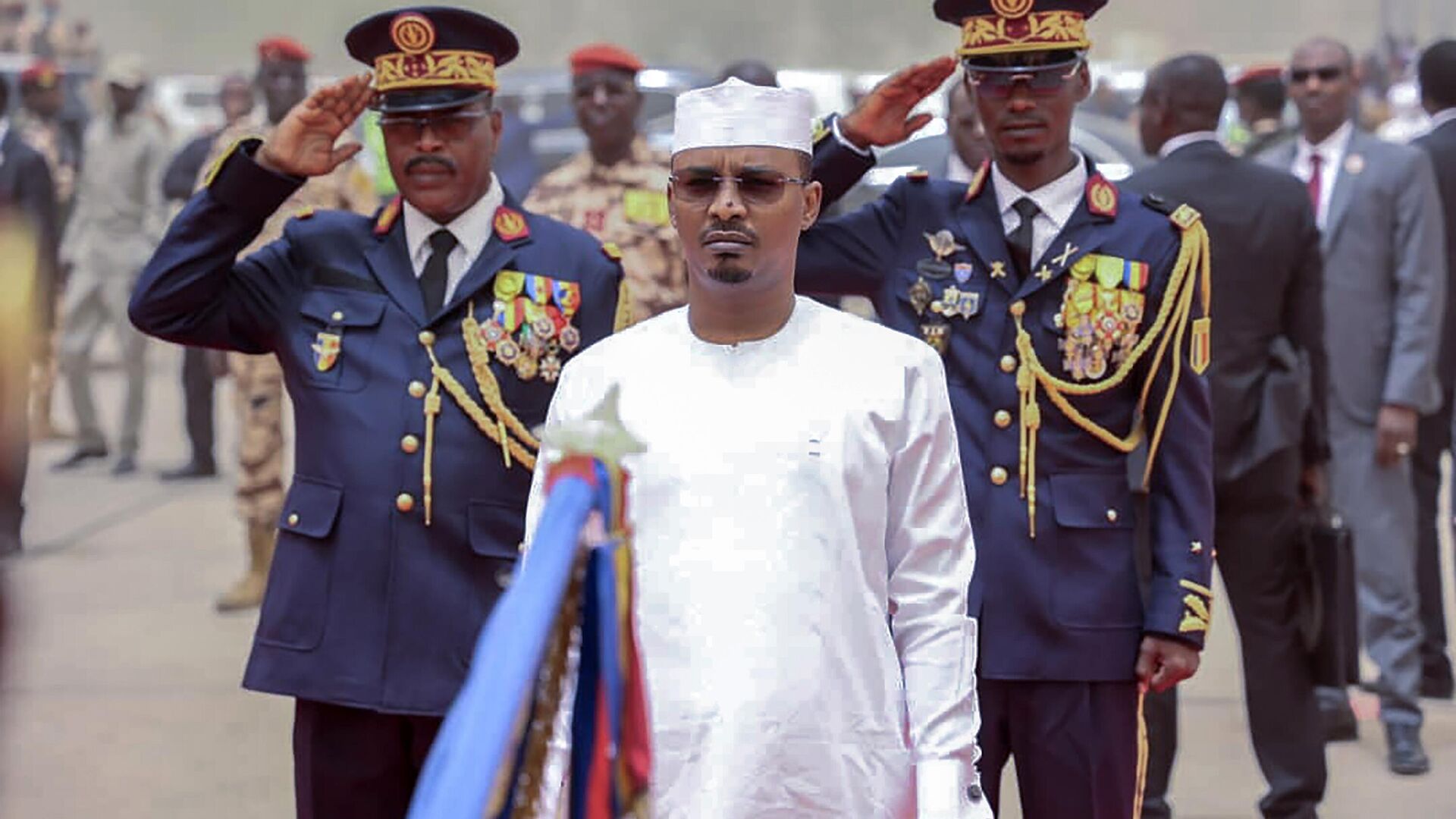
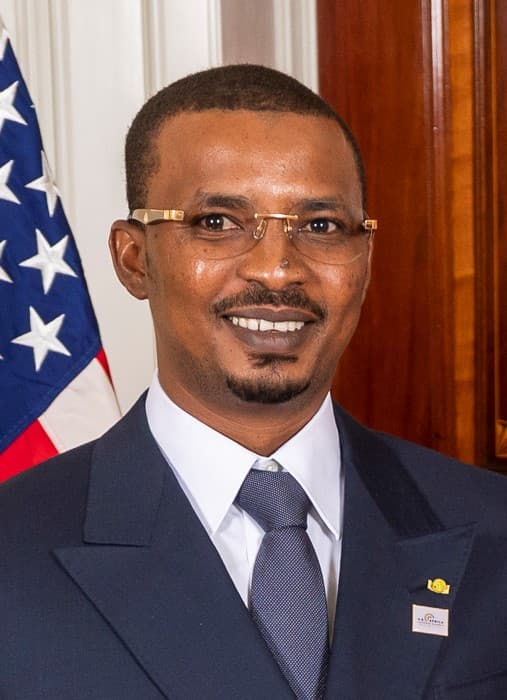
President of Chad
Public Views
Experience
Documented career positions
Mahamat Idriss Déby Itno, widely known by his nickname "Mahamat Kaka," is a Chadian military officer and politician who serves as the President of Chad. He assumed the presidency in 2021 following the unexpected death of his father, the long-serving President Idriss Déby Itno, and later consolidated his position through a controversial transitional period and victory in the 2024 presidential election. Born on April 4, 1984, in N’Djamena, Mahamat Idriss Déby is the son of Idriss Déby Itno, who ruled Chad for over three decades, and a mother of Gourane descent. He spent much of his childhood under the care of his paternal grandmother, which earned him the moniker "Kaka," the Chadian Arabic word for "grandmother." He received his primary and secondary education in Chad before pursuing a military career, which was one of the few established professional pathways available to the nation’s youth at the time. Déby’s military trajectory was characterized by rapid advancement and proximity to the country's elite security apparatus. He attended the Joint Grouping of Military Schools (GEMIA) in Chad and later underwent training at a French military school in Aix-en-Provence, France. Upon his return to Chad, he was appointed to the Directorate General of the Security Services of State Institutions (DGSSIE), the elite force responsible for the protection of state institutions and the presidential guard. He saw his first significant combat experience in 2006 during rebel attacks on the capital. His military reputation grew following his involvement in the 2009 Battle of Am Dam, where government forces defeated a rebel coalition, and his 2013 deployment to Mali as the second-in-command of the Chadian special forces, where he participated in operations against insurgents in the Ifoghas and Tigharghar mountains. In April 2021, following the death of his father on the front lines during clashes with the Front for Change and Concord in Chad (FACT) rebels, Mahamat Idriss Déby was named the head of the Transitional Military Council (CMT). While the Chadian constitution dictated that the President of the National Assembly should assume the presidency, the military bypassed this provision, installing the younger Déby as the country’s de facto head of state. This move was widely characterized by international observers and internal opposition groups as an unconstitutional power grab. The transitional government initially promised an 18-month period of rule culminating in democratic elections. However, this timeline was extended following an "Inclusive and Sovereign National Dialogue" (DNIS) in 2022, a process which permitted Déby to stand as a candidate in subsequent elections. In the presidential election held on May 6, 2024, Déby was declared the winner with approximately 61 percent of the vote. International rights groups and opposition leaders frequently criticized the process, citing concerns over the lack of free and fair conditions, the exclusion of key political figures, and the violent suppression of dissent. Throughout his tenure, Déby has faced significant challenges, including internal unrest, economic difficulties, and allegations of corruption. Reports have emerged regarding investigations by French authorities into his personal financial expenditures in Paris, while his administration has faced ongoing scrutiny from civil society for its human rights record and the centralized nature of its political control. Despite these controversies, he remains the central figure in Chadian governance, presiding over a nation grappling with regional instability in the Sahel and persistent domestic political divisions.
AI-powered civic intelligence rating
Led Chad through post-2021 transition: Headed the Transitional Military Council following the death of President Idriss Déby.
Oversaw the transition to elections: Managed the roadmap that culminated in the May 2024 presidential vote.
Elected President (2024): Secured victory in elections that formally ended the military transition.
Dynastic succession concerns: His rise after his father’s death sparked accusations of unconstitutional inheritance of power.
Contested 2024 elections: Opposition parties rejected the results, citing irregularities and restricted political space.
Crackdown during transition: Security forces were accused of excessive force against protesters opposing military rule.
Maintained Chad’s regional security role: Preserved Chad’s position as a key counterterrorism partner in the Sahel.
Participated in his first combat missions against rebels in N'Djamena and Eastern Chad in 2006, earning a promotion to the rank of Major.
Promoted to Brigadier General and shared command of Chadian forces during the victory at the Battle of Am Dam in 2009.
Assumed command of the army's armored division in 2010.
Appointed head of the elite Presidential Guard in 2012.
Served as second-in-command of Chadian special forces during the intervention in Northern Mali (FATIM) in 2013, including participation in the Battle of Ifoghas.
Appointed Director of the General Directorate of the Security Services of State Institutions (DGSSIE) in 2014, responsible for the presidential guard and special forces.
Assumed the role of Head of State and President of the Transitional Military Council in April 2021 following the death of his father, President Idriss Déby.
Sworn in as the Transitional President of Chad in October 2022 following the conclusion of the National Sovereign Inclusive Dialogue.
Issued a presidential pardon to 380 imprisoned members of the Front for Change and Concord in Chad (FACT) in March 2023 to encourage national reconciliation and peace talks.
Elected as the seventh President of Chad in May 2024, formally concluding the military transition period.
Promoted to the rank of Marshal by the National Transitional Council in December 2024.
Civil–military balance: Ongoing debate over the military’s continued influence in civilian governance.
In April 2021, Mahamat Idriss Déby assumed power following his father's death, leading a transitional military council in a move that critics and rights organizations labeled as an unconstitutional power grab, as it bypassed the constitutional requirement for the National Assembly president to lead the transition.
On October 20, 2022, often referred to as 'Black Thursday,' security forces violently suppressed anti-government protests against the extension of the transitional period; the crackdown resulted in the deaths of at least 50 to over 200 people, hundreds of injuries, and the mass detention of protesters, many of whom were sent to the remote Koro Toro prison.
In February 2024, prominent opposition leader Yaya Dillo was killed during a military-led assault on his party's headquarters; while the government stated he died in a shootout, opposition groups and rights organizations condemned the event as an assassination intended to eliminate a key political rival ahead of the upcoming elections.
In 2024, French authorities launched an investigation into allegations that Mahamat Idriss Déby and his entourage misused public funds, specifically scrutinizing large cash payments for luxury goods and clothing in Paris that reportedly exceeded legal limits.