We're loading the complete profile of this person of interest including their biography, achievements, and contributions.
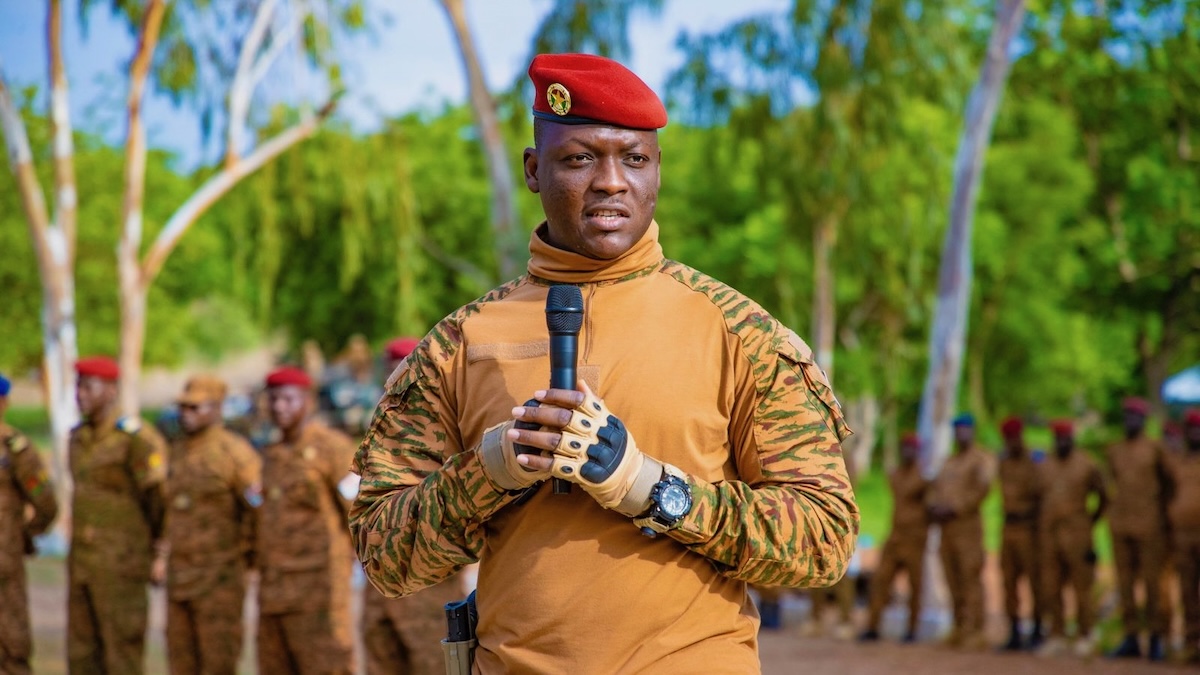
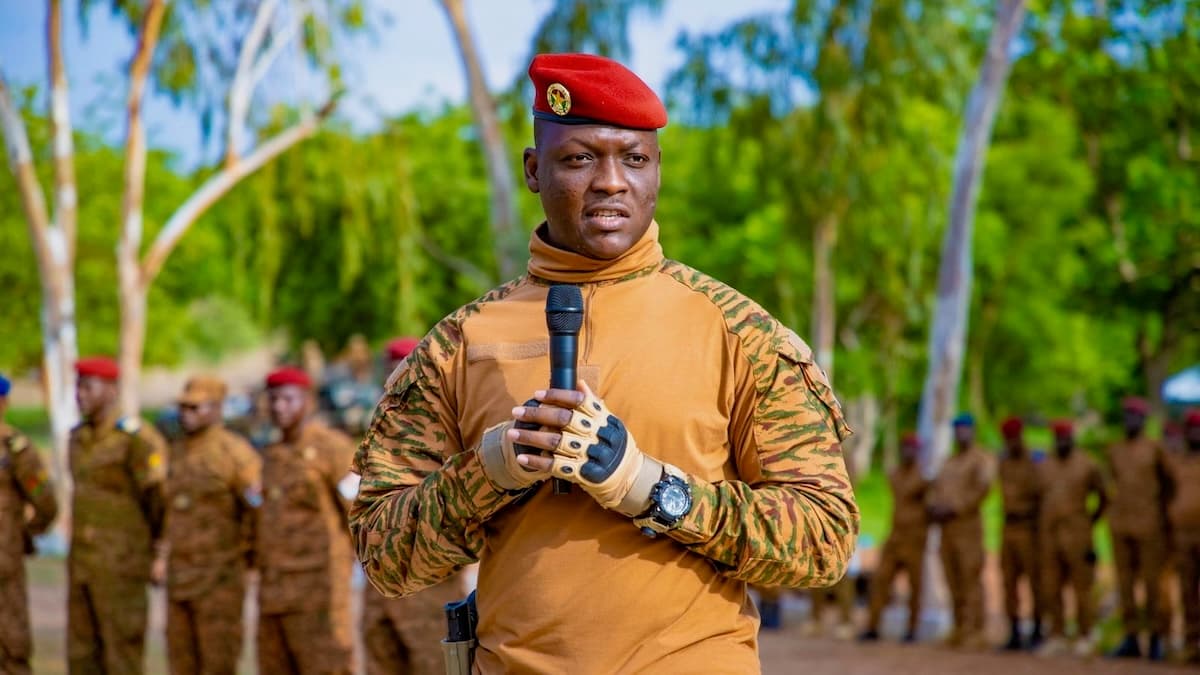
Interim President of Burkina Faso
Born
1988(38 yrs)
County
Mouhoun
Public Views
Experience
Documented career positions
Ibrahim Traoré (born 14 March 1988) is a Burkinabé military officer who has served as the interim president of Burkina Faso since October 2022. He rose to power following the September 2022 coup d'état, making him one of the youngest heads of state in the world. Traoré is recognized for his staunch nationalist, anti-imperialist, and pan-Africanist ideology, often drawing comparisons to the revolutionary leader Thomas Sankara. His administration has marked a significant shift in Burkina Faso’s geopolitical orientation, characterized by a pivot away from traditional Western partnerships and a strengthening of ties with regional allies and alternative international partners. Born in Kéra, in the Bondokuy department of the Mouhoun Province, Traoré’s upbringing was rooted in a rural setting. He completed his primary education in Bondokuy before attending secondary school in Bobo-Dioulasso, the country’s second-largest city. In 2006, he enrolled at the University of Ouagadougou to study geology. During his university years, he was an active member of student organizations, including the Association of Muslim Students and the Marxist-leaning National Association of Students of Burkina Faso (ANEB), where he was known for defending his peers. He graduated with honors in 2009. Traoré’s military career began in 2009 when he joined the Burkina Faso Armed Forces. He attended the Georges-Namoano Military Academy and underwent specialized anti-aircraft training in Morocco. His service included participation in the United Nations Multidimensional Integrated Stabilization Mission in Mali (MINUSMA), where he was recognized for his courage during operations. By 2020, he had attained the rank of captain. Before assuming the presidency, he served as the head of an artillery regiment in Kaya, a city in northern Burkina Faso, an experience that gave him firsthand insight into the challenges faced by soldiers combating the escalating jihadist insurgency. The trajectory of Traoré's rise to power is intrinsically linked to the political instability of 2022. He supported the January 2022 coup that ousted President Roch Marc Christian Kaboré and brought Lieutenant Colonel Paul-Henri Sandaogo Damiba to power. However, disillusionment grew among military ranks due to the continued deterioration of the security situation and the government's perceived failure to adequately support front-line troops. On 30 September 2022, Traoré led a group of dissident soldiers in a second coup, removing Damiba from office. He was subsequently appointed as the interim president of the Patriotic Movement for Safeguard and Restoration (MPSR). Under his presidency, Traoré has pursued a policy of state sovereignty and resource nationalism. His government has taken steps to nationalize gold mines and has actively sought to diversify international alliances, fostering close relations with Russia and forming the Alliance of Sahel States with the military-led governments of Mali and Niger. Domestically, his administration has faced significant challenges, including the ongoing security crisis caused by jihadist militant groups, as well as international scrutiny regarding human rights and the suspension of democratic processes. Despite these challenges, Traoré maintains a base of support among segments of the population and youth who view his actions as a necessary assertion of national independence and a departure from post-colonial political norms.
Seized power in September 2022: Became interim president amid widespread dissatisfaction with insecurity and governance.
Youngest head of state globally (2022): Symbolized generational rupture in Sahelian leadership.
Expelled French military forces: Marked a decisive break with France’s long-standing security presence.
Democratic rollback: His seizure of power by force is widely condemned as unconstitutional by regional and Western actors.
Prolonged military rule: Lack of a clear, fixed transition timetable has raised fears of entrenched junta governance.
Security challenges persist: Despite strong rhetoric, jihadist violence continues in large parts of the country.
News articles featuring Ibrahim Traoré
Co-founded the Alliance of Sahel States (AES): Created a new geopolitical bloc with Mali and Niger focused on sovereignty and collective security.
Graduated from the University of Ouagadougou with a bachelor's degree in science and geology in 2009.
Joined the Burkina Faso Armed Forces in 2009 and began officer training at the Georges-Namoano Military Academy in 2010.
Promoted to the rank of lieutenant in 2014.
Served with the United Nations Multidimensional Integrated Stabilization Mission in Mali (MINUSMA) in 2019, receiving recognition for his service.
Promoted to the rank of captain in 2020.
Appointed as the chief of an artillery regiment in Kaya in March 2022.
Led a military coup on September 30, 2022, that ousted Interim President Paul-Henri Sandaogo Damiba and led to his appointment as head of the Patriotic Movement for Safeguard and Restoration.
Assumed office as the Interim President of Burkina Faso on October 6, 2022, becoming the world's youngest serving head of state at age 34.
Formally demanded the withdrawal of French military forces from Burkina Faso in January 2023.
Oversaw the official withdrawal of Burkina Faso from the Economic Community of West African States (ECOWAS) in January 2025.
Instrumental in the formation and development of the Alliance of Sahel States (AES), a confederation including Burkina Faso, Mali, and Niger.
Foreign policy realignment risks: Pivot away from Western partners toward Russia-aligned networks has sparked debate over long-term stability.
In September 2022, Ibrahim Traoré assumed power after leading a military coup that ousted interim President Paul-Henri Sandaogo Damiba, an act that drew significant international condemnation for overturning the constitutional order.
His administration has faced severe criticism from global press freedom organizations for the suspension or expulsion of several international media outlets, including Radio France Internationale (RFI), France 24, Le Monde, the BBC, and Voice of America, for allegedly biased reporting.
Human Rights Watch and Amnesty International have documented numerous reports of extrajudicial killings and massacres committed by government forces and the 'Volunteers for the Defense of the Homeland' (VDP) militia during counter-insurgency operations, leading to international scrutiny of the junta's human rights record.
The Traoré government has been accused of suppressing dissent by forcibly conscripting critical journalists, civil society activists, and political opponents into the military to fight in the country's insurgency, a tactic critics describe as a tool to silence opposition.
In 2024 and 2025, various international NGOs and humanitarian aid organizations reported increased government restrictions on their operations, with authorities occasionally accusing these groups of interfering with national security priorities and sovereign military strategies.