We're loading the complete profile of this person of interest including their biography, achievements, and contributions.

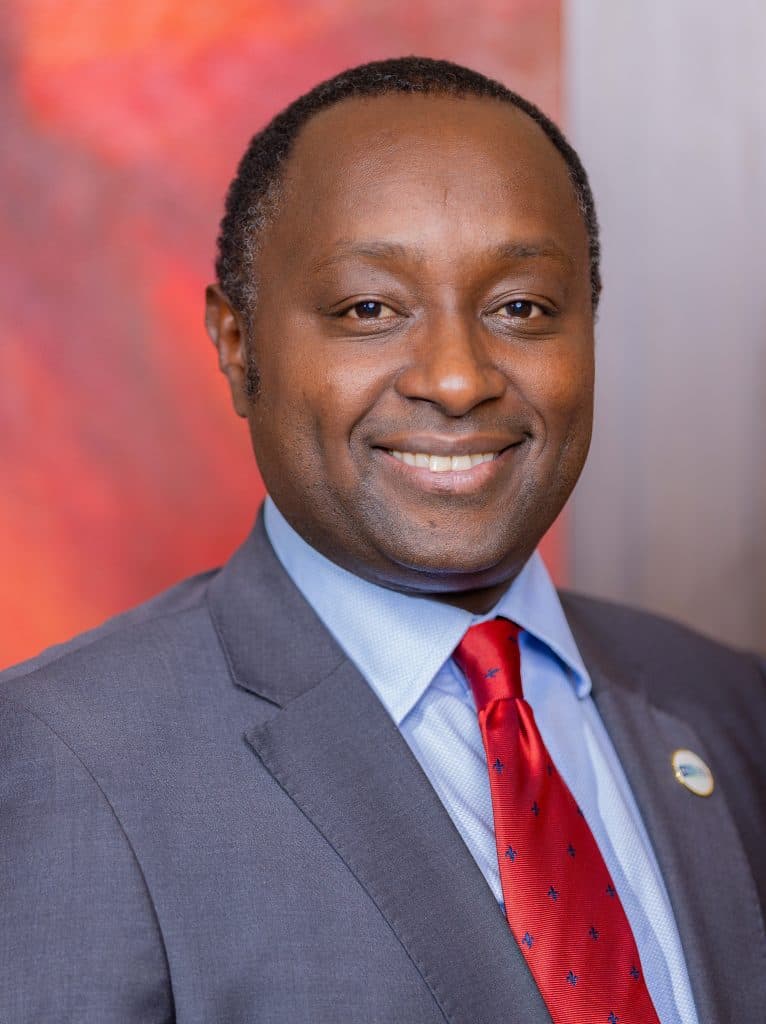
Group CEO, Nairobi Securities Exchange (NSE)
Public Views
Experience
Documented career positions
Frank Mwiti is a Kenyan finance and capital-markets executive serving as the Chief Executive Officer of the Nairobi Securities Exchange Plc (NSE), a role he assumed on 2 May 2024 following a rigorous board recruitment process to succeed long-serving CEO Geoffrey Odundo. A dynamic senior business leader with more than two decades of global and regional experience, he has worked across strategy, governance, corporate finance, M&A, investment banking, risk management and performance improvement, advising governments, investors, boards and CEOs in Africa, Europe, the US, the Middle East and Asia. Before joining the NSE, Mwiti was Partner and Eastern Africa Markets Leader at EY, where he led strategy, mergers and acquisitions and business development across Kenya, Ethiopia, Tanzania, Uganda, Rwanda, Burundi, Somalia and South Sudan. Earlier in his career he held senior roles in London at UBS Investment Bank, Deutsche Bank, EY and PwC, and founded Afrika Kapital, a boutique advisory firm serving global investment banks, private-equity and hedge funds in major financial centres including London, New York, Frankfurt, Singapore, Moscow and Hong Kong. As NSE CEO, his mandate is to revitalise Kenya’s capital markets, deepen listings, grow data and derivatives revenues and rebuild investor confidence after a prolonged market slump.
Appointment as CEO of the Nairobi Securities Exchange (2024): Selected after a competitive process and formally taking office on 2 May 2024, he now leads East and Central Africa’s leading stock exchange at a time of low valuations and thin trading, with a mandate to rebuild liquidity, diversify products and restore market confidence
Regional markets leadership at EY Eastern Africa: As Eastern Africa Markets Leader and Partner at EY, he led strategic business development for assurance, tax, consulting and transaction services across at least seven countries in the region, positioning EY as a key advisor on major deals and investments.
Performance of the NSE under his tenure: Mwiti took over at a time when the NSE was experiencing one of its worst market routs in years, with delistings, foreign-investor exits and low trading volumes. Media and analyst commentary closely track whether his strategies on new products, data, derivatives and regional positioning can reverse the downturn; this is scrutiny on performance rather than allegations of misconduct.
Pressure to attract new listings and deepen liquidity: As CEO, he faces persistent questions from issuers, investors and policymakers about the slow pipeline of new IPOs and the need to make the exchange more attractive relative to regional and global alternatives. Critics often frame this as a systemic challenge for Kenyan capital markets rather than a personal failing, but he is now the public face of the effort.
News articles featuring Frank Mwiti
Global investment-banking and advisory track record: Accumulated more than 20 years of experience in London and other global centres, advising on corporate finance, M&A, restructuring and capital-markets transactions at UBS Investment Bank, Deutsche Bank, EY and PwC, and later via Afrika Kapital
Career banker with extensive experience at KCB Group
Legacy of earlier governance issues at the bourse: Prior corporate-governance and market-structure debates (e.g., on broker collapses, market transparency, and regulation) pre-date his tenure but still shape public perceptions of the NSE. His leadership is therefore judged, in part, on how effectively he can reassure investors and regulators that the exchange is modern, well-governed and resilient.
High expectations around transformation narrative: Through speeches, interviews and social-media presence, Mwiti positions his purpose as providing “transformative leadership to inspire Africa’s transformation.” This bold framing raises expectations that he must deliver visible, measurable improvements at the NSE and in regional market development; any perceived shortfall is likely to draw sharper public critique, even in the absence of ethical or legal controversy.