We're loading the complete profile of this person of interest including their biography, achievements, and contributions.
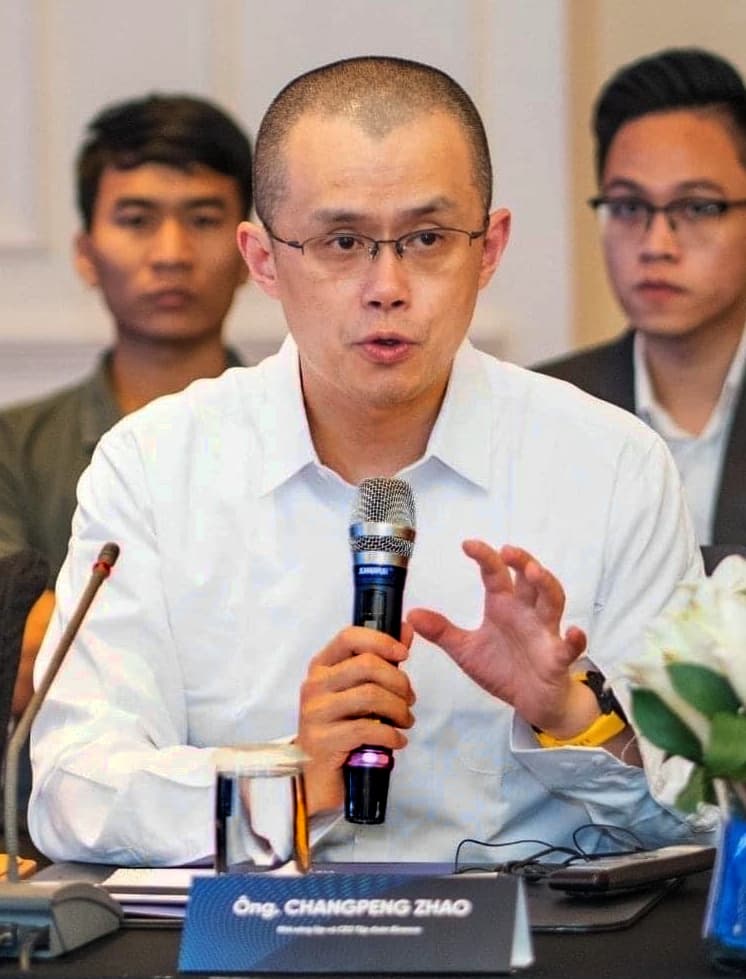
Founder & Former CEO, Binance
Public Views
Experience
Documented career positions
Changpeng Zhao, widely known by his initials "CZ," is a prominent Chinese-Canadian business executive, software engineer, and the founder of the cryptocurrency exchange Binance. Born on February 5, 1977, in Lianyungang, Jiangsu province, China, Zhao’s early life was marked by significant upheaval. His father, an academic, was labeled a "pro-bourgeois intellect" by the Chinese government, leading to the family's displacement and eventual emigration to Vancouver, Canada, in 1989. During his formative years in Canada, Zhao supported his family through various service industry positions, including employment at a McDonald’s restaurant and a gas station, before enrolling at McGill University in Montreal to study computer science. Zhao’s professional career began in the financial technology sector, where he developed systems for high-frequency trading and market infrastructure. Following an internship with the Tokyo Stock Exchange, he spent four years at Bloomberg Tradebook, where he played a key role in developing futures trading software. In 2005, seeking entrepreneurial opportunities in Asia, he moved to Shanghai to co-found Fusion Systems, an IT consultancy known for creating high-speed trading platforms for brokers. His transition into the cryptocurrency industry occurred in 2013 after he was introduced to Bitcoin during a poker game. Recognizing the potential of the technology, he liquidated his Shanghai apartment to invest heavily in Bitcoin and subsequently joined Blockchain.info as the head of development and later became the Chief Technology Officer (CTO) of the exchange OKCoin. In July 2017, Zhao launched Binance, which rapidly evolved into the world's largest cryptocurrency exchange by trading volume. The platform, initially funded through an initial coin offering (ICO) that raised $15 million, became a centerpiece of the global digital asset ecosystem. Under Zhao's leadership, Binance expanded aggressively, introducing its own blockchain and native token (BNB), and building a vast network of products and services that catered to millions of users worldwide. His management style, characterized by rapid iteration and a "move fast" philosophy, facilitated the company's dominance but also brought it into increasing conflict with international regulators. The expansion of Binance eventually attracted scrutiny from United States authorities regarding its compliance with anti-money laundering (AML) protocols and the Bank Secrecy Act. In November 2023, following a multi-year investigation, Zhao reached a settlement with the U.S. Department of Justice. As part of the agreement, Zhao pled guilty to failing to maintain an effective AML program at Binance and agreed to resign from his position as CEO. The settlement involved significant financial penalties for both the company and Zhao personally. Subsequently, Zhao served a four-month prison sentence in the United States, concluding his incarceration in September 2024. In October 2025, he received a full presidential pardon. Despite his resignation from the daily operations of Binance—where he was succeeded by Richard Teng—Zhao remains a significant, though non-operational, shareholder in the company and continues to exert considerable influence within the cryptocurrency industry. His wealth, largely derived from his stake in Binance, has solidified his status as one of the world's most affluent individuals. In the post-CEO phase of his career, Zhao has publicly shifted his focus toward impact-oriented investments, including ventures in education, biotechnology, and decentralized technology. He remains an active commentator on the future of blockchain, consistently advocating for the long-term adoption of digital assets and the development of clear regulatory frameworks to foster innovation in the global financial sector.
AI-powered civic intelligence rating
Founded Binance in 2017 and scaled it into the undisputed largest cryptocurrency exchange in human history processing trillions of dollars in trading volume annually
Built the BNB Chain (formerly Binance Smart Chain) establishing a massive highly active decentralized finance (DeFi) ecosystem that rivals Ethereum in user activity
Pled guilty in late 2023 to massive historic violations of the US Bank Secrecy Act agreeing to pay a 50 million dollar personal fine and step down as CEO while Binance paid a staggering 4.3 billion dollar corporate penalty
Sentenced to and served four months in a US federal prison in 2024 for his failure to implement adequate anti-money laundering (AML) controls effectively allowing illicit actors and sanctioned entities to utilize the exchange
His notoriously secretive highly decentralized corporate structure (famously claiming for years that Binance had 'no official headquarters') deeply infuriated global regulators who accused him of engaging in massive global regulatory arbitrage
News articles featuring Changpeng Zhao
Consistently ranked as the wealthiest individual in the cryptocurrency industry holding a net worth heavily tied to his massive equity stake in Binance and massive personal holdings of BNB token
Launched the Giggle Academy a massive philanthropic initiative designed to provide free gamified basic education to millions of impoverished children without access to formal schooling
Graduated with a degree in Computer Science from McGill University in the 1990s.
Worked as a software developer for the Tokyo Stock Exchange in the late 1990s, developing systems for matching trade orders.
Served as Head of Tradebook Futures Development at Bloomberg from 2001 to 2005.
Founded Fusion Systems, a high-frequency trading technology company, in 2005.
Joined Blockchain.info as Head of Development in 2013.
Appointed Chief Technology Officer (CTO) of the cryptocurrency exchange OKCoin in 2014.
Founded BijieTech, a provider of exchange systems, in 2015.
Founded Binance in July 2017, launching the platform shortly after raising $15 million through an initial coin offering.
Launched Binance Coin (BNB) in July 2017, a utility token that became central to the Binance ecosystem.
Led Binance to become the world's largest cryptocurrency exchange by trading volume within its first year of operation by 2018.
Named one of the richest people in cryptocurrency by Forbes in February 2018.
Recognized as one of the 'Bloomberg 50' most influential people of the year in 2020.
Named 'Most Influential' by CoinDesk in 2022 for his leadership in the crypto industry.
Facilitated a $500 million investment through Binance to support Elon Musk's acquisition of Twitter in 2022.
Appointed as a strategic advisor to the Pakistan Crypto Council by the Ministry of Finance in April 2024.
Appointed as an advisor to the President of Kyrgyzstan, Sadyr Japarov, on digital-asset development in May 2025.
Received a full pardon from U.S. President Donald Trump in October 2025.
In November 2023, Zhao pleaded guilty to failing to maintain an effective anti-money laundering program at Binance, which violated the Bank Secrecy Act. As part of a comprehensive settlement with the U.S. Department of Justice, he resigned as CEO and was sentenced to four months in prison in April 2024.
In June 2023, the U.S. Securities and Exchange Commission (SEC) filed a lawsuit against Zhao and Binance, alleging they operated unregistered exchanges, commingled customer assets, and engaged in wash trading. The case, which accuses the platform of deceiving investors and regulators, remains active as of 2026.
In March 2023, the Commodity Futures Trading Commission (CFTC) sued Zhao and Binance for allegedly knowingly offering unregistered crypto derivatives products in the U.S. and failing to register as a futures commission merchant. The civil charges were largely resolved as part of the broader December 2023 settlement with U.S. authorities.
For several years prior to the 2023 regulatory crackdown, Zhao and Binance faced criticism and investigative reports alleging that the exchange facilitated transactions for entities in sanctioned nations, including Iran. These operational failures to comply with U.S. sanctions were a central factor in the subsequent federal investigation and guilty plea.