We're loading the full news article for you. This includes the article content, images, author information, and related articles.
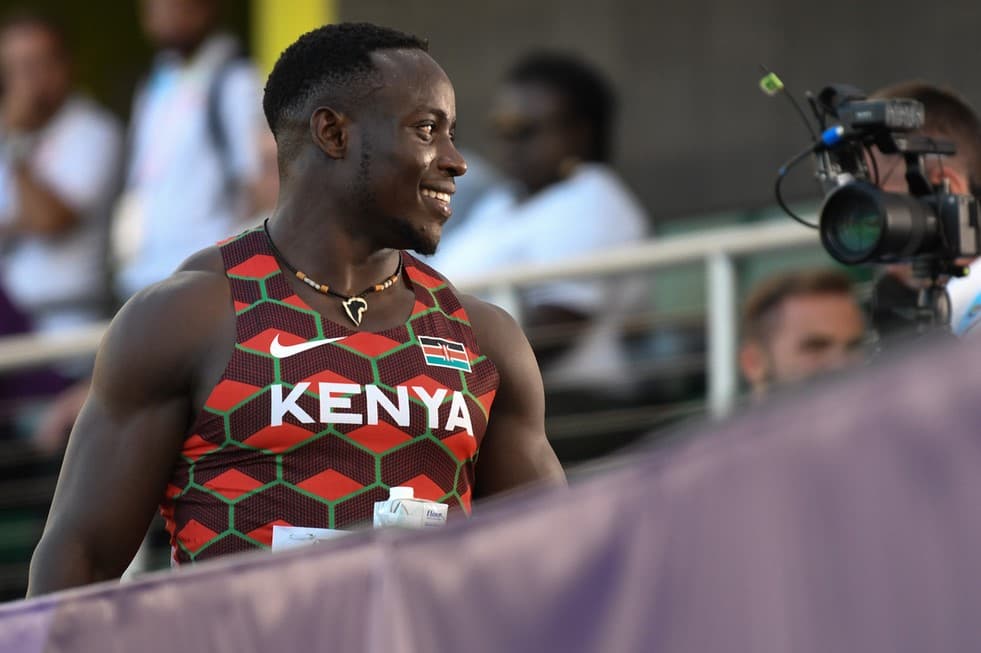
Kenyan sprint star Zablon Ekwam warns African rivals of an incoming storm at the upcoming African Athletics Championships in Accra this May.

The starting blocks in Accra are barely set, yet the psychological warfare of the 24th African Senior Athletics Championships has already begun. For Zablon Ekwam, the 28-year-old Kenyan sprint sensation, the upcoming continental showdown in Ghana is not merely an opportunity to compete it is a declaration of intent to dismantle the established hierarchy of African sprinting.
As Africa’s premier track and field event approaches this May, Ekwam’s assertion signals a tectonic shift in Kenyan athletics. Long synonymous with the relentless dominance of distance runners, Kenya is now witnessing a fierce, rapid, and unapologetic surge in its sprint capabilities. At the heart of this revolution is Ekwam, a man whose ambition is as explosive as his finishing kick, aiming to prove that the "land of champions" has evolved to master speed as effectively as it has mastered endurance.
For decades, international observers and Kenyan fans alike have viewed the nation’s athletic output through the narrow lens of middle and long-distance dominance. From the steeplechase to the marathon, Kenya’s global hegemony was absolute. However, Ekwam and his peers are rewriting this narrative. The transition from distance-focused training to the specialized, high-intensity biomechanics required for the 400m has been a long-gestating project for Athletics Kenya, and it is finally yielding results.
Ekwam’s own journey illustrates this professionalization. After a stint in military training with the Kenya Defence Forces, he refined his craft under the tutelage of Ian Dexter. His progression is backed by cold, hard data, reflecting a steep upward trajectory in performance:
These figures are not just statistics they represent a fundamental realignment of Kenyan resources—moving toward investment in technical coaching, specialized nutrition, and advanced speed conditioning. Ekwam stands as the vanguard of this movement, refusing to accept the secondary status often afforded to Kenyan sprinters on the continental stage.
The African Senior Athletics Championships, slated for May 12–18, 2026, at the University of Ghana Stadium in Legon, Accra, serves as the ultimate proving ground. The event is expected to attract over 1,000 athletes, with the continent’s finest sprinters from Botswana, South Africa, and Nigeria converging to vie for supremacy. The stakes are significant: these championships are the primary catalyst for regional ranking and momentum heading into the global summer season.
Ekwam’s confidence is rooted in experience. Having lined up against world-class competitors such as Botswana’s Bayapo Ndori and South Africa’s Zakithi Nene, he understands that at the elite level, the difference between gold and fourth place is measured in milliseconds and mindset. His "storm" warning is a calculated move to unsettle rivals, shifting the pressure onto the traditional powerhouses that have dominated the 400m discipline. He is not merely participating he is demanding a seat at the head of the table.
Elite sprinting is as much a mental battle as it is physical. Ekwam speaks openly about the mental fortitude required to thrive in the 400m, a race famously described as "the longest sprint." He emphasizes that the grueling hours of training in the Kenyan high altitude are not just for physiological adaptation but for mental resilience.
The current generation of Kenyan sprinters is characterized by a "fearless flyer" attitude. Ekwam, who refers to himself as "The Olympiad," exemplifies this shift. He has stated that his rigorous winter training, which focused on speed endurance, has left him in the best shape of his career. By intentionally skipping early-season indoor circuits and relay events to focus solely on his individual performance, he has signaled a maturity and a singular focus that was previously rare in the Kenyan sprint program.
The implications of a gold medal in Accra for Ekwam would extend far beyond his personal accolades. A victory would serve as a profound validation of the government and private sector investment in non-distance sports infrastructure. As the Minister for Sports and Recreation has repeatedly noted, the hosting of the championships is an opportunity to elevate Ghana’s athletic prestige, but for Kenya, it is an opportunity to break the "distance-only" stigma permanently.
If Ekwam succeeds in delivering on his promise to create a "storm" in Accra, he will not only secure his own legacy but also inspire the next generation of Kenyan youths in Turkana, Trans Nzoia, and beyond to pick up the baton for the sprints. The challenge has been issued, the training is complete, and the stage is set. Come May, the world will see whether this Kenyan storm brings a new dawn for African sprinting or if the established powers can withstand the pressure of a rising challenger.
As the final preparations unfold, the question remains: will the tactical confidence of Zablon Ekwam translate into continental gold, or will the seasoned titans of the 400m successfully turn back the tide?
Keep the conversation in one place—threads here stay linked to the story and in the forums.
Sign in to start a discussion
Start a conversation about this story and keep it linked here.
Other hot threads
E-sports and Gaming Community in Kenya
Active 10 months ago
Popular Recreational Activities Across Counties
Active 10 months ago
The Role of Technology in Modern Agriculture (AgriTech)
Active 10 months ago
Investing in Youth Sports Development Programs
Active 10 months ago
Key figures and persons of interest featured in this article