We're loading the full news article for you. This includes the article content, images, author information, and related articles.
What began as a scheduled political rally erupted into violent street confrontations as the United Opposition descended on Kisii.
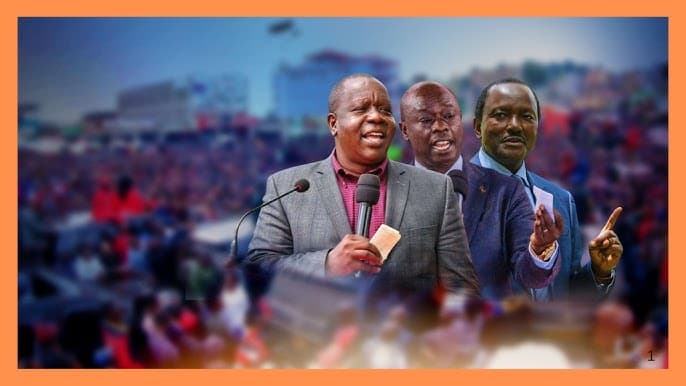
What began as a scheduled political rally erupted into violent street confrontations as the United Opposition descended on Kisii, setting the stage for a fiercely contested 2027 electoral battle.
The political temperature in the Gusii region has reached a boiling point. A high-stakes tour by the United Opposition—featuring heavyweights such as Fred Matiang'i, Rigathi Gachagua, Kalonzo Musyoka, and Eugene Wamalwa—morphed into one of the most volatile political flashpoints of the year, characterized by running battles, torched vehicles, and explosive allegations of political sabotage.
The chaos in Kisii is not merely a localized skirmish; it is a profound indicator of the shifting tectonic plates in Kenyan national politics. As the newly formed coalition attempts to consolidate a formidable voting bloc to challenge President William Ruto in 2027, the intense resistance and overwhelming mobilization witnessed in Gusii underscore the high stakes of regional supremacy and the uncompromising nature of Kenya's current political landscape.
The three-day offensive in Nyamira and Kisii counties was designed to be a show of absolute force, rallying the region's 900,000 registered voters behind Dr. Fred Matiang'i's presidential ambitions. However, by mid-afternoon on February 23, key intersections in Kisii Town, including Daraja Mbili and the Capital roundabout, had degenerated into active confrontation zones. Groups of masked youth clashed violently with opposition supporters, paralyzing transport and forcing traders to hurriedly shutter their businesses.
The tension had already combusted earlier in Keroka, where the advancing convoy encountered a Toyota Probox allegedly ferrying individuals intent on violently disrupting the rally. In a stark display of the crowd's fury, the vehicle was surrounded and swiftly set ablaze, sending thick plumes of black smoke into the air. Despite these violent attempts at disruption, the opposition diehards overpowered the agitators, allowing the massive convoy to advance into the heart of the city.
The political theater reached its zenith at Gusii Stadium. In a deeply symbolic move that captured the defiant mood of the crowd, a red carpet reportedly positioned for official county government use was physically uprooted by supporters and relocated to the main gate to welcome the opposition principals. The supporters framed this aggressive act as a "civic reclamation," implying that true political authority flows upwards from the wananchi, not downwards from the incumbents.
Inside the stadium, the atmosphere shifted from tension to absolute triumph. Thousands of supporters, undeterred by the earlier clashes, chanted and waved flags as the principals made their grand entrance. The sheer volume of the crowd sent a chilling message to the ruling party: the opposition possesses the capacity to absorb violent disruption and still command overwhelming grassroots numbers.
The events in Kisii are a critical component of a broader, highly calculated national strategy. Former Deputy President Rigathi Gachagua has been vocal about the necessity for each principal to lock down their respective backyards. "Mobilisation for bargaining edge must start with each principal's base," Gachagua stated. If Matiang'i can definitively consolidate the Gusii vote, while Gachagua anchors Mount Kenya dissent and Kalonzo secures Ukambani, the United Alternative Government transitions from a theoretical threat to an existential crisis for the current administration.
The coalition has explicitly framed these rallies not as tribal gatherings, but as a unified national movement seeking to course-correct the country's economic trajectory and governance. The presence of leaders spanning the entire geographic and political spectrum of Kenya on one stage in Kisii was a powerful visual representation of this unity.
In the aftermath of the rally, explosive allegations dominated the political discourse. Opposition figures openly accused allies of Kisii Governor Simba Arati of mobilizing the armed goons to prevent Matiang'i from asserting dominance in his own backyard. While these allegations have been fiercely denied by Arati's defenders, in Kenyan politics, perception frequently outruns reality.
The overriding perception from the Kisii showdown is that the attempted blockade failed spectacularly. The opposition proved its resilience, and the resulting chaos only served to amplify their message on a national scale.
"These are not tribal events but efforts to rally all Kenyans," stated Jubilee Deputy Secretary-General Zack Kinuthia, encapsulating the fiery determination of a coalition that has officially drawn the battle lines for the 2027 general elections.
Keep the conversation in one place—threads here stay linked to the story and in the forums.
Sign in to start a discussion
Start a conversation about this story and keep it linked here.
Other hot threads
E-sports and Gaming Community in Kenya
Active 9 months ago
The Role of Technology in Modern Agriculture (AgriTech)
Active 9 months ago
Popular Recreational Activities Across Counties
Active 9 months ago
Investing in Youth Sports Development Programs
Active 9 months ago
Key figures and persons of interest featured in this article