We're loading the full news article for you. This includes the article content, images, author information, and related articles.
Comprehensive, up-to-date news coverage, aggregated from sources all over the world by Google News.
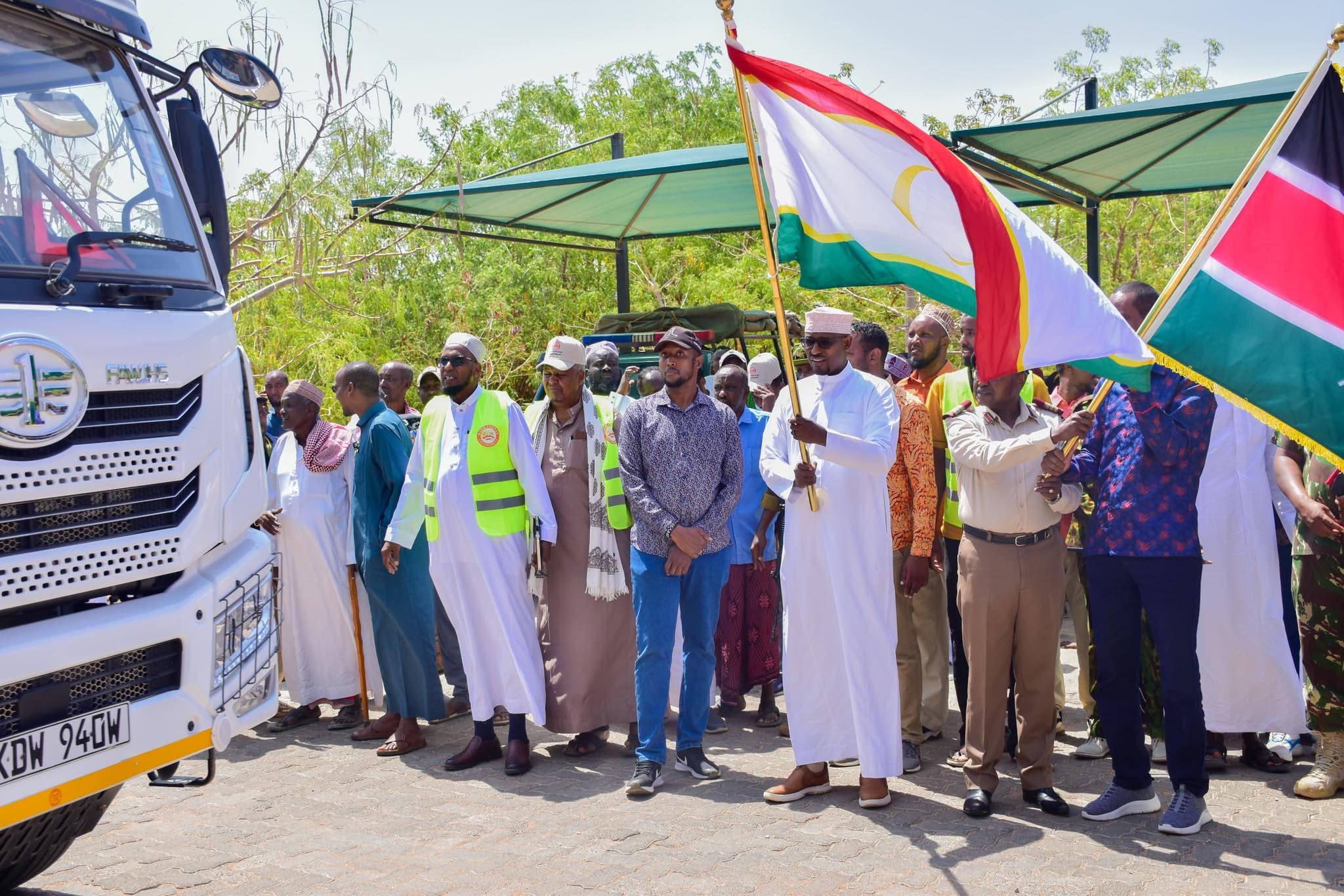
The Wajir County government has launched a massive relief food distribution programme, stepping up critical interventions as severe drought continues to devastate livelihoods across Northern Kenya.
The harsh realities of climate change and chronic marginalization have once again converged in Wajir County, triggering a massive humanitarian response. In a desperate bid to avert starvation, the county administration has initiated an emergency food aid rollout targeting the most vulnerable demographics.
This intervention matters urgently because the cycles of drought in the Arid and Semi-Arid Lands (ASALs) are becoming increasingly frequent and severe. For 40,000 families, this food aid is not a supplement; it is the absolute difference between survival and catastrophic malnutrition during the sacred month of Ramadhan.
Wajir Governor Ahmed Abdullahi, alongside County Commissioner Karuku Ngumo, officially flagged off the distribution of 915 tonnes of essential food supplies. The staggering volume of relief—comprising sifted maize, fortified porridge flour, dates, and cooking oil—underscores the magnitude of the crisis. The target beneficiaries are meticulously selected from the most fragile segments of the society: orphaned children, patients undergoing chronic treatments like dialysis, persons with disabilities, and destitute households entirely stripped of their pastoralist livelihoods by the relentless lack of rain.
The timing of this intervention is critical. The launch coincides with the holy month of Ramadhan, a period meant for spiritual reflection but increasingly defined by extreme hardship for Muslims in Kenya's arid counties. "Instead of concentrating on prayers, they are forced to prioritize survival due to water scarcity and lack of food," notes local leadership. The drought has decimated the grass cover, triggering a silent driver of massive livestock losses. For a community whose entire economic architecture is built on pastoralism, the death of their herds translates to an immediate, devastating plunge into absolute poverty.
Food distribution is only one facet of the emergency response. The total collapse of natural water sources has necessitated an expensive, logistical nightmare: mass water trucking. The county administration has been forced to divert significant developmental funds toward the maintenance and continuous servicing of strategic boreholes and the provision of free water trucking to the most severely affected, far-flung settlements. This is a stop-gap measure, a frantic attempt to keep communities and remaining livestock alive until the unpredictable rains return.
Governor Abdullahi explicitly acknowledged the necessity of collaboration, citing the critical partnership with the national government. County Commissioner Ngumo reiterated the state's commitment to mobilizing additional resources and coordinating relief efforts. However, the sheer scale of the geographical area and the dispersed nature of the nomadic populations make efficient distribution a monumental challenge. Beneficiaries like Mohamed Hussein express profound gratitude but emphasize that the current allocations must be urgently scaled up to match the rapidly expanding crisis.
The perpetual reliance on emergency food aid highlights a profound failure in long-term developmental planning for Northern Kenya. Successive regimes have historically neglected the region, treating fisheries, agriculture, and water harvesting as emergency stopgaps rather than sectors for sustainable investment. The political leadership in Wajir faces a regulatory tightrope: balancing the immediate, desperate need to purchase and distribute relief food against the necessity to invest in climate-resilient infrastructure.
Every shilling spent on emergency maize is a shilling diverted from building mega-dams, expanding irrigation schemes, or establishing modern abattoirs. The national government must fundamentally shift its policy framework from reactive disaster management to proactive climate adaptation. If the underlying structural vulnerabilities are not addressed, the ASAL counties will remain trapped in a permanent state of emergency.
As trucks carrying tons of grain rumble across the dusty, unforgiving terrain of Wajir, they carry the immediate hopes of a battered population. Yet, the systemic issue remains unsolved.
The resilience of the pastoralist communities is legendary, but it is being stretched beyond its breaking point. "We cannot continue to manage drought through charity; we must engineer an economy that survives the dry seasons."
Keep the conversation in one place—threads here stay linked to the story and in the forums.
Sign in to start a discussion
Start a conversation about this story and keep it linked here.
Other hot threads
E-sports and Gaming Community in Kenya
Active 9 months ago
The Role of Technology in Modern Agriculture (AgriTech)
Active 9 months ago
Popular Recreational Activities Across Counties
Active 9 months ago
Investing in Youth Sports Development Programs
Active 9 months ago
Key figures and persons of interest featured in this article