We're loading the full news article for you. This includes the article content, images, author information, and related articles.
Kakamega: MP David Ndakwa’s viral dance-off with a talented girl sparks debate on the intersection of political optics, youth empowerment, and cultural identity.

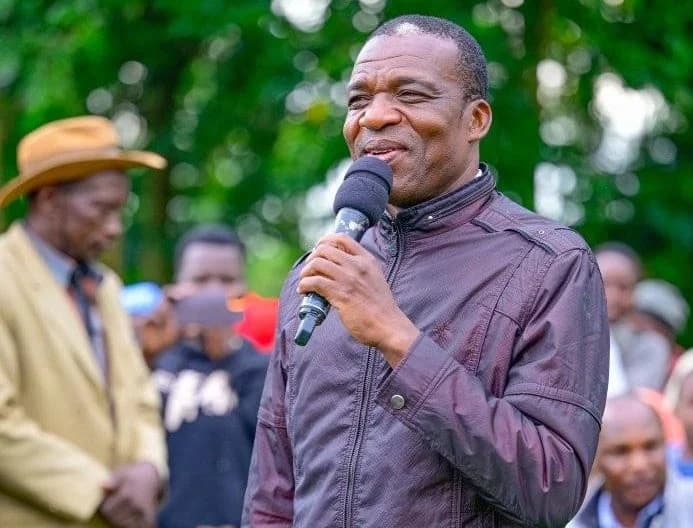
In the heart of Kakamega County, the dusty compound of a local primary school became the unlikely stage for a political spectacle that has captured the national imagination. Malava Member of Parliament David Ndakwa, recently thrust into the national spotlight following his victory in the November 2025 by-election, found himself not behind a podium delivering policy, but in the center of a frenetic, high-energy dance-off with a young girl from the community.
The footage, which has since surged across social media platforms, shows Ndakwa engaging in a spirited performance to the Luhya hit Moyo Kwakhenya by Peter Rochilo. What began as a standard community engagement event quickly pivoted into a viral sensation, forcing a re-examination of the performative nature of leadership in rural Kenya. For the residents of Malava, however, the moment served as a tangible—if fleeting—example of a leader bridging the vast, often intimidating gap between the political elite and the electorate.
In the contemporary Kenyan political landscape, the art of the dance has become a potent tool for humanizing the holder of public office. Analysts observing the trend note that such displays are rarely spontaneous they are carefully calibrated acts of political communication. By stepping onto the dance floor, an official signals humility, vitality, and a shared cultural identity with the youth demographic, which constitutes the majority of the Kenyan population.
For Ndakwa, a politician who ascended to the National Assembly following a contested by-election against DAP-K’s Seth Panyako, the dance was an opportunity to shed the rigid formality of his office. His constituency, which has faced chronic challenges ranging from struggling sugar sector infrastructure to inadequate education facilities, often views its representatives with a mix of hope and deep-seated skepticism. In this context, the viral video acts as a strategic reset, projecting a leader who is "on the ground" and physically in tune with the rhythm of the people.
The choice of music—Peter Rochilo’s Moyo Kwakhenya—is significant. The track resonates deeply within Western Kenya, tapping into a shared cultural consciousness that transcends political party lines. When Ndakwa joined the young girl on the floor, he was not merely dancing he was participating in a cultural ritual that validates the local creative economy. The girl’s ability to outpace the legislator in technique and stamina became the story’s hook, offering a rare moment where the power dynamics of a political rally were inverted.
Observers from the University of Nairobi have frequently argued that such public displays are a response to a "trust deficit" in Kenyan governance. When politicians engage in these acts, they attempt to bypass traditional bureaucratic channels and connect directly with the voter’s emotions. However, critics warn of the "clownification" of leadership, where the serious work of legislative representation—tackling unemployment, fixing rural roads, and improving healthcare—is overshadowed by the demand for digital entertainment.
The incident concluded with Ndakwa rewarding the girl with an undisclosed sum of cash, a practice that is commonplace in Kenyan political gatherings but continues to draw scrutiny from governance experts. While the gesture was framed as a reward for talent and a display of generosity, it mirrors broader debates about the "handout culture" that permeates Kenyan politics. In a constituency where economic distress is acute, the sight of a politician dispensing cash—even as a prize for a dance—highlights the transactional nature of the relationship between the representative and the represented.
Residents, speaking on the condition of anonymity due to the sensitivity of local politics, expressed a nuanced view. While many were charmed by the lighthearted nature of the event, others questioned whether such interactions detract from the substantive legislative advocacy required in the National Assembly. As one local observer noted, "The dance is fun, but the road to the market remains impassable. We want a dancer who can also deliver development."
As the video continues to circulate, it raises an enduring question for the citizens of Kakamega and beyond: What is the true measure of a leader in 2026? Is it their ability to resonate on TikTok, or their efficacy in the legislative chambers in Nairobi? The challenge for Ndakwa and his peers is to ensure that the goodwill generated by such viral moments does not evaporate when the music stops.
Ultimately, the dance-off in Malava is a snapshot of modern governance—caught between the desperate need for human connection in a fractured society and the cold, hard requirements of economic policy. If Ndakwa is to secure his legacy beyond a single viral clip, he must now ensure that his performance on the floor is matched by a performance in the halls of power, turning the applause of the crowd into tangible prosperity for the people of Malava.
Keep the conversation in one place—threads here stay linked to the story and in the forums.
Sign in to start a discussion
Start a conversation about this story and keep it linked here.
Other hot threads
E-sports and Gaming Community in Kenya
Active 10 months ago
The Role of Technology in Modern Agriculture (AgriTech)
Active 10 months ago
Popular Recreational Activities Across Counties
Active 10 months ago
Investing in Youth Sports Development Programs
Active 10 months ago
Key figures and persons of interest featured in this article