We're loading the full news article for you. This includes the article content, images, author information, and related articles.
The SAVE America Act is sparking a fierce Senate debate. We analyze the citizenship proof requirements, the political divide, and the global implications.

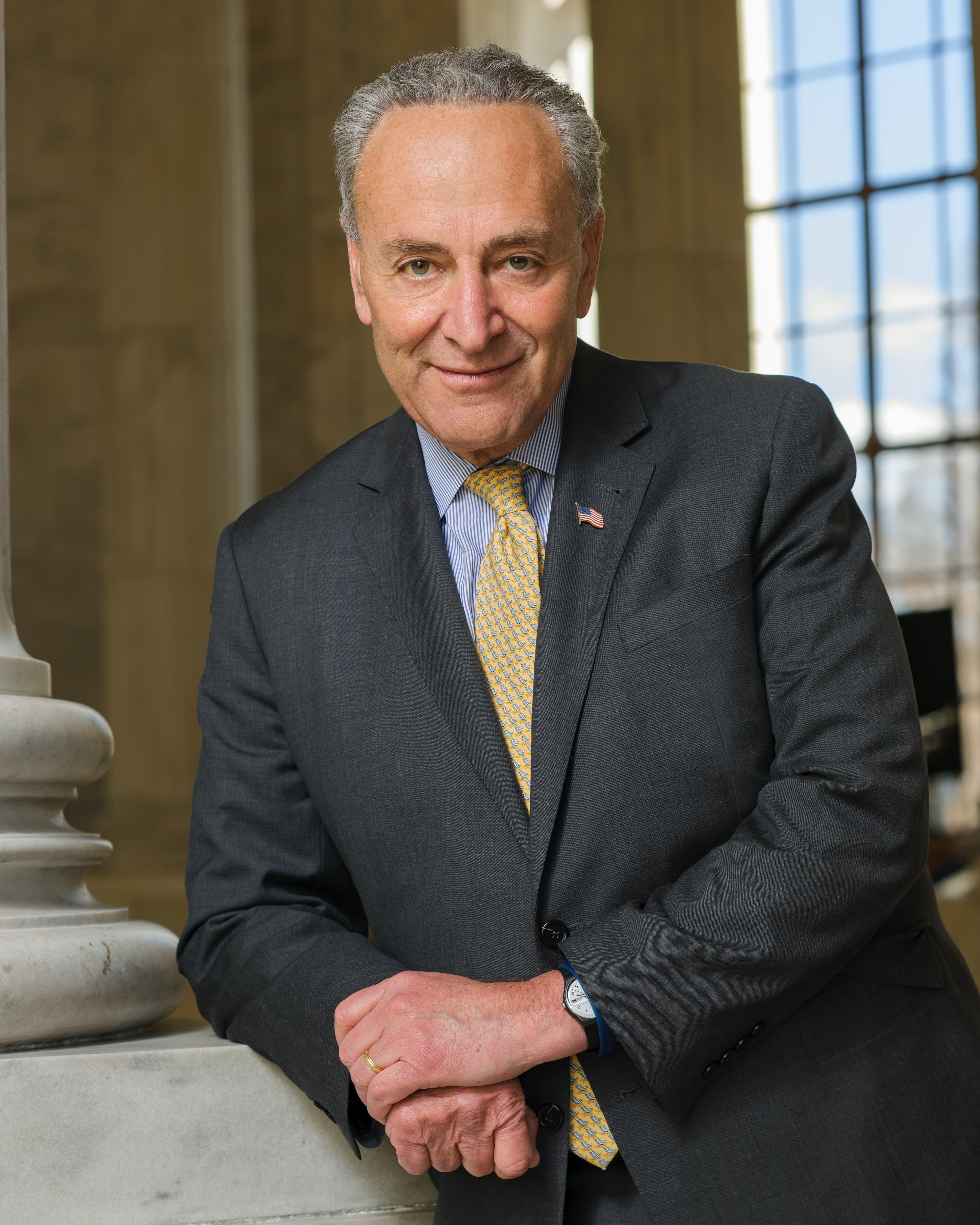
The United States Senate has transformed into a high-stakes legislative battleground as lawmakers debate the Safeguard American Voter Eligibility (SAVE) America Act, a proposal that has brought the country’s fragmented election administration system to a pivotal breaking point. At the center of the storm is Senate Minority Leader Chuck Schumer, who has characterized the legislation as a profound threat to democratic participation.
The SAVE America Act, which passed the House of Representatives in February 2026, aims to fundamentally rewrite the rules for federal elections. Its primary provisions would mandate that every applicant provide documentary proof of U.S. citizenship—such as a passport, birth certificate, or naturalization record—to register to vote. Additionally, the bill would institute strict photo identification requirements for all federal balloting. For proponents, this is a necessary safeguard to shore up public confidence for critics, it is an administrative hurdle that could silence millions of eligible voices.
The core of the debate rests on whether existing verification processes are sufficient. Under current federal law, non-citizen voting is already prohibited. Yet, proponents of the SAVE America Act argue that the current system lacks the teeth to verify eligibility with absolute certainty. They contend that shifting the burden of proof to the individual ensures that voter rolls remain pristine and immune to the influence of foreign nationals or unauthorized residents.
However, the logistical implications of the bill are significant. According to the Brennan Center for Justice, an estimated 21 million voting-age U.S. citizens—approximately 9% of the voting population—do not have easy access to the specific documentary proof required by the act. For these individuals, who are disproportionately lower-income, elderly, or members of minority communities, the path to the ballot box would become significantly more arduous. Senate Minority Leader Chuck Schumer has been vocal in his opposition, arguing that the bill is less about security and more about strategic disenfranchisement.
Schumer’s fierce resistance highlights the partisan divide over what constitutes "election integrity." In floor speeches throughout March 2026, the Democratic leader has repeatedly labeled the proposal a form of voter suppression, drawing sharp parallels to historical efforts to restrict the franchise. He contends that by making in-person registration nearly mandatory—thereby undermining online and mail-based systems that serve as lifelines for rural and disabled voters—the bill effectively constructs a barrier that many Americans cannot clear.
Republican supporters, conversely, maintain that the legislation is a "common sense" measure. Senator Chuck Grassley, a co-sponsor, has argued that given the current geopolitical climate and concerns over border security, ensuring that only citizens cast ballots is a fundamental duty of the government. They point to polling data from early 2026 suggesting that a majority of Americans support the idea of requiring photo ID for voting, framing the debate as a disconnect between established political norms and public sentiment.
While the debate in Washington is uniquely American, it touches on a tension familiar to global democracies: the balance between strict verification and universal access. In Kenya, the electoral landscape is managed through a highly centralized system utilizing biometric registration and the national Integrated Population Registration System (IPRS). While this system has faced its own scrutiny regarding efficiency and transparency, it provides a stark contrast to the decentralized, state-led election models in the United States.
For Kenyan observers, the U.S. struggle is instructive. Many nations, including Kenya, have moved toward digitized, centralized identity verification to reduce the risk of "ghost voters" and ensure that registration is tied to clear, state-recognized citizenship. However, the American resistance to a singular "national ID" card remains a defining feature of its constitutional culture. The debate over the SAVE America Act underscores that what is perceived as "integrity" in one system—centralized, government-verified identity—is often viewed as "authoritarian overreach" in another.
As the Senate continues its deliberations, the mathematical reality of the chamber suggests the bill’s passage remains unlikely without a significant shift in coalition-building. The 60-vote threshold required to break a filibuster serves as a formidable barrier for the legislation in its current form. Nonetheless, the mere act of debating the bill has served its purpose for proponents: it has solidified the "election integrity" platform for the 2026 midterm elections.
The controversy leaves election administrators in a state of suspended animation. Local officials across the United States are currently operating under existing state laws, preparing for upcoming primaries while monitoring the federal debate. The question of whether the United States will move toward a more stringent, document-heavy registration model remains unanswered. What is clear, however, is that the definition of who belongs on the voter rolls, and the ease with which they can be placed there, is currently the most contentious variable in the American democratic experiment.
Keep the conversation in one place—threads here stay linked to the story and in the forums.
Sign in to start a discussion
Start a conversation about this story and keep it linked here.
Other hot threads
E-sports and Gaming Community in Kenya
Active 10 months ago
The Role of Technology in Modern Agriculture (AgriTech)
Active 10 months ago
Popular Recreational Activities Across Counties
Active 10 months ago
Investing in Youth Sports Development Programs
Active 10 months ago
Key figures and persons of interest featured in this article