We're loading the full news article for you. This includes the article content, images, author information, and related articles.
Tobias Okello applied for a job in Luxembourg on a whim and ignored the acceptance call thinking it was a scam, only to land a prestigious role vacant for seven years.
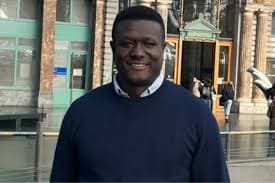
It began with a skeptical ignore of a phone call. Tobias Okello, a Kenyan biologist scrolling the internet on a lazy Saturday, had no idea that a casual click would catapult him from Nairobi to the Histology labs of the Luxembourg Institute of Health, effectively rewriting his destiny by accident.
In a world where thousands of Kenyans risk life and limb crossing the Mediterranean or pay fortunes to dubious agencies for a shot at the European dream, Okello’s story is a stark, almost unbelievable anomaly. It challenges the prevailing narrative of desperation, highlighting a rare intersection of preparedness and sheer serendipity. His journey from an idle internet search to a high-stakes scientific career in one of the world’s wealthiest nations is not just a success story; it is a case study on the hidden global demand for Kenyan technical talent.
The sequence of events reads like a script. Eight years ago, Okello, a graduate of the University of Eastern Africa, Baraton, was not actively hunting for a job. "I was just scrolling," he admits, a confession that flies in the face of the aggressive hustle culture that defines Nairobi’s job market. He stumbled upon a vacancy in Luxembourg—a country he, like many, could barely place on a map. "Some people still think it is a city in Europe," Okello quips.
He applied on a whim. The requirements matched his skillset, but his expectations were zero. He was unaware that he had just applied for a position that had remained vacant for seven years, waiting for a specific set of skills that he unknowingly possessed. When the call came from a strange foreign number the following week, he ignored it, suspecting a scam. It was only after persistent attempts that he Googled the country code. That search changed everything.
Okello’s assimilation into Luxembourg—a small, landlocked nation bordering Belgium, France, and Germany—offers a window into a unique diaspora experience. Unlike the transient struggle of undocumented migrants, Okello arrived as a highly sought-after professional.
Today, Okello is a fixture at the Luxembourg Institute of Health, contributing to cutting-edge research. His story is a powerful counter-narrative to the "brain drain" pessimism. Instead, it represents "brain circulation," where Kenyan expertise asserts its value on the global stage. Yet, it raises uncomfortable questions for local policymakers: Why did a talent like Okello have to leave to find a role that utilized his full potential?
As he walks the cobblestone streets of his new home, Tobias Okello remains a symbol of the accidental possibilities of the digital age. He didn't force the door open; he simply clicked a mouse. "I wasn't even serious," he says, a humble kicker to a life-altering event. For the millions of educated, unemployed youth in Kenya, his story is both a beacon of hope and a reminder that sometimes, the call you ignore is the one that changes your life.
Keep the conversation in one place—threads here stay linked to the story and in the forums.
Sign in to start a discussion
Start a conversation about this story and keep it linked here.
Other hot threads
E-sports and Gaming Community in Kenya
Active 9 months ago
The Role of Technology in Modern Agriculture (AgriTech)
Active 9 months ago
Popular Recreational Activities Across Counties
Active 9 months ago
Investing in Youth Sports Development Programs
Active 9 months ago