We're loading the full news article for you. This includes the article content, images, author information, and related articles.
Kalonzo issues urgent safety appeal as floods threaten to devastate communities government and citizens face test of resilience amid seasonal deluge.

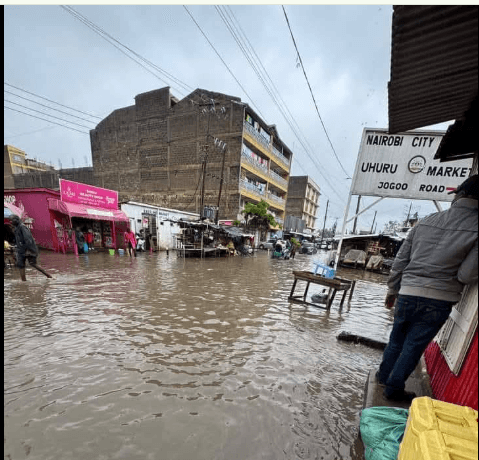
The heavens above Kenya have opened once more, but for millions of residents across the country, this is not the benevolent rain of a new agricultural season—it is an existential threat. As heavy, relentless rainfall pounds the capital and its surrounding counties, the memory of earlier, tragic inundations remains painfully fresh. With the Kenya Meteorological Department issuing urgent advisories for further deluges, the nation is holding its breath.
United Alternative Government (UAG) convener Kalonzo Musyoka has issued a stark, non-partisan appeal, urging Kenyans to exercise extreme caution as the country faces a renewed surge of flood risks. Musyoka’s intervention, delivered as the rainfall intensity reached a critical threshold, underscores the precarious state of the nation's disaster preparedness. With tens of thousands already displaced and a rising death toll that has eclipsed 70 since the onset of the long rains, the question is no longer whether infrastructure will hold, but how many more lives must be lost before the country moves from reactive crisis management to true, climate-resilient adaptation.
The meteorology underpinning this crisis is clear. The March-to-May "Long Rains" season has arrived with a ferocity that meteorological models had suggested, but for which urban planning had failed to prepare. According to data from the Kenya Meteorological Department, precipitation levels in parts of the Highlands East and West of the Rift Valley, as well as the Lake Victoria Basin, are tracking towards above-average totals. The atmospheric dynamics are creating concentrated, high-intensity storms that dump significant volumes of water in compressed timeframes, turning dry riverbeds into lethal conduits within minutes.
For the residents of Nairobi, the threat is magnified by an urban landscape that is increasingly unable to manage the volume. The National Disaster Operations Centre has mapped 37 distinct flood-prone hotspots across the city, primarily clustered along the Nairobi, Ngong, and Mathare river corridors. These are not just geographic coordinates they are home to thousands of citizens in informal settlements—communities like Mukuru, Kibera, and Mathare—who reside on the literal frontlines of this climate emergency. The risk here is compounded by the saturation of soil, leaving those in low-lying areas with almost no buffer against rapid-onset flash floods.
The conversation around flooding in Kenya has long been marred by a reactive, stop-start policy framework. Historically, the nation has seen this cycle repeat every few years: the onset of rains leads to infrastructure failure, followed by emergency aid, and eventually, public outcry. However, experts argue that the events of March 2026 represent a dangerous escalation. The sheer volume of water—recorded in some instances at over 100mm in 24 hours—demonstrates that the drainage infrastructure, much of which was designed decades ago for a significantly smaller population, is fundamentally obsolete.
Kalonzo Musyoka’s warning is as much a political critique as it is a public safety advisory. By calling for immediate vigilance and urging families to relocate from high-risk zones, the UAG leader is highlighting a void in state-led evacuation and mitigation strategies. Critics within urban planning circles argue that the government has failed to enforce existing riparian protections, allowing construction to proliferate on land that is essential for natural water runoff. This is a failure of enforcement as much as it is a failure of design.
The economic stakes are staggering. When roads become rivers, the cost of commerce spikes, and when health clinics are submerged, the public health apparatus buckles under the strain of preventable injury and illness. The government has deployed multi-agency teams, including the National Police Service and the Kenya Red Cross Society, but these are emergency stopgaps. Without a fundamental redesign of Nairobi’s stormwater management and a shift toward "sponge city" concepts that utilize wetlands and permeable surfaces, the capital will remain perpetually vulnerable to the very clouds that nourish its reservoirs.
As the nation looks toward the remaining weeks of March, the focus must shift from the immediate to the structural. If the 2026 floods serve as a diagnostic tool, the report is damning: the status quo is unsustainable. Climate change is no longer a future scenario it is a current, defining variable of Kenyan life. It is the force that turns a normal rainy season into a national disaster. The calls from civil society for early-warning systems that translate into real-time, community-level action are no longer just advocacy—they are the minimum requirement for public survival.
As night falls over the capital and the rhythmic thrum of rain against corrugated iron roofs continues, families across the city are left to watch the water levels, hoping that the dawn will not bring further tragedy. For the policymakers in high offices and the citizens in the river-valleys, the message is the same: the rains will not stop because we ask them to. Only by fortifying our defences and respecting the logic of our landscapes can Kenya hope to weather the storm.
Keep the conversation in one place—threads here stay linked to the story and in the forums.
Sign in to start a discussion
Start a conversation about this story and keep it linked here.
Other hot threads
E-sports and Gaming Community in Kenya
Active 10 months ago
The Role of Technology in Modern Agriculture (AgriTech)
Active 10 months ago
Popular Recreational Activities Across Counties
Active 10 months ago
Investing in Youth Sports Development Programs
Active 10 months ago
Key figures and persons of interest featured in this article