We're loading the full news article for you. This includes the article content, images, author information, and related articles.
As the long rains arrive, the Kenya Red Cross alerts residents to flood risks while experts point to systemic failures in Nairobi`s drainage.
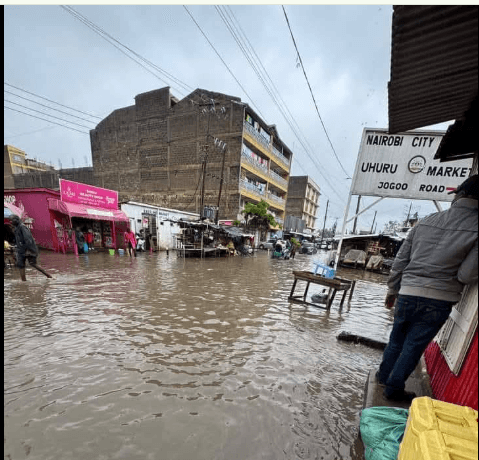
The slate-grey clouds gathering over the Nairobi skyline carry more than just the promise of seasonal relief they herald a recurring crisis that tests the structural integrity of the capital. As the long rains commence, the Kenya Red Cross Society has issued urgent directives to residents, signalling a state of high alert across the city’s most vulnerable corridors. This is not merely a weather forecast it is an annual countdown to a humanitarian challenge that exposes the fragility of urban planning in East Africa’s economic hub.
For the millions who commute through the Central Business District or reside in the sprawling informal settlements of Mathare and Mukuru, the warning issued by the Kenya Red Cross carries immediate, life-altering weight. The advisory focuses on risk mitigation: moving away from riparian zones, securing personal property, and preparing for rapid evacuation should flash floods breach the limited drainage capacities of the metropolis. The stakes are immense, as previous seasons have demonstrated that even moderate rainfall can paralyze the city, disrupt supply chains, and exacerbate public health crises such as cholera and typhoid.
Nairobi’s struggle with water management is a compounding issue of rapid urbanization and historical negligence. While the Kenya Red Cross provides the frontline response, the underlying problem lies in the city’s outdated sewerage and drainage systems, many of which were designed for a population fraction of the current 5.2 million residents. Experts at the University of Nairobi’s Department of Urban Planning note that uncontrolled land development, particularly the encroachment on wetlands and natural floodplains, has effectively paved over the city’s natural drainage channels.
The Kenya Red Cross has reinforced its emergency protocols, urging residents to maintain situational awareness. This includes identifying elevated routes for egress during heavy downpours and strictly adhering to evacuation orders when issued by the county government. Yet, the burden of safety often falls on the most economically disadvantaged, who are frequently the last to receive infrastructure support or flood-mitigation interventions.
The economic impact of Nairobi’s flooding is difficult to quantify precisely, but conservative estimates from previous disaster reports suggest that disruptions to small and medium enterprises (SMEs) result in losses amounting to hundreds of millions of shillings annually. When roads in key trade arteries—such as the Mombasa Road and the Thika Superhighway—become impassable, the ripple effect reaches across the entire East African Community. Logistics companies face significant delays, and the cost of damaged stock often pushes small business owners into insolvency.
Beyond the ledger, the human cost is catastrophic. Vulnerable families in informal settlements face the daily threat of displacement, loss of meager assets, and the degradation of sanitation facilities. The Kenya Red Cross, alongside the Ministry of Health, emphasizes that the greatest post-flood risk is the contamination of water sources. The destruction of pit latrines and the overflow of open sewers into residential areas significantly raise the probability of waterborne disease outbreaks, necessitating proactive mobilization of medical supplies.
While the Kenya Red Cross serves as the essential stopgap during emergencies, disaster management analysts argue that reliance on reactive aid is an unsustainable strategy. Sustainable urban resilience requires a paradigm shift that integrates climate adaptation into every level of county governance. This involves the systematic clearance of storm drains, the restoration of riparian buffer zones, and, crucially, the enforcement of building codes that prevent construction in flood-prone topography.
The current emergency measures provided by the Kenya Red Cross include the following recommendations for all Nairobi residents:
The challenge for Nairobi is to evolve from a city that manages recurring disasters to one that proactively mitigates them. The Kenya Red Cross stands ready to act, as it has done for decades, but the institutional capability to prevent these emergencies from becoming catastrophes resides with the city planners and the national government. As the skies open over Nairobi, the question remains whether the city will continue to rely on the bravery of emergency responders or if it will finally commit to the structural changes necessary to make the capital safe for all its inhabitants.
Residents are urged to take these warnings seriously. The intensity of modern weather patterns means that past experience is no longer a reliable predictor of future risk. In the coming weeks, the capacity of the city to protect its most vulnerable will be tested once more, and for many families, preparation today is the only buffer against the unpredictable rains of tomorrow.
Keep the conversation in one place—threads here stay linked to the story and in the forums.
Sign in to start a discussion
Start a conversation about this story and keep it linked here.
Other hot threads
E-sports and Gaming Community in Kenya
Active 10 months ago
The Role of Technology in Modern Agriculture (AgriTech)
Active 10 months ago
Popular Recreational Activities Across Counties
Active 10 months ago
Investing in Youth Sports Development Programs
Active 10 months ago



