We're loading the full news article for you. This includes the article content, images, author information, and related articles.
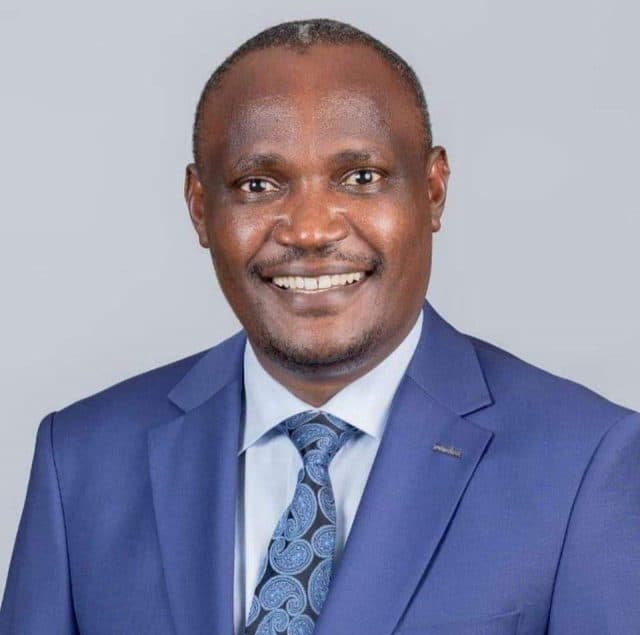
Treasury CS John Mbadi reveals plans to extend the Standard Gauge Railway to Malaba without accumulating new external debt.

Treasury CS John Mbadi reveals plans to extend the Standard Gauge Railway to Malaba without accumulating new external debt, signaling a shift in infrastructure financing.
The steel spine of Kenya's rapidly growing economy is set to stretch further west, but this time, without the incredibly heavy anchor of foreign loans. The government has drastically pivoted its strategy for the Standard Gauge Railway (SGR), aiming to connect Naivasha to Kisumu and the Malaba border through innovative financing.
This major development is absolutely crucial as Kenya wrestles with a crushing national debt burden, much of it heavily owed to external creditors like China. Finding a non-debt pathway to complete the SGR is not just a logistical necessity; it is a profound test of the state's fiscal sovereignty and its ability to deliver mega-projects in a severely constrained economic environment.
For years, Kenya’s massive infrastructure binge was primarily fueled by highly expensive commercial loans, prominently featuring the multi-billion-dollar deals inked with China’s Exim Bank for the initial Mombasa-Nairobi and Nairobi-Naivasha SGR phases. While these projects undeniably transformed the local transport landscape, they left behind a suffocating repayment schedule that routinely swallows a massive chunk of ordinary tax revenue. Treasury Cabinet Secretary John Mbadi has now drawn a firm line in the sand. He categorically stated that the administration is entirely done with accumulating new external debt for the railway. This reflects a growing realization within the Treasury that the country simply cannot borrow its way to prosperity without risking a catastrophic sovereign default.
If foreign loans are strictly off the table, how will Kenya finance a project estimated to cost hundreds of billions of shillings? The government is heavily banking on "creative financing options." While Mbadi remained somewhat tight-lipped on the exact granular details, financial analysts strongly suggest this will likely involve sophisticated Public-Private Partnerships (PPPs). Under a PPP model, massive private consortiums would completely fund, build, and operate the railway line for a specific concession period to seamlessly recoup their enormous investments before eventually transferring ownership back to the state. Additionally, the government might seek to intensely leverage domestic capital markets through specialized infrastructure bonds, effectively tapping into local institutional investors and wealthy pension funds.
The proposed extension of the SGR to Kisumu is poised to completely revolutionize the economy of the entire Lake Victoria basin. For decades, the region has suffered from chronic logistical bottlenecks that heavily stifle local trade and industrialization. A modern, high-speed rail connection would seamlessly link Kisumu’s revamped port directly to the Indian Ocean, massively facilitating the efficient movement of heavy bulk cargo. This would instantly lower the prohibitive cost of doing business, aggressively attract new manufacturing hubs, and create thousands of desperately needed direct and indirect jobs for the youth. Furthermore, it would breathe new, vibrant life into the agricultural sector by heavily reducing crippling post-harvest losses and rapidly speeding up access to lucrative markets.
Beyond Kenya’s immediate borders, pushing the SGR to the Malaba border crossing is a strategic geopolitical masterstroke. Uganda is Kenya’s largest regional trading partner, heavily relying on the Port of Mombasa for the vast majority of its essential imports and exports. However, the current reliance on the dilapidated meter-gauge railway and a heavily congested, dangerous road network makes transport painfully slow and incredibly expensive. Completing the SGR to Malaba would dramatically slash transit times and heavily reduce immense logistical costs, fiercely cementing Kenya’s crucial position as the premier logistics gateway for the entire landlocked East African hinterland, including Rwanda, Burundi, and the Eastern Democratic Republic of Congo.
Despite the undeniable optimism, delivering this monumental project without sovereign guarantees will be incredibly difficult. Key challenges the state must overcome include:
The successful execution of the Naivasha-Malaba SGR extension via alternative, non-debt financing will serve as the ultimate litmus test for the current administration’s widely touted economic competence. It represents a necessary, bold paradigm shift from the deeply flawed "borrow-and-build" model of the past decade towards a far more sustainable, private-sector-led approach.
As the Treasury intensely scrambles to finalize the complex financial blueprints, all eyes remain firmly fixed on CS Mbadi. If he can pull off this incredible logistical and financial miracle, it will not only complete Kenya’s most ambitious transport network but also provide a powerful, replicable blueprint for sustainable infrastructure development across the entire African continent.
Keep the conversation in one place—threads here stay linked to the story and in the forums.
Sign in to start a discussion
Start a conversation about this story and keep it linked here.
Other hot threads
E-sports and Gaming Community in Kenya
Active 9 months ago
The Role of Technology in Modern Agriculture (AgriTech)
Active 9 months ago
Popular Recreational Activities Across Counties
Active 9 months ago
Investing in Youth Sports Development Programs
Active 9 months ago
Key figures and persons of interest featured in this article