We're loading the full news article for you. This includes the article content, images, author information, and related articles.
As criminal warlords seize control of territory, the theoretical independence of the state crumbles before the grim reality of negotiated survival.
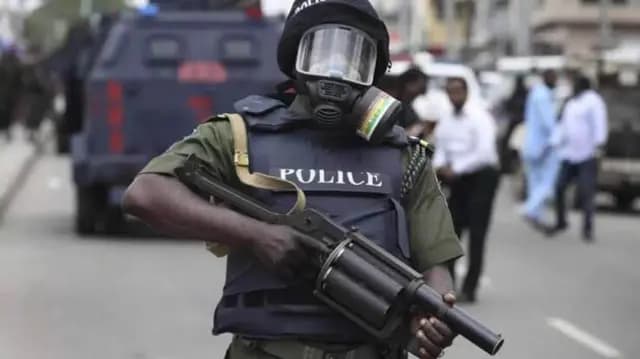
Sovereignty, when stripped of its ability to protect the life and property of the citizen, becomes a hollow noun, a decorative word used by elites to mask the rotting architecture of the state. In his piercing analysis, Osmund Agbo forces us to confront an uncomfortable truth that many in Abuja would prefer to ignore: for millions of Nigerians living in the so-called "ungoverned spaces," the Nigerian state has ceased to exist. In its place, a new, brutal order has emerged, presided over by bandits and insurgents who levy taxes, dispense "justice," and hold the power of life and death.
Agbo's reflection, triggered by the profound essays of Professor Jibrin Ibrahim, dissects the national anxiety surrounding Nigeria's deepening security partnership with the United States. The uproar over "handing over sovereignty" to foreign powers reveals a deep cognitive dissonance. We jealously guard the abstract concept of sovereignty while surrendering the physical reality of our land to non-state actors. If a foreign power helps reclaim these territories, is that a loss of sovereignty, or the necessary first step to restoring it?
The term "ungoverned spaces" is a dangerous euphemism. As Agbo rightly argues, these spaces are not ungoverned; they are merely governed by someone else. In parts of the North-East and North-West, the vacuum left by the retreating Nigerian military has been filled by "criminal sovereigns." These warlords have established a monopoly on violence, the defining characteristic of a state.
When a farmer in Chiraa pays a levy to the Islamic State to harvest his crops, he is acknowledging a new sovereign. When communities in Zamfara negotiate peace deals with bandit kingpins, they are engaging in foreign relations with a rival power. To these citizens, the debates in Abuja about "imperialism" are irrelevant. Their reality is binary: security or death. The Nigerian state's failure to provide the former has forced them to accept the latter from whoever wields the gun.
The essay poses a chilling question: given the choice between chaotic violence and an orderly but exploitative occupation, what would the average citizen choose? History suggests that survival precedes ideology. A nation under siege will often prioritize order over abstraction. The profound tragedy of modern Nigeria is that its citizens are increasingly forced to make this impossible choice.
Agbo's analysis ultimately lands on a pragmatic, albeit bitter, conclusion. If an external partnership—even one with the baggage of American geopolitical interests—can help dismantle these insurgent networks and restore the state's monopoly on force, it may be a necessary pill to swallow. The postcolonial sensibilities that recoil at foreign boots on the ground must be weighed against the daily carnage of homegrown terror.
We are left defending a word rather than a condition. Until the Nigerian state can project power into every forest and hamlet, its sovereignty remains a fiction. And as Agbo warns, a people pushed to the brink may eventually stop caring who provides their security, as long as someone—anyone—does.
Keep the conversation in one place—threads here stay linked to the story and in the forums.
Sign in to start a discussion
Start a conversation about this story and keep it linked here.
Other hot threads
E-sports and Gaming Community in Kenya
Active 9 months ago
The Role of Technology in Modern Agriculture (AgriTech)
Active 9 months ago
Popular Recreational Activities Across Counties
Active 9 months ago
Investing in Youth Sports Development Programs
Active 9 months ago