We're loading the full news article for you. This includes the article content, images, author information, and related articles.
Two women from vastly different worlds—Rwanda and Northern Ireland—are finding common ground in the face of escalating climate-driven agricultural failure.
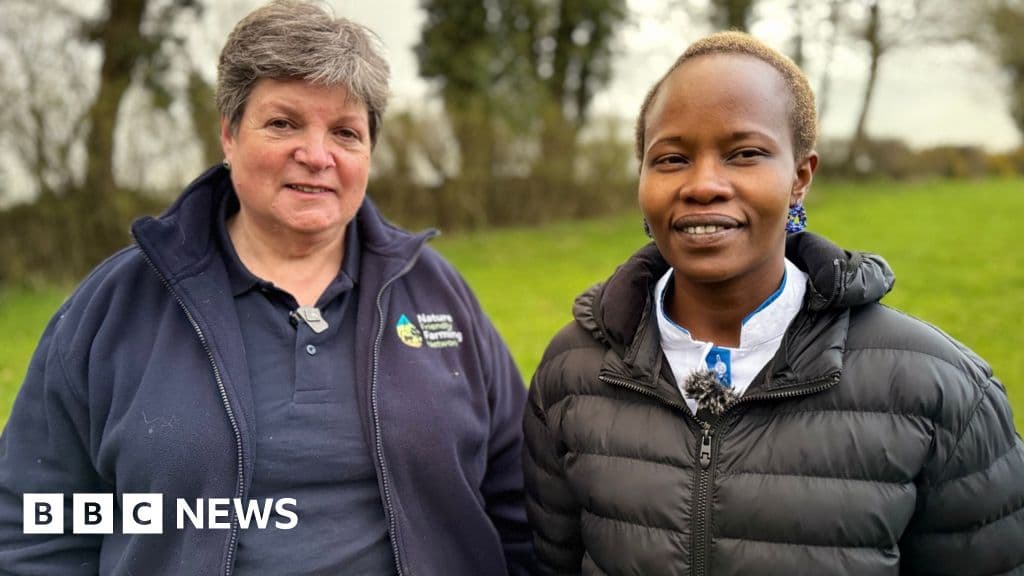
The damp, rolling hills of County Down in Northern Ireland feel a world away from the volcanic slopes of Rwanda. Yet, for Jackline Mugoboka, a smallholder farmer in Rwanda, and Louise Skelly, a sheep farmer in Northern Ireland, the distance has collapsed. They share a vocational intimacy dictated by the soil—and an increasingly perilous struggle against an erratic climate that respects no borders. Their recent exchange of stories, facilitated by the charity Trocaire, crystallizes a global reality: agriculture, the backbone of human survival, is under siege, and the burden is falling heaviest on the women who sustain it.
This is not merely a story of two individuals it is a microcosm of a systemic crisis. In Rwanda, where nearly 90 percent of the agricultural workforce is female, climate change is no longer a future threat—it is a present-day catastrophe manifested in catastrophic landslides and erratic rainfall that obliterated livelihoods during the 2023 disaster season. Across the globe, in the temperate pastures of Northern Ireland, the challenge manifests as constant soil saturation, flash flooding that halts essential operations, and the relentless pressure to manage livestock in conditions that defy historical patterns. Both women, despite the radical disparity in their geographic and economic environments, are forced to adapt or perish.
In Rwanda, the consequences of climate change are written in the topography of the land. The 2023 floods, which claimed over 130 lives and displaced thousands, were more than a weather event they were an economic erasure for rural families. For Mugoboka, who cultivates a one-hectare plot—more than twice the national average for a Rwandan smallholder—the soil is not just a medium for growth it is a precarious asset. According to the United Nations Development Programme, disasters attributed to climate change have spiked by 134 percent globally since 2000, and Rwanda’s reliance on rain-fed agriculture means that every deviation in weather patterns translates directly into food insecurity.
Conversely, in Northern Ireland, the struggle is one of extreme moisture. Queen’s University Belfast researchers have noted that farmers in the region are increasingly battling flash flooding that hampers operations and reduces crop yields. While the scale of displacement differs from the Rwandan experience, the economic anxiety is remarkably similar. Farmers are facing the daily, grueling reality of managing livestock in waterlogged fields, where unseasonal weather can destroy an entire year’s work in weeks. The shared experience between Mugoboka and Skelly highlights that while the hazards differ—landslides versus soil saturation—the psychological and economic strain of climate volatility is a universal language.
The shared struggle of these two women brings into sharp focus the feminization of agriculture, a global trend where women bear an outsized portion of the labor in a sector that is increasingly fragile. In Rwanda, as in many parts of the Global South, traditional gender roles dictate that women are responsible for water, firewood, and the primary labor of the field. Climate change has turned these essential tasks into hazardous, time-consuming burdens. As water sources dry up or become polluted by runoff, women must walk further and longer to secure their families’ basic needs, stealing time from paid employment and education.
This gendered vulnerability is not unique to Rwanda. Research from international agencies indicates that across the developing world, women are disproportionately tasked with domestic and agricultural duties. When environmental degradation strikes, the immediate cost is paid in the currency of their time and physical health. Without access to land titles, credit, or decision-making power, these women are often excluded from the very climate adaptation strategies that could save their livelihoods.
For readers in Nairobi and across Kenya, the conversation between these two farmers holds profound resonance. Kenya is navigating its own version of this crisis, with the agricultural sector contributing roughly 24 percent of the national GDP. Yet, like Rwanda, this engine is sputtering under the weight of climate change. Data from the Kenya National Drought Management Authority reveals that droughts affect over 4 million Kenyans annually, with women—who are the bedrock of local food systems—bearing the brunt of the shock. During the 2021-2022 drought, the country saw livestock losses exceeding KES 60 billion, a staggering hit to the wealth of rural households where women are the primary livestock carers.
However, a shift is underway. Projects such as the UN Women-supported initiative in Kenya, which promotes climate-smart agriculture (CSA), have begun to empower women by providing training in water conservation, drought-resistant crop varieties, and better seed handling. These efforts have demonstrated that when women are given the resources to adapt, they become the most effective agents of resilience. In 2024 alone, specific CSA projects enabled hundreds of women across counties like Laikipia and Kitui to generate significant income and stabilize their livelihoods against climate shocks.
The meeting of Jackline Mugoboka and Louise Skelly serves as a necessary reminder that climate change is an equity issue as much as an ecological one. It is not sufficient to focus solely on emission reductions when the people at the frontlines of food production are denied the tools to survive the transition. Bridging the gap between the Global North and South—between the smallholder in the Rwandan hills and the livestock farmer in County Down—requires acknowledging that while their soils are different, their stakes are identical.
As the international community debates the future of agricultural policy, the focus must shift to the granular level of the farm-gate. Whether in the Rift Valley or the valleys of County Down, the future of food security depends on recognizing, resourcing, and respecting the women who, against all odds, continue to plant, harvest, and feed the world.
Keep the conversation in one place—threads here stay linked to the story and in the forums.
Sign in to start a discussion
Start a conversation about this story and keep it linked here.
Other hot threads
E-sports and Gaming Community in Kenya
Active 10 months ago
The Role of Technology in Modern Agriculture (AgriTech)
Active 10 months ago
Popular Recreational Activities Across Counties
Active 10 months ago
Investing in Youth Sports Development Programs
Active 10 months ago



