We're loading the full news article for you. This includes the article content, images, author information, and related articles.
President William Ruto has officially announced that the construction of the long-awaited Nairobi–Thika Expressway will commence in September 2026, marking a monumental step in alleviating chronic traffic congestion along Kenya's busiest transport artery.
President William Ruto has officially announced that the construction of the long-awaited Nairobi–Thika Expressway will commence in September 2026, marking a monumental step in alleviating chronic traffic congestion along Kenya's busiest transport artery.
The rumble of heavy machinery will soon echo along the Thika superhighway corridor, as President William Ruto officially sets September 2026 for the groundbreaking of the Nairobi–Thika Expressway.
For millions of Nairobi residents and the broader East African logistics network, this announcement is a lifeline. The metropolis has long choked under the weight of vehicular gridlock, hemorrhaging an estimated billions of shillings annually in lost productivity and fuel wastage. By seamlessly linking the city's northern satellites to its core, this mega-project transcends mere asphalt—it is a critical economic conduit designed to propel Kenya's commercial dominance into the next decade.
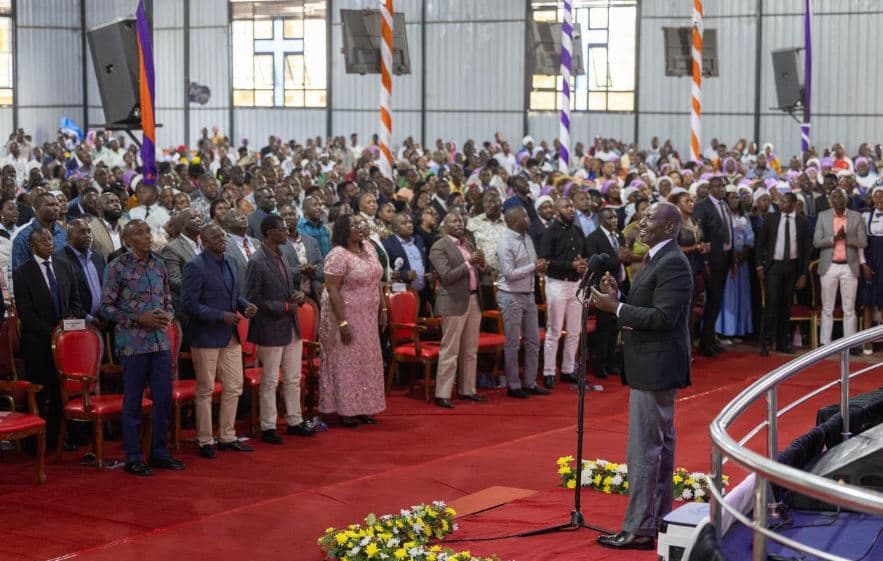
Spanning an ambitious 60 kilometers, the new expressway is envisioned not as an isolated toll road, but as the masterstroke in a broader, interconnected matrix of urban highways. President Ruto, speaking to congregants during a Sunday service at Jesus Compassion Ministry (JCM) in Ruiru on February 22, 2026, explicitly linked this upcoming development to the near-complete expansion of the Jomo Kenyatta International Airport (JKIA) to Westlands route.
This strategic integration means that freight originating from East Africa's busiest aviation hub, or cargo moving from the Inland Container Depot, will soon enjoy an uninterrupted, high-speed transit corridor traversing the entire capital. The ripple effects for supply chains—stretching as far as Kampala and Kigali—cannot be overstated. Reduced transit times translate directly to lower overheads for regional distributors.
Yet, the aggressive pursuit of first-world infrastructure frequently collides with the gritty realities of third-world informal economies. The specter of forced evictions loomed large over the President's announcement, directly referencing recent, highly controversial demolitions spearheaded by the Kenya National Highways Authority (KeNHA). In Githurai, a bustling economic node along the planned route, night-time bulldozing operations flattened over 300 informal stalls, abruptly severing the livelihoods of hundreds of micro-entrepreneurs.
The situation prompted an impassioned intervention from Kiambu Governor Kimani Wamatangi. While affirming his administration's unwavering support for the overarching modernization agenda—including the slated construction of a state-of-the-art Githurai terminal—Wamatangi decried the callous nature of the evictions. He advocated for a structured, humane transition, proposing a high-level summit at State House to orchestrate financial compensation. “Getting Sh10,000 or Sh20,000 (approx. KES 10k-20k) to facilitate their relocation won't be that difficult,” the Governor implored, highlighting the fragile economic tightrope walked by the urban poor.
The friction in Githurai provided a microcosm of the governance challenges facing the Kenya Kwanza regime. Rather than deflecting the heat to semi-autonomous state agencies, President Ruto utilized the pulpit to enforce a doctrine of collective governmental responsibility. He issued a stern rebuke against political grandstanding and the shifting of blame among leaders.
“If a problem has emerged in Githurai, let us not blame each other. We should solve the problem together,” Ruto asserted, demanding a unified front from his lieutenants. His rhetorical challenge—“There's no one in a lesser position among us here. We are all in government. Who is to be blamed here?”—serves as a clear directive that the collateral social costs of state projects must be managed collectively.
Looking beyond the immediate localized disruptions, the Nairobi–Thika Expressway represents a formidable piece of regional statecraft. As neighboring nations aggressively upgrade their own logistical frameworks, Kenya is under immense pressure to justify its status as the commercial gateway to East Africa. A congested Nairobi is a deterrent to foreign direct investment (FDI); a fluid, interconnected Nairobi is a magnet.
By prioritizing projects of this magnitude, the administration is telegraphing a strong signal to global markets: Kenya is open, accessible, and ready for scaled-up industrial activity. The road to September 2026, however, will be paved with complex negotiations, balancing macroeconomic ambitions against the microeconomic survival of the Kenyan masses.
As the blueprint moves toward ground-breaking, the ultimate test will be whether the government can build a highway to the future without bulldozing the present livelihoods of its most vulnerable citizens.
Keep the conversation in one place—threads here stay linked to the story and in the forums.
Sign in to start a discussion
Start a conversation about this story and keep it linked here.
Other hot threads
E-sports and Gaming Community in Kenya
Active 9 months ago
The Role of Technology in Modern Agriculture (AgriTech)
Active 9 months ago
Popular Recreational Activities Across Counties
Active 9 months ago
Investing in Youth Sports Development Programs
Active 9 months ago
Key figures and persons of interest featured in this article