We're loading the full news article for you. This includes the article content, images, author information, and related articles.
Raphael Tuju lies in ICU under police watch, as a billion-shilling property war and a controversial legal charge fuel a deep national political rift.

The sterile, guarded corridors of Karen Hospital have become the latest, unexpected theater for Kenya’s volatile political landscape, where the life of former Cabinet Secretary Raphael Tuju hangs in a precarious balance. Admitted to the Intensive Care Unit under strict police supervision, Tuju’s current condition has transformed a routine legal proceeding into a national flashpoint, pitting allegations of state overreach against accusations of political stage-management.
The unfolding saga is not merely a story of one man’s deteriorating health it is a manifestation of the deeper, often subterranean, tensions defining the current administration’s struggle with dissent and the opposition’s battle for institutional legitimacy. With a billion-shilling property dispute looming in the background and a legal charge for giving false information hanging over his head, Tuju is now a symbol of the friction between individual rights, the rule of law, and the ruthless calculus of Kenyan political survival.
At the center of this crisis is a charge under Section 129(a) of Kenya’s Penal Code, an obscure provision that has suddenly been thrust into the national consciousness. Prosecutors allege that Tuju knowingly provided false information to public officers on March 21, 2026, when he reported that he was being trailed by unknown assailants, claiming this move prompted a state-wide security response for a disappearance that the state characterizes as staged.
Legal analysts note that Section 129 is designed to protect public resources from being squandered on baseless claims, yet its application in high-profile political cases often sparks intense debate. A conviction for giving false information carries a potential jail term of up to three years. However, the legal battle is not merely about the veracity of the claim it is a battle for narrative control. The state, led by the Directorate of Criminal Investigations, claims to have incontrovertible evidence that Tuju was at his residence throughout the period he claimed to be in hiding, rendering the police response a misuse of public machinery.
For those familiar with Raphael Tuju’s long public life, the sight of him in a hospital bed is a hauntingly familiar image, yet one that carries weightier implications today. In February 2020, Tuju survived a catastrophic road accident on the Nairobi-Nakuru highway that resulted in 21 injuries, including 18 broken bones and severe internal trauma. That incident, which required specialized care in the United Kingdom, left him with permanent, debilitating spinal complications.
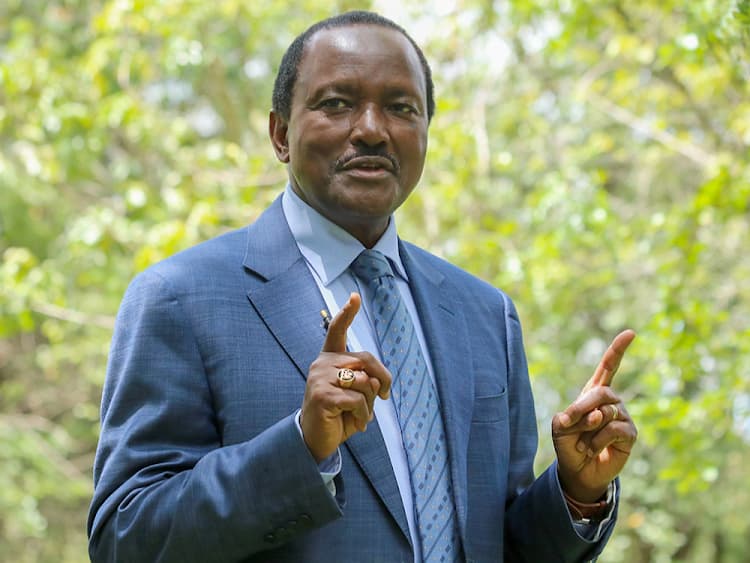
His legal team, led by figures like Wiper Party leader Kalonzo Musyoka, argues that the physical handling of Tuju during his arrest at his Karen residence was not just an act of state coercion but a potential health hazard that worsened his pre-existing injuries. They contend that the police, in their rush to execute an arrest, disregarded the clear medical vulnerability of a man who is essentially a recovering patient. This perspective has galvanized a segment of the opposition, which views the arrest as an act of political brutality rather than a legitimate enforcement of the law.
Beneath the surface of this political posturing lies a more prosaic, yet equally aggressive, financial conflict. Observers of the case point to an ongoing dispute involving the East African Development Bank (EADB), which has been pursuing the auction of Tuju’s prime assets, including the Dar Business Park and Entim Sidai, to recover a loan debt estimated in the billions of shillings. Some political commentators suggest that the current turmoil is intrinsically linked to these financial pressures.
The President, William Ruto, has publicly weighed in on the saga, advising Tuju to seek "honest friends" who can assist him in saving his estate, rather than those who would exploit his misfortunes for political gain. By framing the narrative this way, the administration is effectively delegitimizing the opposition’s defense of Tuju, portraying it as a cynical attempt to weaponize a man’s private financial and medical struggles to score cheap points against the government.
The polarization surrounding this incident is a microcosm of the wider fatigue felt by many Kenyans, who see their political leaders constantly locked in cycles of accusation and counter-accusation. Whether one views Tuju as a victim of state persecution or a political operative who overplayed his hand in a gambit for sympathy, the consequences are starkly real. The hospital, intended to be a place of healing, has become a battlefield where the medical chart is a political document and the presence of police guards serves as a constant reminder of the state’s unwavering gaze.
As Tuju remains under ICU monitoring, the nation waits for the next phase of this drama—a court session that may or may not proceed, a medical report that may or may not be made public, and a political temperature that shows no sign of cooling. The question that remains is whether the institutions of justice can untangle the threads of genuine legal violation from the knot of political opportunism, or if the case will simply vanish into the murky waters of history, leaving behind only the wreckage of a reputation and a fractured public discourse.
Keep the conversation in one place—threads here stay linked to the story and in the forums.
Sign in to start a discussion
Start a conversation about this story and keep it linked here.
Other hot threads
E-sports and Gaming Community in Kenya
Active 10 months ago
The Role of Technology in Modern Agriculture (AgriTech)
Active 10 months ago
Popular Recreational Activities Across Counties
Active 10 months ago
Investing in Youth Sports Development Programs
Active 10 months ago
Key figures and persons of interest featured in this article