We're loading the full news article for you. This includes the article content, images, author information, and related articles.
Political analyst Herman Manyora’s call for Ford Kenya to merge with UDA highlights the deepening tensions over political identity and dominance in Kenya.
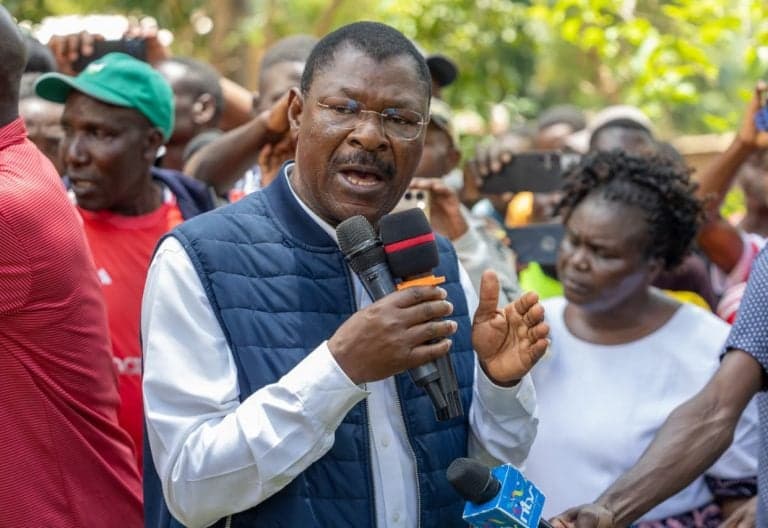
The Kenyan political landscape is undergoing a silent, tectonic shift as voices from within the analytical community amplify calls for the dissolution of smaller coalition partners into the governing United Democratic Alliance. The recent assertion by political analyst Herman Manyora that National Assembly Speaker Moses Wetang’ula should fold the Ford Kenya party into the UDA framework serves as a stark reminder of the fragile state of independent political identities within the Kenya Kwanza coalition.
This is not merely a debate about administrative housekeeping it is a fundamental question of political survival, legacy, and the future of multi-party democracy in East Africa. As the political calendar inches closer to the next election cycle, the pressure to consolidate power under a unified banner has sparked a fierce, albeit quiet, debate in the corridors of Nairobi’s power centers. At stake is the identity of one of Kenya’s oldest political institutions, which has weathered decades of tumult, and the strategic positioning of its leadership in a government dominated by a behemoth political machine.
Herman Manyora’s argument, articulated in recent commentary, rests on the premise of political efficiency and the centralization of influence. The logic follows a familiar trajectory in contemporary Kenyan politics: to maximize success in the upcoming 2027 elections, the ruling coalition must present a monolithic front. In this view, fragmented parties—even those within the coalition—represent inefficiencies that could dilute voter concentration and internal party cohesion.
However, the proposed dissolution of Ford Kenya is fraught with complexities that transcend simple electoral math. Ford Kenya, historically rooted in the struggle for multi-partyism and led by iconic figures such as the late Michael Wamalwa Kijana, carries a sentimental and historical weight that few other parties possess. For Speaker Moses Wetang’ula, the decision to fold the party would be a choice between the preservation of this historical legacy and the pragmatic pursuit of long-term political relevance within a UDA-dominated system.
Moses Wetang’ula occupies a unique position in this unfolding drama. As the Speaker of the National Assembly, he represents the impartial arbiter of parliamentary democracy. Simultaneously, as the party leader of Ford Kenya, he is tasked with the protection and expansion of his political base, primarily centered in the Bungoma region and the broader Western Kenya bloc. This duality creates an inherent tension. If he bows to the pressure of absorption, he risks alienating the grassroots supporters who view Ford Kenya not just as a political vehicle, but as a cultural and regional identity.
Economically, the impact of such a move would be felt in the allocation of political resources. Smaller parties often face the dual challenge of fundraising and complying with the increasingly stringent regulations set by the Office of the Registrar of Political Parties. An absorption into a larger entity like UDA provides immediate access to centralized infrastructure, but at the cost of autonomy. For a region like Western Kenya, which has historically oscillated in its political allegiances, the loss of a distinct party identity could have unforeseen consequences for local representation and the negotiation of development priorities with the national government.
Kenya is not unique in this trend toward political consolidation. Across the globe, emerging democracies often grapple with the cycle of multiparty fragmentation followed by periods of forced or strategic unification. In many instances, the push for dominant party systems—under the guise of national unity or efficiency—has been viewed with skepticism by democratic theorists. The concern is that when the boundaries between government and party blur, the capacity for internal dissent, which is the lifeblood of any democratic system, begins to erode.
Comparatively, countries in the Global South that have witnessed the total absorption of smaller parties into a single dominant movement have often seen a decline in the quality of debate within the legislative arm. Without the presence of smaller, distinct parties, the pressure for accountability is reduced, and the "echo chamber" effect within the ruling party can stifle innovation and corrective policy making. The Kenyan electorate, known for its high level of political engagement and skepticism of centralized power, has historically resisted absolute hegemony, a trait that the current political class must navigate with caution.
Data from recent political surveys indicates that voters in the Western region remain deeply attached to the idea of a "local" political home, even when that home is part of a national coalition. The fear among grassroots operatives is that merging into UDA would render them invisible, a mere footnote in a larger manifesto written in Nairobi. Whether Wetang’ula chooses to follow the advice to merge or opts to maintain the independence of Ford Kenya will serve as a bellwether for the behavior of other coalition partners.
The internal metrics for such a decision are stark. With the 2027 General Election roughly 18 months away, the window for restructuring is closing. Analysts observe that a merger would require not just political will but a restructuring of the party constitution, approval from the National Delegates Conference, and a delicate re-negotiation of the power-sharing agreement within the Kenya Kwanza coalition. This is a complex bureaucratic and political endeavor that carries as much risk of failure as it does the promise of integration.
Ultimately, the conversation sparked by Manyora’s comments is a reflection of a deeper, ongoing struggle to define the nature of party politics in Kenya. Is a political party merely a vehicle for gaining executive power, or is it a vessel for ideological representation? If it is the former, the argument for consolidation is ironclad. If it is the latter, the dissolution of Ford Kenya would represent a significant, perhaps irreversible, loss to the diversity of the Kenyan political tapestry. As the political maneuvering intensifies, the eyes of the electorate remain fixed on whether the Speaker will choose the path of the organization man or that of the custodian of history.
Keep the conversation in one place—threads here stay linked to the story and in the forums.
Sign in to start a discussion
Start a conversation about this story and keep it linked here.
Other hot threads
E-sports and Gaming Community in Kenya
Active 10 months ago
The Role of Technology in Modern Agriculture (AgriTech)
Active 10 months ago
Popular Recreational Activities Across Counties
Active 10 months ago
Investing in Youth Sports Development Programs
Active 10 months ago



