We're loading the full news article for you. This includes the article content, images, author information, and related articles.
In private, invitation-only environments, a dining companion is not “company.” It is presence with composure—coordinated with intention, executed with discretion, and protected by standards.
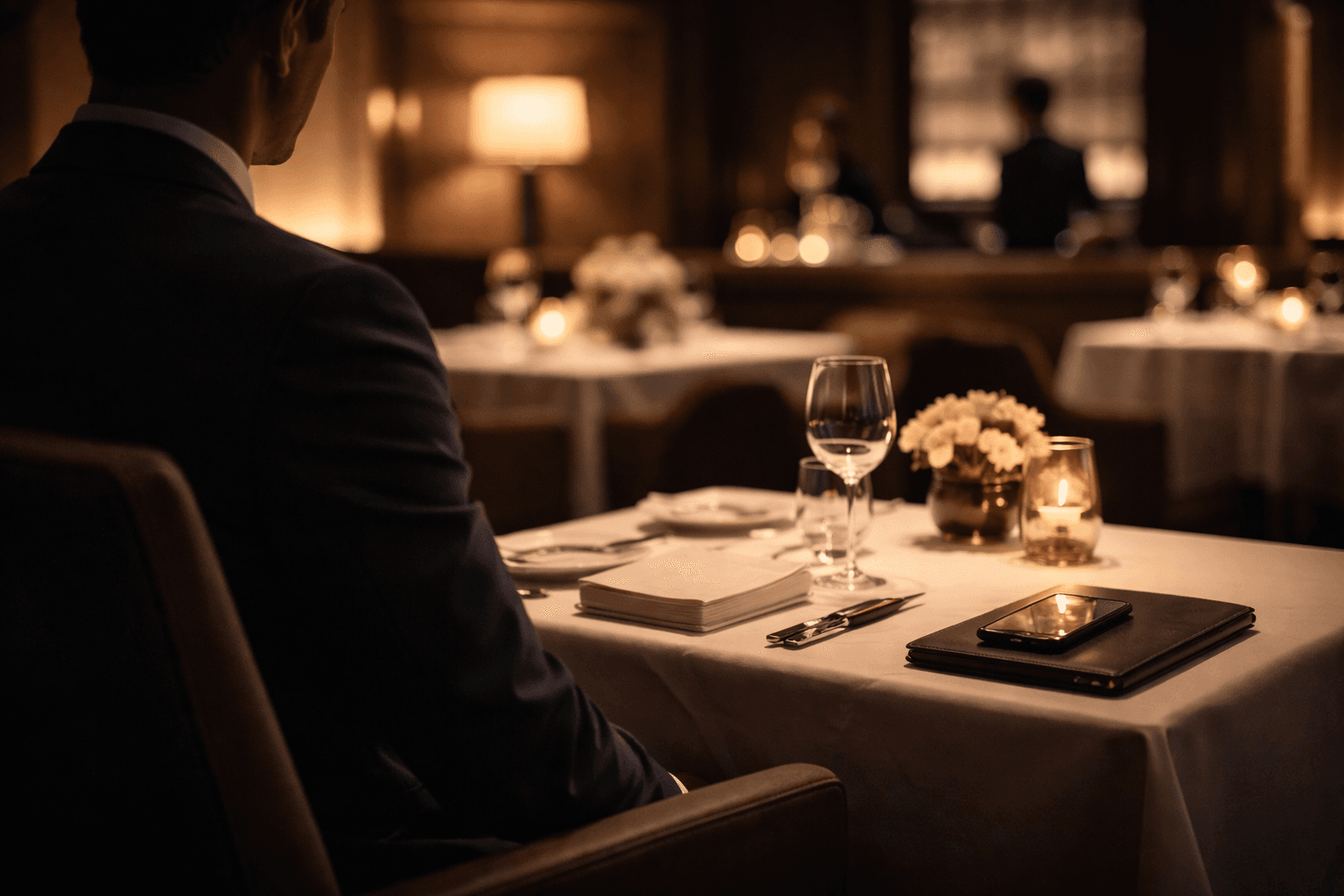
Taste is not about where you dine. It’s about how the evening is structured, how boundaries are respected, and how little needs to be said for everything to feel clear.
In private, invitation-only environments, a dining companion is not “company.” It is presence with composure—coordinated with intention, executed with discretion, and protected by standards.
This is what tasteful coordination looks like.
The most refined experiences are never improvised. They are clearly defined before they begin.
Tasteful coordination removes ambiguity:
What the evening is (dinner, conversation, event continuation)
Where it takes place (venue type, not just a name)
How it flows (arrival, duration, exit)
What is expected—and what is not
When clarity is present, everything else becomes effortless.
A well-structured brief is the difference between noise and control.
Copy-paste template:
“Private dinner at a professionally staffed venue. Dress code: smart/formal. Time window: 7:30–10:00pm. Discretion required—no photos or posting. Conversation tone: calm and respectful. Boundaries: clearly defined. Independent arrivals and departures.”
Short. Specific. Complete.
Choose professionally staffed, low-exposure environments—hotel lounges, refined restaurants, private members’ spaces.
Avoid high-traffic, high-visibility settings.
Arrive within a defined window—not early, not late.
Timing signals respect and protects flow.
Tasteful presence is calm, attentive, and composed.
No over-talking. No over-explaining. No performance.
Phones remain silent and out of sight.
No table-facing screens, no interruptions, no casual scrolling.
Keep conversation:
Respectful
Non-invasive
Context-aware
Avoid probing into personal, financial, or sensitive areas unless clearly welcomed.
No photos
No recording
No location tagging
No post-event storytelling
What happens in the room stays in the room.
The strongest signal of taste is knowing when to leave.
End within the agreed time window—gracefully, without delay.
Tasteful coordination is enforced through behavior:
No pressure of any kind—social, conversational, or otherwise
No persistence after a boundary is set
No sharing of messages, identities, or details outside the engagement
No deviation from agreed expectations without mutual consent
Discipline is what makes the experience feel effortless.
They rely on spontaneity instead of structure
They confuse visibility with value
They leave expectations unspoken
They treat discretion as optional
In high-trust environments, these are not small mistakes—they are disqualifiers.
Private dining is not about being seen.
It is about being trusted, composed, and in control.
When coordination is clean, conduct is clear, and discretion is absolute, the experience speaks for itself—without ever needing to be shared.
Keep the conversation in one place—threads here stay linked to the story and in the forums.
Sign in to start a discussion
Start a conversation about this story and keep it linked here.
Other hot threads
E-sports and Gaming Community in Kenya
Active 9 months ago
The Role of Technology in Modern Agriculture (AgriTech)
Active 9 months ago
Popular Recreational Activities Across Counties
Active 9 months ago
Investing in Youth Sports Development Programs
Active 9 months ago