We're loading the full news article for you. This includes the article content, images, author information, and related articles.
The official entry of Lebara into the Nigerian telecommunications market has been championed by President Bola Tinubu as a resounding vote of confidence in the nation's digital growth trajectory.
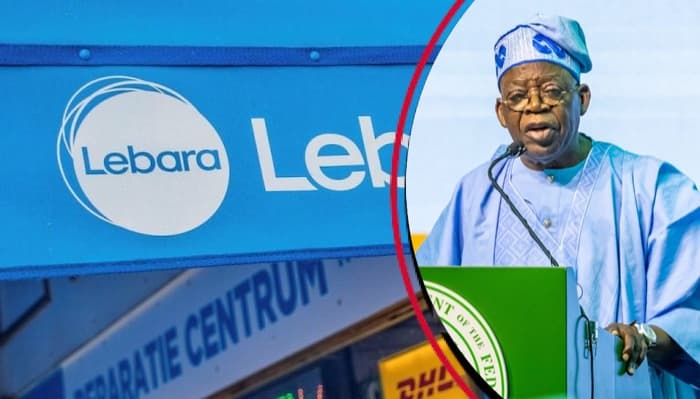
In a major endorsement of West Africa's booming technological landscape, President Bola Ahmed Tinubu has enthusiastically welcomed the official launch of Lebara Nigeria, framing the massive telecom entry as a definitive, undeniable vote of confidence in the nation's rapidly expanding digital economy.
This strategic expansion by the globally recognized telecommunications brand signals a profound shift in foreign direct investment patterns across the continent. For East African tech hubs, particularly Kenya's globally celebrated "Silicon Savannah," the aggressive growth of Nigeria's digital infrastructure presents both a formidable competitive challenge and a brilliant blueprint for attracting massive, international technological partnerships.
The telecommunications sector remains the absolute bedrock of Nigeria's economic diversification strategy. According to state data, the sector recorded an impressive 5.78 percent year-on-year growth in the third quarter of 2025, contributing a staggering 14 percent to the nation's Gross Domestic Product (GDP).
Lebara's highly anticipated entry is expected to further democratize internet access, aggressively drive down data costs through increased competition, and significantly accelerate digital financial inclusion for millions of unbanked citizens. President Tinubu explicitly praised Lebara's Chief Executive, Mrs. Teniola Stuffman, for her visionary commitment to expanding infrastructure and creating critical, high-value employment opportunities.
Investments of this magnitude are not merely corporate milestones; they are foundational economic pillars. Building out a comprehensive national network requires hundreds of millions of dollars—often exceeding initial capital injections of $100m (approx. KES 13bn)—which instantly translates into a massive surge in local engineering and retail jobs.
Nigeria's telecom trajectory offers a fascinating comparative study for Kenya, a nation where Safaricom has historically maintained dominant, nearly monopolistic market leadership. While Kenya pioneered mobile money with M-Pesa, the Nigerian market is currently experiencing explosive, highly competitive growth that is attracting intense global venture capital.
Both nations recognize that the future of African economic sovereignty is entirely digital. Kenya's ongoing efforts to roll out massive fiber-optic networks and deploy free public Wi-Fi directly mirror Nigeria's aggressive push to position itself as the continent's premier, undisputed technology and investment destination.
The high-profile launch event was significantly bolstered by the official presence of the British High Commission, represented by Deputy High Commissioner Mr. Johny Baxter. This diplomatic backing underscores the deep, enduring economic ties between Nigeria and the United Kingdom, specifically in the technology and service sectors.
President Tinubu was quick to note that such high-level, strategic collaborations perfectly reflect Nigeria's newly reformed openness to responsible foreign investment. The administration's recent macroeconomic stabilizing reforms, despite their severe short-term friction, are evidently succeeding in their primary goal: rebuilding shattered investor confidence.
For global telecom operators, the African youth demographic represents the last truly massive, untapped digital frontier. Companies that successfully navigate the complex regulatory and infrastructural challenges of the continent stand to secure unprecedented, generational subscriber growth.
As Lebara begins its aggressive rollout across Nigerian states, the competitive pressure will force incumbent telecom giants to heavily upgrade their legacy systems and vastly improve consumer service delivery. The ultimate winner in this corporate battle is the African consumer, who will finally gain access to faster, cheaper, and more reliable digital connectivity.
The realization of a fully connected continent is no longer a distant utopian dream; it is an active, heavily funded construction site. Governments must now ensure that their regulatory frameworks remain agile enough to support this rapid innovation without stifling it through excessive taxation.
Monitoring the markets at 11:30 EAT, financial analysts view the launch as a critical regional indicator. The entry of Lebara Nigeria proves that despite severe economic headwinds, the fundamental growth logic of the African digital ecosystem remains incredibly, undeniably strong.
Keep the conversation in one place—threads here stay linked to the story and in the forums.
Sign in to start a discussion
Start a conversation about this story and keep it linked here.
Other hot threads
E-sports and Gaming Community in Kenya
Active 9 months ago
The Role of Technology in Modern Agriculture (AgriTech)
Active 9 months ago
Popular Recreational Activities Across Counties
Active 9 months ago
Investing in Youth Sports Development Programs
Active 9 months ago
Key figures and persons of interest featured in this article