We're loading the full news article for you. This includes the article content, images, author information, and related articles.
The Treasury defends the Sh9 share price for the Kenya Pipeline Company IPO as a safe bet, aiming to raise Sh106 billion in Kenya’s biggest privatization drive in nearly two decades.
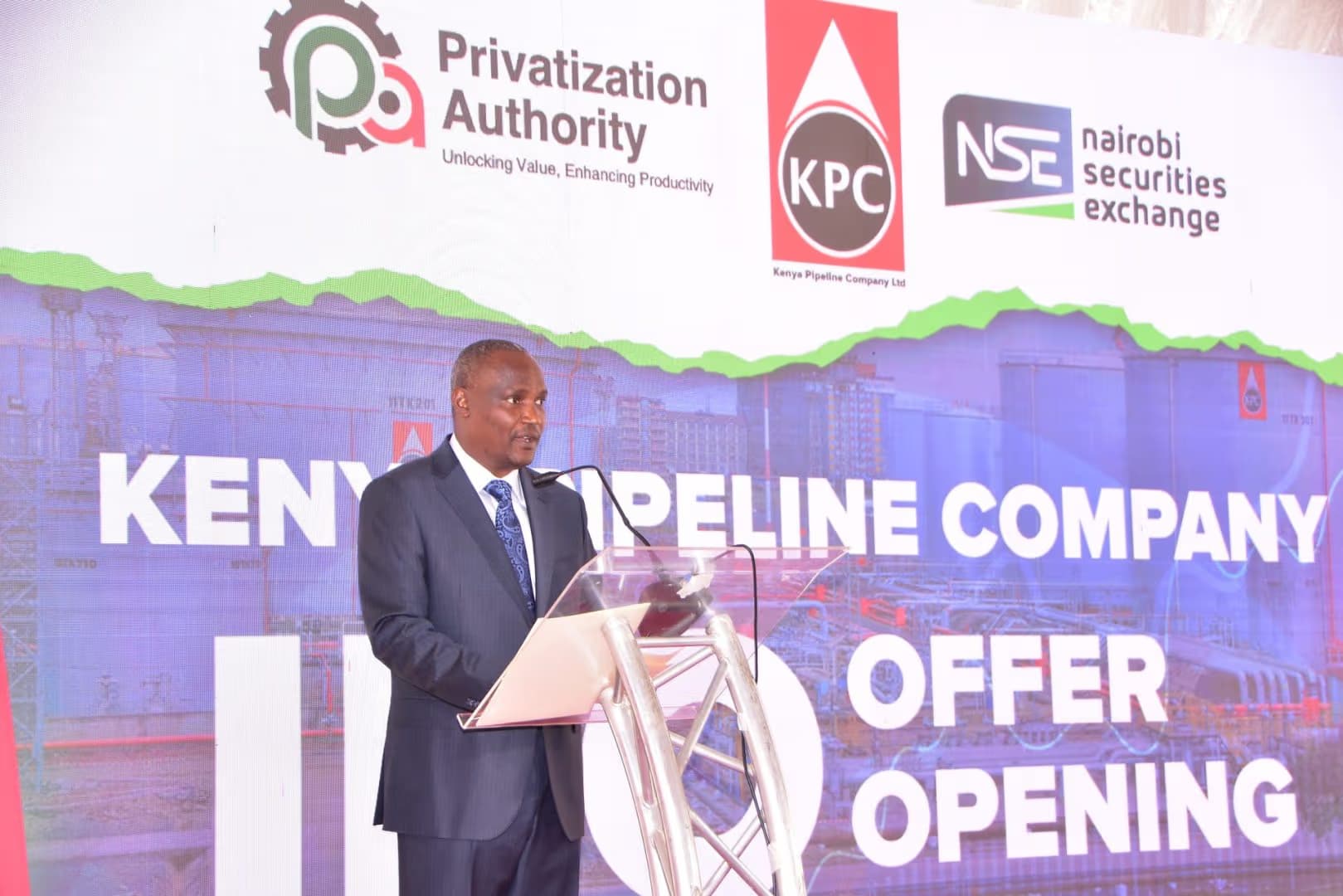
The government has placed a Sh106 billion bet on the Nairobi Securities Exchange, and it wants you to buy in. The Kenya Pipeline Company (KPC) IPO is live, offering shares at Sh9 a piece in a desperate bid to unlock capital for infrastructure.
This is the most significant privatization effort in decades, a litmus test for the Ruto administration’s economic philosophy. By offloading 65% of the state’s crown jewel in the energy sector, the Treasury is not just raising funds; it is attempting to rewrite the social contract with investors. But with the subscription window closing on February 19, the question remains: is this a genuine opportunity for wealth creation, or a fundraising exercise for a cash-strapped exchequer?
Treasury Cabinet Secretary John Mbadi has vigorously defended the Sh9 valuation, calling it a "safe investment." The math, on the surface, is compelling. KPC is a profitable, monopoly-holding entity with steady cash flows—a rarity in a market cluttered with speculative stocks. The offer of 11.81 billion shares is structured to favor Kenyans, with a 60% allocation reserved for local retail and institutional investors.
However, skepticism lingers. Critics argue that the valuation might be rich for a company whose fortunes are tied so tightly to policy whims and fuel demand volatility. Yet, the promise of regular dividends from a company that posted a Sh7.5 billion profit last year is the carrot being dangled to lure the wary mwananchi back to the bourse.
For the Nairobi Securities Exchange, this IPO is a make-or-break moment. A successful subscription would inject unmatched liquidity and confidence into a market that has struggled for momentum. A failure, however, would be a disastrous vote of no confidence in the state’s economic stewardship.
For the investor with Sh9 to spare, the KPC share represents a slice of the strategic backbone of Kenya’s economy. It is a long-term play on the region’s energy needs. The risks are real, but as the pipeline flows, so too—presumably—will the dividends.
Keep the conversation in one place—threads here stay linked to the story and in the forums.
Other hot threads
E-sports and Gaming Community in Kenya
Active 9 months ago
The Role of Technology in Modern Agriculture (AgriTech)
Active 9 months ago
Popular Recreational Activities Across Counties
Active 9 months ago
Investing in Youth Sports Development Programs
Active 9 months ago
Key figures and persons of interest featured in this article