We're loading the full news article for you. This includes the article content, images, author information, and related articles.
Treasury unveils aggressive plan to source 82% of borrowing locally, aiming to cut currency risk but sparking fears of a credit squeeze for the private sector.
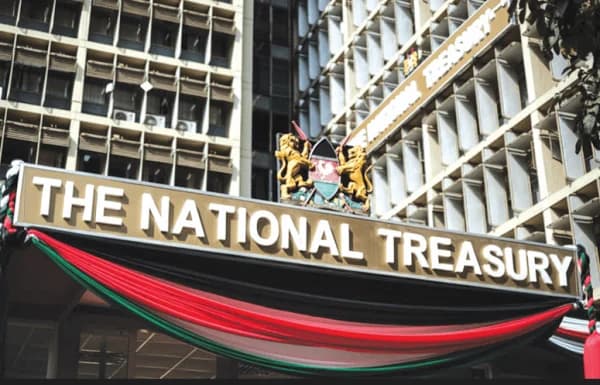
The National Treasury has unveiled a radical shift in its financing strategy, pivoting aggressively towards domestic markets to shield the economy from volatile currency risks. In a move that has sent ripples through the private sector, the government announced it will source a staggering 82 per cent of its gross borrowing requirements from local lenders in the coming medium term.
This decisive policy change, outlined in the 2026 Medium-Term Debt Management Strategy (MTDS), represents a significant departure from previous years where external financing played a more dominant role. By capping external borrowing at just 18 per cent, the Treasury is explicitly prioritizing stability over immediate liquidity, aiming to insulate the country’s Sh11.8 trillion debt stock from the unpredictable fluctuations of the shilling against the dollar. However, this strategy raises immediate and urgent questions about the availability of credit for private enterprises, which may now find themselves crowded out by the government`s insatiable appetite for funds.
The logic underpinning this shift is rooted in the harsh lessons of recent fiscal years. High exposure to foreign exchange risk has previously ballooned Kenya`s debt service obligations, forcing the Exchequer into a defensive posture. By turning inward, the Treasury hopes to "lock in" fixed rates and reduce the currency risk that has plagued the nation`s balance sheet.
Yet, the sheer scale of the target—82 per cent—is unprecedented. It implies that the government will be competing directly with households and small businesses for the limited pool of capital held by commercial banks and pension funds. Economic analysts warn that this could lead to a spike in interest rates, making loans prohibitively expensive for the very private sector engine that is supposed to drive economic growth.
The timeline for this strategy extends to 2029, a period during which the government hopes to stabilize its fiscal trajectory. The 2025 Debt Sustainability Analysis indicates that while Kenya`s debt remains sustainable, it is effectively walking a tightrope with a high risk of distress. The present value of public debt stands at a precarious 65.3 per cent of GDP.
Critics argue that without a corresponding reduction in recurrent expenditure, shifting the borrowing source is merely rearranging the deck chairs. "Borrowing domestically does not solve the solvency issue; it only changes who we owe," noted a leading economist in Nairobi today. "If the government does not rein in its spending, we will simply be creating a domestic debt crisis instead of an external one."
As the Treasury begins to implement this aggressive domestic borrowing program, the eyes of the financial world will be on the Central Bank of Kenya. The regulator’s ability to manage liquidity in the market while the government mops up billions will be the ultimate test of this new economic doctrine. For the average Kenyan entrepreneur, the coming months may bring tighter credit conditions, a reality that stands in stark contrast to the government`s promise of an economic renaissance.
Keep the conversation in one place—threads here stay linked to the story and in the forums.
Other hot threads
E-sports and Gaming Community in Kenya
Active 9 months ago
The Role of Technology in Modern Agriculture (AgriTech)
Active 9 months ago
Popular Recreational Activities Across Counties
Active 9 months ago
Investing in Youth Sports Development Programs
Active 9 months ago