We're loading the full news article for you. This includes the article content, images, author information, and related articles.
President Tinubu urges the release of Sudan's first Vice President, Riek Machar, signaling a major shift in diplomatic pressure.
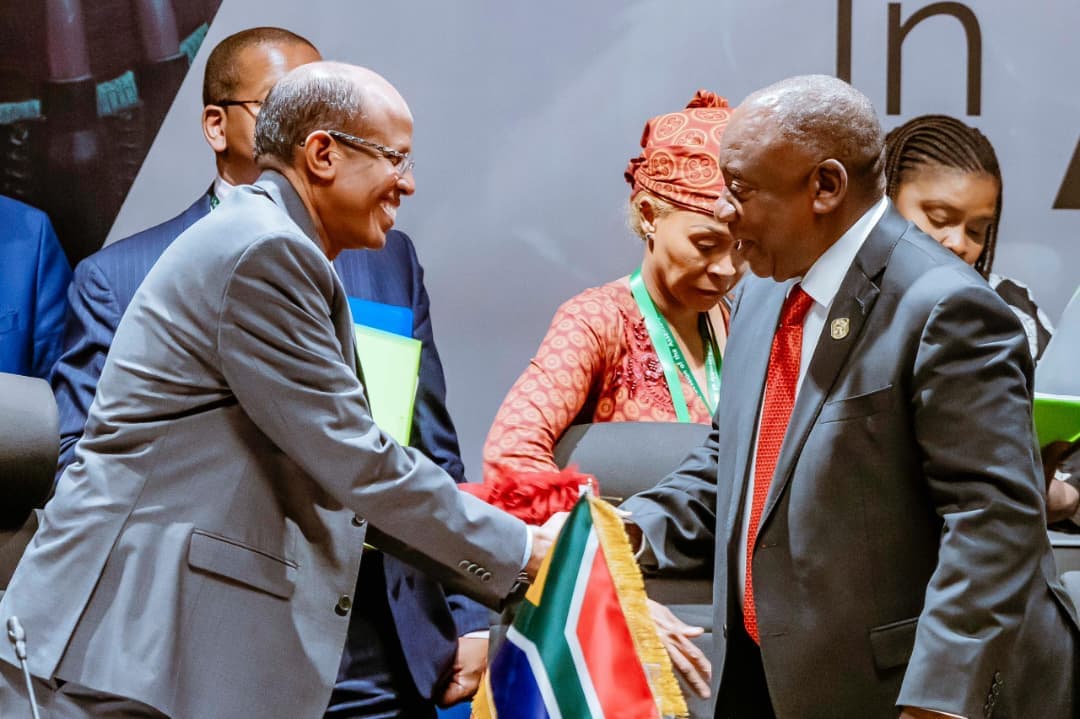
In a decisive diplomatic intervention at the African Union summit in Addis Ababa, Nigerian President Bola Tinubu has demanded the immediate release of South Sudan's First Vice President Riek Machar, signaling a hardened stance against the fragile transition in Juba.
The diplomatic corridors of Addis Ababa reverberated with a new urgency this morning as Nigeria threw its heavyweight political capital behind the stalling peace process in South Sudan. President Bola Tinubu, represented by Vice President Kashim Shettima at the high-stakes C-5 Plus Summit, did not mince words. The message to the transitional government in Juba was unequivocal: the status quo is no longer tenable.
“We cannot allow South Sudan to continue on its current trajectory,” Tinubu declared, his statement cutting through the diplomatic pleasantries often associated with African Union gatherings. The core of his demand—the unconditional release of First Vice President Riek Machar and other detained opposition figures—marks a significant pivot. It suggests that Abuja views the restriction of opposition leaders not as a security measure, but as the primary bottleneck to the revitalized peace agreement.
Nigeria’s intervention comes at a critical juncture. With the transitional period repeatedly extended and elections looming as a logistical and political mirage, the patience of regional power brokers is wearing thin. By explicitly calling for an "all-inclusive national dialogue," Tinubu is effectively challenging the legitimacy of a peace process that excludes its primary dissenters.
For Kenya, a frontline state in the South Sudan crisis, Nigeria’s re-entry into the fray is a double-edged sword. While it adds welcome pressure on Juba, it also highlights the limitations of IGAD’s recent mediation efforts. Nairobi has long borne the brunt of South Sudan’s instability, from refugee flows to illicit arms proliferation. A destabilized neighbor is a direct threat to Kenya’s economic corridor, particularly the LAPSSET project which relies on a peaceful South Sudan for viability.
“Without national unity and elite consensus, not much can be achieved,” Tinubu warned. It is a sentiment that resonates deeply in Nairobi, where the cost of regional instability is calculated not just in diplomatic hours, but in trade deficits and security deployments. As the summit concludes, the eyes of the continent turn to President Salva Kiir. Will he heed the call of the continent's economic giant, or will Juba retreat further into isolation?
The clock is ticking on the transition, and Abuja has just reset the alarm.
Keep the conversation in one place—threads here stay linked to the story and in the forums.
Sign in to start a discussion
Start a conversation about this story and keep it linked here.
Other hot threads
E-sports and Gaming Community in Kenya
Active 9 months ago
The Role of Technology in Modern Agriculture (AgriTech)
Active 9 months ago
Popular Recreational Activities Across Counties
Active 9 months ago
Investing in Youth Sports Development Programs
Active 9 months ago
Key figures and persons of interest featured in this article