We're loading the full news article for you. This includes the article content, images, author information, and related articles.
After 11 years and 50 tonnes of accumulated garbage, officials admit the KES 520,000 climber deposit created an administrative nightmare rather than a cleaner peak.
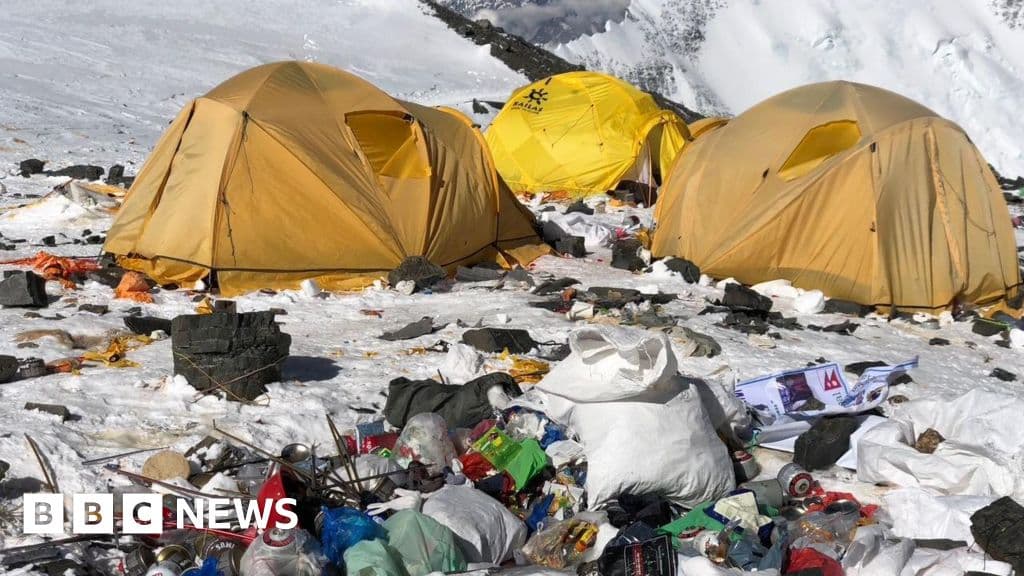
The world’s highest peak is drowning in trash, and the financial stick meant to clean it up has officially snapped.
Nepalese authorities are shelving the controversial deposit scheme that charged climbers $4,000 (approx. KES 520,000) to ensure they returned with their refuse. The decision marks a sobering admission of failure in the global fight to balance high-altitude adventure with environmental stewardship—a challenge that resonates deeply with conservation efforts here in East Africa.
Launched 11 years ago, the initiative was designed to force accountability. Climbers were required to deposit the hefty sum, refundable only if they returned to base camp with at least 8kg (18lbs) of waste.
However, the policy crumbled under the weight of its own loopholes. Tshering Sherpa, chief executive of the Sagarmatha Pollution Control Committee, revealed that while climbers were technically complying, they were gaming the system.
"From higher camps, people tend to bring back oxygen bottles only," Sherpa noted. The grim reality is that climbers were collecting easier-to-reach garbage from lower altitudes to reclaim their cash, while leaving the most ecologically damaging waste—tents, excrement, and canisters—in the 'Death Zone' where retrieval is dangerous.
Despite an estimated 50 tonnes of waste still covering the mountain, the Tourism Ministry confirmed that most deposits had been refunded over the years. This created a false metric of success: on paper, the mountain was being cleaned; in reality, the garbage was just shifting or staying put.
Himal Gautam, a director at the tourism department, told the BBC that the scheme had devolved into an "administrative burden" that "failed to show a tangible result."
The failure of the Everest model offers a critical lesson for Kenya. As the Kenya Wildlife Service (KWS) continues to battle litter on Mount Kenya and Kilimanjaro routes, the Nepalese experience suggests that financial penalties alone cannot override the logistical realities of high-altitude survival.
With the deposit system gone, Nepal faces an uncertain path forward. The garbage issue has "not gone away," Gautam admitted, leaving the roof of the world waiting for a solution that relies on more than just a refundable check.
Keep the conversation in one place—threads here stay linked to the story and in the forums.
Sign in to start a discussion
Start a conversation about this story and keep it linked here.
Other hot threads
E-sports and Gaming Community in Kenya
Active 9 months ago
The Role of Technology in Modern Agriculture (AgriTech)
Active 9 months ago
Popular Recreational Activities Across Counties
Active 9 months ago
Investing in Youth Sports Development Programs
Active 9 months ago