We're loading the full news article for you. This includes the article content, images, author information, and related articles.
A coordinated multi-agency security sweep has delivered a crushing blow to the deadly underground alcohol trade, neutralizing thousands of litres of toxic contraband.
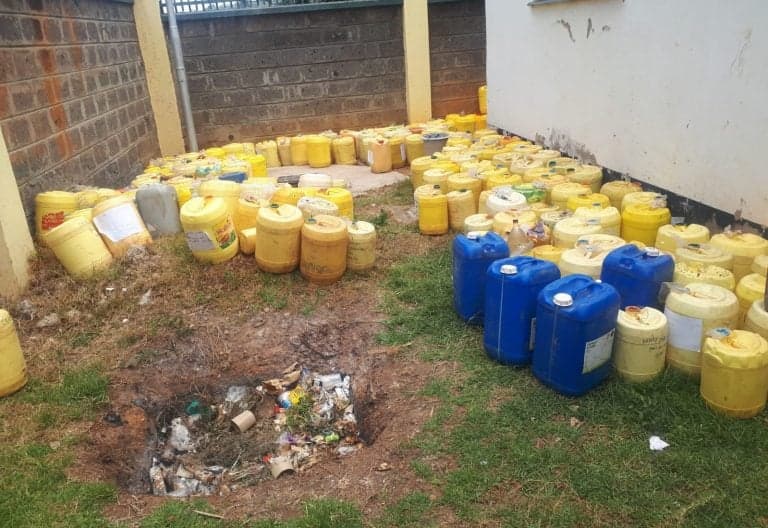
A coordinated multi-agency security sweep has delivered a crushing blow to the deadly underground alcohol trade, neutralizing thousands of litres of toxic contraband in the North Rift region. The government is signaling an uncompromising stance against the merchants of lethal brews.
The fight against the proliferation of lethal, unregulated alcohol escalated dramatically this week in Kapenguria, West Pokot County. Heavily armed enforcement teams descended upon suspected illicit brewing syndicates, executing a targeted operation that resulted in the confiscation and public destruction of 5,000 litres of toxic brew.
The subterranean industry of brewing counterfeit spirits and highly potent traditional liquors continues to wreak havoc across rural and peri-urban Kenya. By driving up mortality rates, fueling crime, and entrenching a cycle of chronic poverty, this shadow economy remains one of the most pressing socio-economic crises facing the nation today.
The successful operation in West Pokot was orchestrated by the National Authority for the Campaign Against Alcohol and Drug Abuse (NACADA) in strict collaboration with the Kapenguria Law Courts and the National Police Service (NPS). The seamless synergy between the judiciary and law enforcement ensured that the operation was executed with absolute legal precision.
Following intense intelligence gathering and surveillance, officers from the West Pokot County Coordination Office raided multiple concealed brewing dens. The targeted facilities were operating outside any established health or manufacturing regulations, producing lethal concoctions intended for immediate mass distribution.
The seized 5,000 litres of illicit brew, primarily consisting of the notorious local spirit known as 'chang'aa', were subsequently destroyed under judicial supervision. This public disposal serves not merely as a regulatory requirement, but as a potent visual deterrent to the remaining cartels operating within the region.
The illicit alcohol industry in Kenya is a highly lucrative, heavily entrenched criminal enterprise. Brewers typically utilize a base of 'kangara'—a fermented mixture of water, sugar, and yeast—which is then crudely distilled into chang'aa.
To accelerate the fermentation process and artificially maximize the alcohol content, rogue brewers frequently lace their products with highly toxic industrial chemicals, including methanol, battery acid, and even jet fuel. The consumption of these adulterated spirits routinely leads to mass blindness, irreversible organ failure, and agonizing fatalities.
The production sites themselves are inherently hazardous, often located in deep forests, along riverbanks, or in unsanitary slum conditions, designed specifically to evade routine police patrols and public health inspectors.
The destruction wrought by illicit brews extends far beyond the immediate physiological damage. In regions like West Pokot and the broader Rift Valley, the rampant consumption of cheap, highly potent alcohol has decimated the local workforce, paralyzing agricultural output and localized commerce.
Families are fractured by addiction, and youth delinquency surges in areas where brewing dens proliferate. The economic burden is subsequently transferred to the state, as underfunded county hospitals are frequently overwhelmed by mass casualty events stemming from poisoned batches of alcohol.
NACADA's aggressive enforcement strategy is, therefore, not simply a law enforcement priority; it is a critical intervention to salvage the human capital of marginalized communities and restore economic viability to the rural heartlands.
The Kapenguria operation is not an isolated incident; it represents a tactical escalation in a much broader, nationwide war against contraband. In recent weeks, the National Police Service has intensified crackdowns across multiple jurisdictions.
In Nanyuki, Laikipia East, targeted raids yielded 400 litres of suspected chang'aa and resulted in the arrest of key suspects, alongside the seizure of counterfeit, uncustomised cigarettes. Similarly, in Nandi South Sub-County, multi-agency teams destroyed over 3,000 litres of kangara and dismantled an intricate network of brewing apparatus hidden within forested enclaves.
These simultaneous strikes indicate a highly coordinated national directive from the Ministry of Interior, demanding the total eradication of the illicit alcohol supply chain from the ground up.
While heavy-handed enforcement is vital, sustainable victory requires absolute community integration. NACADA has increasingly emphasized the power of the 'baraza'—community dialogue forums designed to foster localized reform.
Recent barazas have yielded remarkable results, with individuals voluntarily surrendering their illicit stock and pleading for governmental assistance to transition into safer, legal livelihoods. This dual approach of ruthless interdiction combined with compassionate community rehabilitation is establishing a sustainable blueprint for the future.
As the 5,000 litres of toxic brew seeped into the soil of West Pokot, the message to the criminal syndicates was clear: the state's tolerance for the manufacture and distribution of death has reached absolute zero.
Keep the conversation in one place—threads here stay linked to the story and in the forums.
Sign in to start a discussion
Start a conversation about this story and keep it linked here.
Other hot threads
E-sports and Gaming Community in Kenya
Active 9 months ago
The Role of Technology in Modern Agriculture (AgriTech)
Active 9 months ago
Popular Recreational Activities Across Counties
Active 9 months ago
Investing in Youth Sports Development Programs
Active 9 months ago