We're loading the full news article for you. This includes the article content, images, author information, and related articles.
Severe drought in Central Kenya has forced Murang'a residents into perilous daily treks for water, exposing them to dangerous wildlife encounters and highlighting the urgent need for infrastructure.
Severe drought in Central Kenya has forced Murang'a residents into perilous daily treks for water, exposing them to dangerous wildlife encounters and highlighting the urgent need for sustainable rural water infrastructure in East Africa.
A relentless drought sweeping through Murang'a County has transformed the basic human necessity of fetching water into a daily, potentially lethal ordeal for thousands of rural villagers.
As traditional water sources dry up under the scorching sun, communities are being pushed to the absolute edge. Families are now embarking on grueling, miles-long treks across harsh terrain, pitting them in direct and terrifying conflict with desperate wildlife competing for the exact same dwindling resources.
The situation in the lower, semi-arid zones of Murang'a paints a grim picture of climate change impacts on vulnerable populations. Rivers that once flowed year-round have been reduced to cracked mud beds. The failure of consecutive rainy seasons has effectively decimated the local water table, leaving shallow wells and community boreholes completely arid.
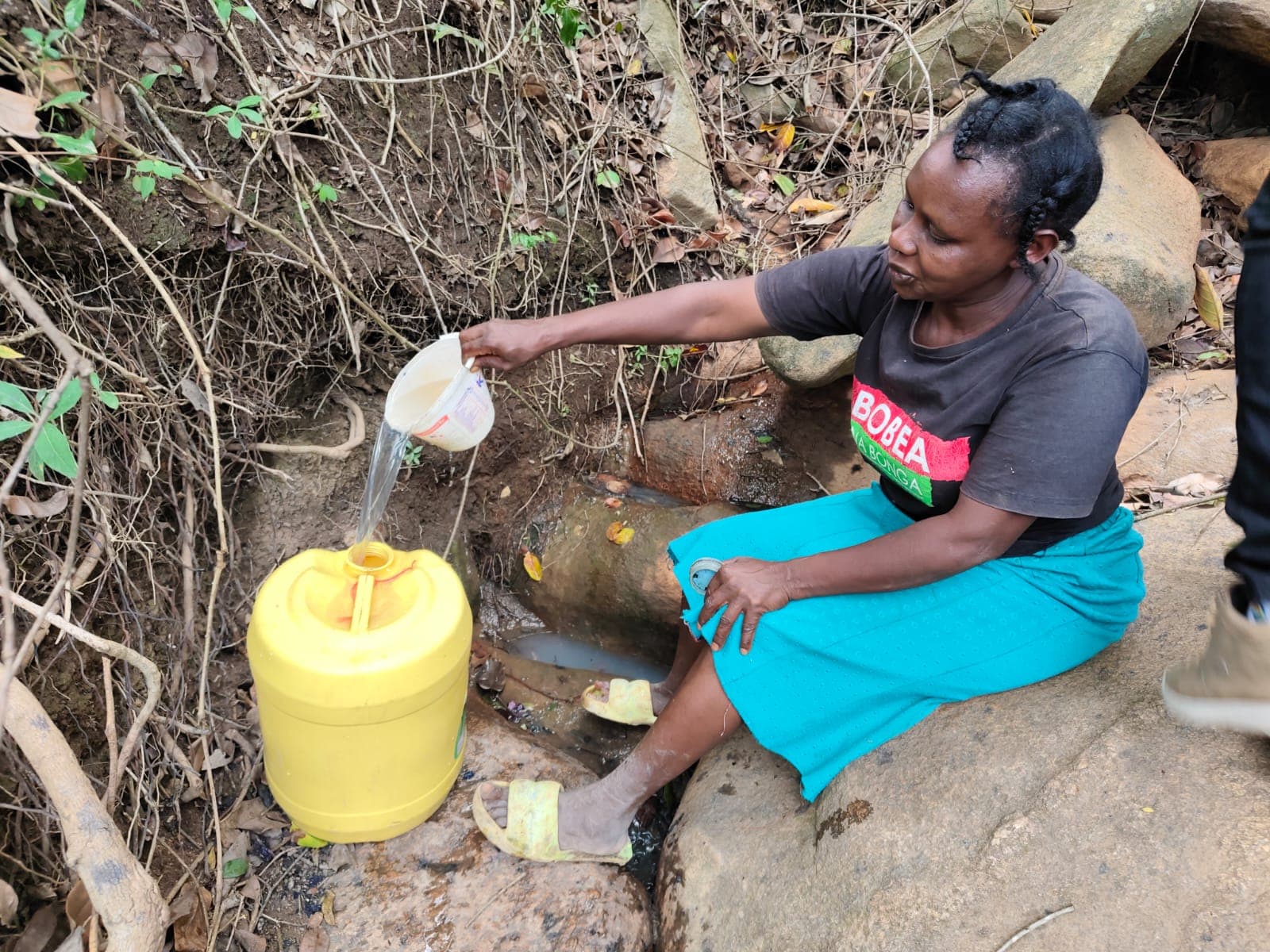
For the villagers, particularly women and children who bear the traditional burden of domestic water collection, the routine has shifted from a chore to a highly dangerous expedition. Armed with plastic jerrycans, they must navigate dense, unforgiving scrubland to reach the few remaining stagnant water pans.
At these isolated water points, the danger escalates exponentially. The scarcity of water has driven wild animals out of their natural habitats and into human-dominated landscapes. Encounters with highly venomous snakes, aggressive primate troops, and even larger mammals have become a terrifyingly common occurrence.
The convergence of desperate humans and thirsty wildlife at single watering holes is a recipe for disaster. The Kenya Wildlife Service (KWS) has recorded a sharp spike in distress calls from the region as the ecological balance collapses.
Villagers are forced into a brutal game of survival, often waiting hours for a safe window to scoop muddy water while keeping a vigilant watch for predators hidden in the surrounding brush. The psychological toll of this constant fear, coupled with the physical exhaustion of carrying heavy jerrycans over long distances, is devastating the community's overall well-being.
Moreover, the water they do manage to collect is often heavily contaminated, raising the acute risk of severe waterborne diseases such as cholera and typhoid, further straining the already fragile rural healthcare infrastructure.
The crisis in Murang'a exposes a glaring failure in the region's long-term developmental planning. Despite being geographically close to the water-rich Aberdare ranges, the county's lower regions remain chronically underserved by piped water networks.
The over-reliance on rain-fed rivers and rudimentary shallow wells is an unsustainable model in the era of accelerated global warming. There is an urgent, undeniable need for the county government and national authorities to pivot toward massive investments in climate-resilient water infrastructure.
Experts advocate for the immediate construction of deep-drilled, solar-powered boreholes, the extensive deployment of household rainwater harvesting systems, and the construction of protected community dams that separate human access points from wildlife troughs.
As the dry spell persists, the residents of Murang'a cannot afford to wait for long-term policy debates. Immediate humanitarian intervention, via sustained water trucking, is critical to prevent a total collapse of community health and safety.
The struggle for a single jerrycan of water is a stark metric of systemic inequality. The eradication of this hardship must become the primary metric of developmental success for local political leadership.
"We are not just dying of thirst; we are risking our lives every single day just to wet our lips," lamented an exhausted village elder, summarizing the brutal reality of life on the frontlines of climate change.
Keep the conversation in one place—threads here stay linked to the story and in the forums.
Sign in to start a discussion
Start a conversation about this story and keep it linked here.
Other hot threads
E-sports and Gaming Community in Kenya
Active 9 months ago
The Role of Technology in Modern Agriculture (AgriTech)
Active 9 months ago
Popular Recreational Activities Across Counties
Active 9 months ago
Investing in Youth Sports Development Programs
Active 9 months ago