We're loading the full news article for you. This includes the article content, images, author information, and related articles.
Treasury CS John Mbadi's declaration for Nyanza's presidential bid signals a major shift in Kenya's complex political succession dynamics.
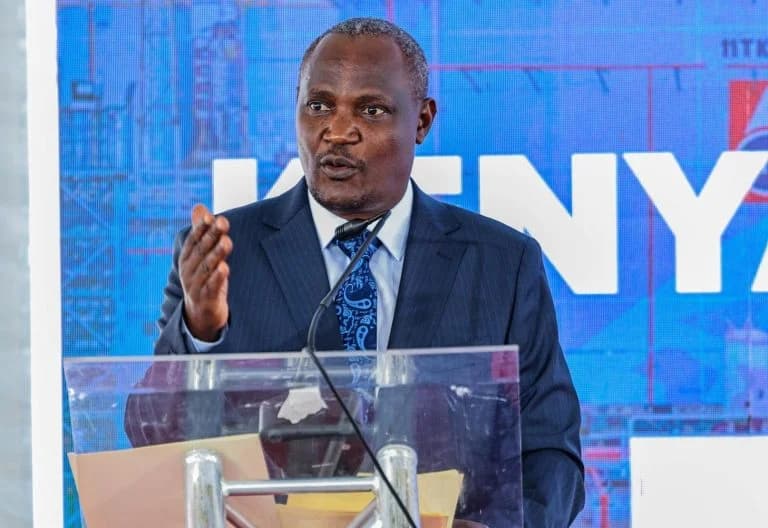
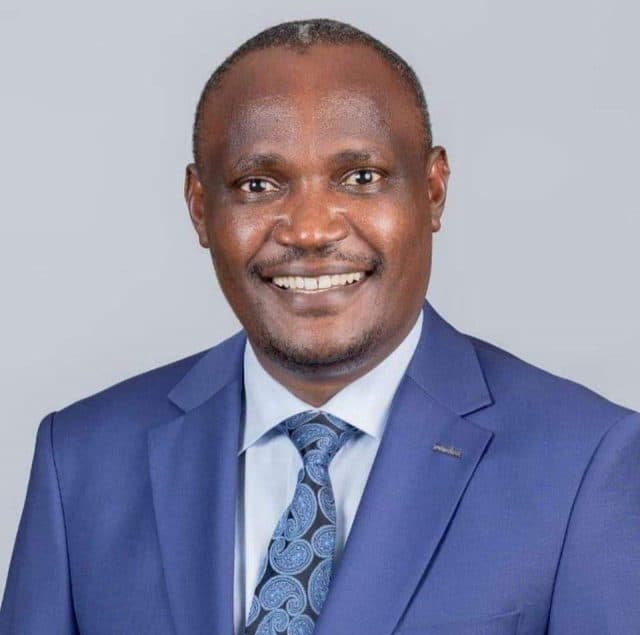
The political topography of Kenya shifted significantly this weekend, as Treasury Cabinet Secretary John Mbadi issued a bold declaration during a high-profile church service in the Kasipul Kabondo Constituency. Standing before President William Ruto, who was in attendance, Mbadi asserted that the Nyanza region is not merely a political bystander but an essential architect of the nation's future, explicitly calling for the region to produce the country's next leader after the conclusion of the current administration's term.
This statement, delivered at a pivotal juncture in the government's mid-term cycle, represents more than a regional rallying cry. It signals a calibrated, strategic pivot within the Orange Democratic Movement (ODM) and its relationship with the incumbent administration. As the country looks toward the 2027 electoral cycle and the subsequent horizon of 2032, Mbadi's intervention highlights the emerging, complex calculus of succession politics, where the traditional barriers of opposition versus government are increasingly blurring into a new, albeit fragile, consensus.
For decades, Nyanza has defined itself through its role as the bastion of opposition politics in Kenya. From the early post-independence era to the constitutional referendums of the 2010s, the region has served as the bedrock of resistance against centralized power. However, Mbadi’s recent remarks suggest an evolution. By framing the quest for the presidency not as a movement of protest, but as a path to national administrative leadership, the Treasury CS is signaling a desire to transition the region from a perennial opposition heavyweight to a central, governing authority.
The stakes are undeniably high. Nyanza’s voting bloc remains one of the most cohesive and influential in the country, but its ability to deliver the top seat has been complicated by the shifting sands of coalition-building. Mbadi’s insistence that the region will offer candidates with the "right qualifications and competence" is a direct retort to critics who argue that the region’s political trajectory has been overly reliant on populist rhetoric rather than technocratic governance. This move effectively ties the region’s future directly to its ability to field candidates capable of navigating the complex machinery of the Kenyan state, particularly as fiscal and economic challenges dominate the national discourse.
As the head of the National Treasury, Mbadi occupies a uniquely powerful position. His ability to frame the succession debate while managing the country’s Sh4.7 trillion recurrent expenditure budget gives his words added weight. Unlike traditional political figures who operate from the campaign trail, Mbadi speaks from the vantage point of the cabinet, lending his pronouncements a veneer of administrative legitimacy.
Observers note that this declaration also serves as a stabilizing message to the broader political ecosystem. By explicitly looking toward the period after President Ruto’s tenure, Mbadi is implicitly acknowledging the current administration’s hold on power through the 2027 cycle, while simultaneously preparing the groundwork for a transition. This creates a fascinating tension within the current broad-based government, where the ODM party, to which Mbadi remains loyal, has entered into a cooperative framework with the President. The balancing act involves supporting the current administration to ensure economic stability, while simultaneously preserving a distinct political identity that can be mobilized for the post-2032 era.
Mbadi’s call does not exist in a vacuum. Across the country, other regions are similarly positioning themselves. The Mulembe nation, for instance, has seen leaders like Prime Cabinet Secretary Musalia Mudavadi signal ambitions for the top office. This early posturing suggests that the race for 2032 is beginning before the 2027 election has even concluded. The competition is fierce, and the entry of a strong, qualified candidate from Nyanza would fundamentally alter the national negotiating table.
The challenge for Mbadi and other regional leaders will be to navigate the transition without alienating their local base, which is accustomed to the fierce, independent spirit of the opposition. There is a palpable risk that if the narrative of "working with the government" is perceived as capitulation, it could trigger a backlash from the youth-led, anti-establishment movements that have gained significant traction in urban centers. Mbadi’s ability to bridge this gap—maintaining the support of the grassroots while courting the national elite—will define the success of this strategy.
As the country edges closer to the next general election, the discourse around leadership is becoming increasingly sophisticated. The electorate is no longer satisfied with regional endorsement alone there is a growing, vocal demand for candidates who can articulate clear policies on taxation, debt management, and social services. Mbadi has cast the first stone in a long, complicated contest. Whether this vision of a post-Ruto Nyanza presidency gains traction will depend not just on political maneuvering, but on the tangible economic outcomes delivered by the current government in which he plays such a critical, administrative role.
The path to State House has never been a straight line in Kenya. It is a labyrinthine journey of broken alliances, reinvented platforms, and regional deal-making. With this latest declaration, the Treasury CS has signaled that the Nyanza region is no longer content to wait for an invitation to the table—it intends to be the one setting the agenda.
Keep the conversation in one place—threads here stay linked to the story and in the forums.
Sign in to start a discussion
Start a conversation about this story and keep it linked here.
Other hot threads
E-sports and Gaming Community in Kenya
Active 10 months ago
Popular Recreational Activities Across Counties
Active 10 months ago
The Role of Technology in Modern Agriculture (AgriTech)
Active 10 months ago
Investing in Youth Sports Development Programs
Active 10 months ago
Key figures and persons of interest featured in this article